
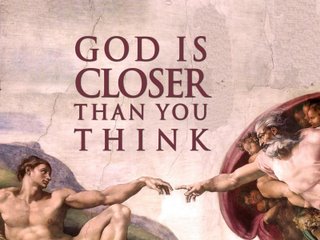
God Is Closer Than You Think #5 – What Is Prayer?

by JT Holderman

DOCTRINE

Illustration of Answered Prayer: Daniel and the Lion’s Den. Daniel is thrown into the pit with the lions and spends the night. But guess what, Daniel was found by King Darius the next morning, unharmed. Prayer is powerful. Both Daniel and King Darius prayed, and God delivered. He heard their prayers.

Definition: A theologian of our day gives a definition for prayer. He says “prayer is personal communication with God” (Wayne Grudem ST-377). I think he captures the essence of prayer, being in relationship, communication, being in conversation with God. Remember you and I were created to be in relationship with God, and relationships are defined by being in communication with one another.

Jesus Makes Prayer Possible: Do you know what gives us confidence in prayer? Jesus. His death on our behalf creates a way for us to know and be in relationship with God again. When you pray to Jesus, he hears you and whispers it into the Father’s ear. Jesus is our advocate.

Kinds of Prayer:

  • Petition: Asking God for…
  • Supplication: Asking God for something on behalf of someone else…
  • Praise: Lifting up God’s greatness
  • Thanksgiving: Thanking God
  • Confession: Asking for forgiveness
  • Sorrow: Prayers of tears and lament

Why do we pray? As Christians prayer is often a response to a need we have. We need help. And we pray because prayer has power. The prayer of Daniel and Darius had power to overcome the Lion’s hunger in the pit. But why does prayer have power? Prayer has power because we communicate with the living God.

Illustration of Answered Prayer #2: There’s a woman in 1st Samuel in the Old Testament. Her name is Hannah. She’s barren, she can’t have a child. She pours out her soul to the Lord. And you know what, God heard her prayer, just like he hears your prayer. He heard it, and he answered it. He gave her a son. His name was Samuel.

What about Unanswered Prayer: We have confidence when we know God has answered our prayer right? But is the same true when we don’t think God has answered our prayer? There is no such thing as unanswered prayer. There is simply prayer that isn’t answered in the manner you and I would like it to be answered. Our prayers are always subject to God’s will. And that’s where we find comfort in unanswered prayer, in the fact that God knows what is best for his children, even when we think he doesn’t.

EXPOSITION OF MATTHEW 6:5-13:

Context: Matthew has recorded three chapters worth of His sermon and teachings to the people, we often refer to this portion of Scripture as the “Sermon on the Mount” because Jesus ascended a mountain, sat down, and preached to all those who followed him.

How Not to Pray vv. 5-8: So in v. 5 Jesus begins to instruct us how to pray. And what does he do first? He tells how NOT to pray. Don’t pray like this, and he gives two examples. Don’t pray like the hypocrites. Jesus explains that these people pray to be seen, they find fulfillment not in praying to God, but their motive is to be seen as pious, as holy people by others. Don’t pray like the hypocrites who pray to be seen, but instead Jesus says to pray in private, in secret where the motive is simply to be in conversation with God.

Jesus also says we are not to pray like the Gentiles, non-Jews in Jesus’ day, unclean people. Read vv. 7 and 8 with me. What is the Gentiles problem in prayer? They heap up empty phrases. They simply say things hoping they will be heard. They want to sound sophisticated and use lots of words to try to impress God and earn His favor. Their motive is to impress, to appear holy to God. The hypocrite wants to appear holy to the masses and the Gentile wants to appear holy to God. So we can see here from these first four verses that what is crucial to Jesus in prayer is MOTIVE. Why we pray is important.

How to Pray: So again knowing about prayer is of little value. Knowing HOW to pray is of infinite value. So in vv. 9-13 Jesus launches into “how” we are to pray, it’s commonly referred to as the Lord’s Prayer.

“Our Father…”: Jesus begins with addressing who He is praying to, God the Father. It’s crucial for us to see that He begins by pointing his conversation, his spoken prayer at God. And the word Father here is important. He doesn’t say Lord, even though He is, He doesn’t say God, he says father. And father implies a close relationship, a nearness to God.

“Hallowed be your name”: And after addressing God, Jesus hallows God’s name. Now what does that mean? A person who is hallowed is worthy of our praise. To hallow something or someone is to treat them as Holy, perfect, spotless. But to say that you hallow God’s name, that you revere Him, means also that your life will be such that it reflects that, that it continually brings glory to God as the Holy one.

“Thy Kingdom Come”: Now when you hear the word Kingdom, think of God’s reign, as a King over all the earth. Jesus is often referred to in three offices, prophet, priest and King. The Kingdom of God is the reign of Jesus over all the earth and that began with His earthly ministry. He teaches us here with the authority of a Lord, a King. So when we pray this, we are simply praying that God would reign over this world. We’re just saying, God be God here and now.

“Your will be done…”: This is a hard one to pray. Remember Jesus in the Garden of Gethsemane? He prayed this, “not my will but yours.” And what happened? He died. To pray that God’s will be done is an absolute sacrifice. It is the ultimate bending of our knee and acknowledging that God knows what is best. It’s hard to pray this because we are inviting God to answer our prayer not in the manner we want, but he wants. Just like Jesus in the garden.

“Give us this day our daily bread”: It isn’t until half way through the prayer that Jesus ever asks for anything in His own life. Here Jesus asks for food, bread. Now this is an image for both physical nourishment that we need from God to live on, as well as spiritual nourishment for our walk with Him.

“Forgive…”: Jesus moves on and asks for forgiveness. Now it’s odd that Jesus asks for forgiveness. Why? Because Scripture tells us that Jesus was perfect, he did not sin, he was the only person who didn’t need forgiveness!!! This is why his death atones for our sins and brings us into relationship with God. So why does he include this. Remember, the whole point of this prayer is an example to you and I of how we should pray. We should pray like Jesus. And so confession, asking for forgiveness is a key part of prayer. Primarily because it forces us to be conscious of our sins, conscious of the ways in which we have turned from God, the ways in which our faith has faltered.

“And lead us not into temptation…”: Jesus ends his example of how we are to pray like Him by admitting that temptation and evil are a reality that we have to deal with, they are universal and inescapable for every human being. The devil is not off the leash. Temptation is essentially a test. When we are tempted our faith is tested. Praying this petition is about admitting that we need God’s help as we face temptation. We can’t do it alone.

Praise and Petition: Now we walked through those pretty quickly. But did you notice as we went through the whole prayer that it was really broken into two separate types of prayer? The first portion of the prayer is what? A prayer of praise. Jesus begins by praising God, by hallowing his name, by exclaiming the goodness of His will and the power of His kingdom. A whole half of this prayer is simply praising God! When you look at your prayer life, if you were to average how much of your prayer time is spent in praising God, hallowing His name, what do you think it would be? And so it isn’t until after Jesus has praised the Father that he moves into asking for things.

APPLICATION

Our Prayer Life: Let’s wind down and bring this home. I would contend the main reason we don’t pray is because God is not a priority in our lives. If God is really our priority in life, if knowing Him is the supreme good above all that we seek after during the hours of the day, then prayer will be as natural as breathing. Prayer is breathing in and out for a Christian. Without prayer we suffocate! And so I argue that the reason we don’t pray as much as we feel called to, or as much as Scripture urges us to, is because God really is not the priority He should be.

And when God becomes our priority, we pray. Not because we are supposed to and it’s what good Christians do, but because we want to! We want to be in relationship with Him who has lavished grace upon us. Prayer is simply communicating with God. What is the most essential thing for any relationship? Communication. If you’re married you know that communication can make a marriage wonderful, or it become a hindrance to loving one another. And so in the same way, our communication with God is of vital importance. Satan wants to thwart prayer more than anything else in our walk as Christians because the reality of our relationship with God is changed through prayer. Prayer is the most powerful action you can do as a Christian. Our call this morning is to take up the charge to be lovers of God, to be people who are characterized by having God as our priority in life.

Closing Prayer: And so where are you? Is God the priority in your life? Or is he simply a priority? Do you pray? Do you wonder what God’s will is for your life? Pray. Do you need help with a struggle you’re currently facing? Pray. Do you feel stuck? Pray. Do you feel lost? Pray. No matter what you are going through this morning, God knows and he wants you to talk to him about it.


God Is Closer Than You Think #3 – What Is The Trinity?

Dr. Jeff Arthurs, Guest Speaker

 Intro: The doctrine of the Holy Trinity is the heart of our faith. It is found in the Apostles’ Creed.

Definition: One God existing from all eternity as three Persons.

We come to this doctrine, this revealed word, with humility and wonder. Why do we believe it? It has been revealed.

1. God is One.

 [Dt. 6:4; Is. 46:9]

 2. In three Persons

  • Implied in OT
    • Genesis 1:26, Let us make man in our own image.
    • Gen. 3:22,  Man has now become like one of us.
    • Gen. 11:3, And they said to each other, Come, let us go down and confuse their language.
    • Is. 9:6, Wonderful Counselor, Mighty God, Everlasting Father, Prince of Peace.
    • Gen. 1:1-2, In the beginning God created…and the Spirit was hovering…
  • More explicit in the NT
    • Baptism (Matt. 3:16-17). Spirit descending and Father saying . . . .
    • Great Commission (Matt. 28:19). Baptize in the name of . . . .
    • Benediction (2 Cor. 13:14). Grace of the Lord Jesus, love of God, and fellowship of the Holy Spirit . . . .
    • High Priestly Prayer (John 14:16). I will ask the Father and he will give you the Spirit of Truth.
    • Deity of Christ (Romans 9:5). From them is traced the human ancestry of Christ who is God over all, forever praised, Amen.
  • Deity of Christ
    • Philippians 2:5-8.

 3. Illustrations:

  •  Roles/hats (father, husband, pastor). No—this is what the ancient church called “modalism.”
  • Egg (three parts of one). No—the three parts do not share the qualities of the other parts.
  • Water (same essence in three forms). Better, but only appearance is different.
  • Human psyche (we can hold conversation with self).
  • Three dimensions of space (height, width, depth).

 Note: the nature of reality is usually (always?) more complex than first glance reveals.  It will be at least as complex as physics.

4. Implications. This is the central reality of the universe. The grand dance of diversity within unity is a dance of mutual honor, love, and submission. That is the essence of reality—love.

  • Eternal life. By grace we are grafted into this life. We become by grace what Christ is by nature—sons of God. How does this occur? He shares it with us.

Ephesians 2: 4-6

  • Christian life.
    • Marriage. Unity and diversity. Equal standing, value, personhood, but distinct roles.

1 Cor. 11:3

    • Church. Diversity and unity.

Rev. 7:9

1 Cor. 12:12

    • Humility, submission, and love.John 15:9

Philippians 2:1-11

God’s Mission Becomes Our Mission

I. INTRO

Last week we turned an important corner in the life of this church with our Sacred Assembly.  Today, I’d like for us to consider the mission of God’s Church – and more specifically this church, Southside Bible Fellowship.

By way of introduction, God has a MISSION, a MEANS, and a METHOD.

1. What is the MISSION of God?

God’s mission is the manifestation of His own glory.

“For the earth will be filled

With the knowledge of the glory of the Lord,

As the waters cover the sea.” Habakkuk 2:14

What is God’s glory?  God’s glory is the shining forth of the perfection of all of God’s attributes.

God’s supreme desire is that He might be known and enjoyed above all things.

God seeks to be recognized as supremely worthy, supremely splendid, and supremely valuable. God’s glory is sensed when we feel the reality of His presence, goodness, and superiority.

2. The MEANS of God’s mission is Jesus Christ and the work He did on the cross.

We call this the gospel.  God creates, calls, rescues, redeems, saves, restores, restrains, and grants — all to the end that we may find our true comfort, joy, and delight in Him.

The gospel is the historical narrative of the triune God orchestrating the reconciliation and redemption of a broken creation and fallen creatures, from Satan, sin and its effects to the Father and each other through the birth, ministry, death, resurrection, ascension — and future return of the substitutionary Son by the power of the Spirit for God’s glory and the Church’s joy. (We see summary statements of this throughout Scripture – both Old and New Testaments.)

To be “gospel-centered” means to both see and live out this narrative as the central theme, or singular story line, of the Bible.  It is central. It is singular.

The gospel stands at the center of God’s redemptive plan, and in it we see Him most clearly for Who He is and what He has done.

3. The METHOD of God’s mission is you and me – the Church.  In a nutshell we (the Church) are all called to live as missionaries in our current life station and cultural context.

Family, friends, neighbors, co-workers – all our social networks.

If you were preparing to be a missionary in Malaysia what activities would best prepare you?

We are to begin the discipleship process BEFORE conversion.  (This is where most churches get it wrong…think about it – we start discipling our kids before they’re converted…)

II. BODY

Having identified God’s MISSION, MEANS, and METHOD I would like to spend the rest of our time considering the mission of the church – and specifically this church – SBF as we enter into a new season of ministry…

The mission of the Church universal is: To glorify God by making disciples through embodying the gospel of Jesus Christ.

God’s mission and the mission of His Church are inseparably linked. If God’s mission is to be glorified through the redemption and reconciliation of a people, the Church’s mission must orient around the glory of God and seek to glorify Him through redemption and reconciliation.

2 Corinthians 5:17-20 – “Therefore if anyone is in Christ, he is a new creature; the old things passed away; behold, new things have come. 18 Now all these things are from God, who reconciled us to Himself through Christ and gave us the ministry of reconciliation, 19 namely, that God was in Christ reconciling the world to Himself, not counting their trespasses against them, and He has committed to us the word of reconciliation.

20 Therefore, we are ambassadors for Christ, as though God were making an appeal through us; we beg you on behalf of Christ, be reconciled to God. 21 He made Him who knew no sin to be sin on our behalf, so that we might become the righteousness of God in Him.

The mission of the Church is highlighted in these verses. As those who have been reconciled to God through the gospel of Jesus Christ, we are now ambassadors of reconciliation to a lost and broken world. We plead, urge, implore, reason, pray, serve, preach, teach and gather to see God glorified through reconciliation.

We also see the mission of the church in the more familiar Matthew 28:19-20:

Go therefore and make disciples of all the nations, baptizing them in the name of the Father and the Son and the Holy Spirit, 20 teaching them to observe all that I commanded you; and lo, I am with you always, even to the end of the age.”

A suggested mission for SBF: To glorify God through making disciples.  We will accomplish this through:

  1. Gospel-centered worship
  2. Gospel-centered prayer
  3. Gospel-centered community
  4. Gospel-centered service
  5. Gospel-centered mission.

1. Gospel-Centered Worship

All of life is worship. Every thought, word, desire, and deed involves the ascribing of worth and value – glory. Each attitude, affection and activity is an expression of our allegiance, whether to our Creator or His creation. God is alone worthy of our worship.

Worship is related to every area of our lives. We are called to eat, drink, speak, think, and work to the glory of God (1 Corinthians 10:31 – whatever you do, do all to the glory of God”). Worship cannot be narrowed down to a particular time and place as if God does not claim authority over certain aspects of our lives. There are no neutral desires or deeds; everything is an expression of worship.

Gospel-centered worship is to be pursued in every facet of our lives as we consider how all encompassing the gospel is to us. Gospel-centered worship is nurtured through:

The gathering of God’s people in a weekend worship service. Within this venue, we worship God by remembering the gospel through preaching, teaching, singing, praying and celebrating the ordinances of baptism and communion. Each presents an opportunity for the church to receive, remember, respond and rejoice in the work of our great King.

Gospel-centered worship also means that we orient our lives (between Sundays) around learning how to worship God and bring Him glory through our thoughts, words, and deeds.  Again, 1 Corinthians 10:31 becomes our holy objective – whatever you do, do all to the glory of God”

1 Corinthians 10:31, Psalm 145:1-21, Isaiah 43:6-7, Colossians 3:1-17

2. Gospel-Centered Prayer

Turn with me to Exodus 33:15-18 –“Then [Moses] said to [God], “ If Your presence does not go with us, do not lead us up from here. 16 For how then can it be known that I have found favor in Your sight, I and Your people? Is it not by Your going with us, so that we, I and Your people, may be distinguished from all the other people who are upon the face of the earth? 17 The Lord said to Moses, “I will also do this thing of which you have spoken; for you have found favor in My sight and I have known you by name.” 18 Then Moses said, “I pray You, show me Your glory!

What we have here is the greatest request we could ever make of God.  It transcends any other request that we could ask of God.

It’s an unrelenting desire to engage the presence of God.

If you want to know the real you, listen for what you pray for involuntarily.  Listen to the spontaneous prayers that irrupt from your heart.

Moses’ prayer is a reflex of the heart.  It reveals what he REALLY wants.

What is it that you involuntarily pray for?  What is the unrehearsed outburst of your soul…

God loves it when we address Him in prayer as the END and not simply a MEANS.  If you’re like me it’s easy to fall into the trap of seeing God as the MEANS to our true desires instead of seeing God as the END of all our desires.  We seek God for jobs, for relationships, for good health, for material things – and all those are good yet the ultimate value is God Himself.

The prayer that most delights God is the prayer that makes Him our most passionate desire.

Jonathan Edwards concluded the most essential difference between a Christian and a moralist is that a Christian obeys God out of the sheer delight in who He is. The gospel means that we are not obeying God to get anything but to give him pleasure because we see his worth and beauty. Therefore, the Christian is able to draw power out of the contemplation of God (i.e., prayer). The moralist will usually only come and petition God for things…

Gospel-centered prayer, is making God the END and not the MEANS — rather than anxious petitioning.

3. Gospel-Centered Community

We worship a triune God, Who has eternally existed as Father, Son and Holy Spirit. In identifying the tri-unity of God, we recognize that God is communal. The Godhead has perpetually dwelt in perfect harmony, unity, joy, and love. Bearing the image of God, we are called to reflect this reality. We are called to be communal creatures imaging the community of our Creator.

Though each Christian has a personal relationship with God, that relationship is not individual or private. The Christian faith is not intended to be lived in isolation. We were made for community – relationship with God and with each other.

The local church is not merely a place that we attend but a people to whom we belong. The Bible calls us members of the body (1 Corinthians 12:12-31) with the expectation that we contribute to the body for the glory of God and the good of His people.

Gospel-centered community is a radical call amid a culture of mere attendance and casual involvement. It involves mutual love, care, consistency and authenticity as we seek to adorn the person and work of Christ with our lives. Where these elements are lacking, we have moved away from gospel-centered community and into the realm of social clubs.

Gospel-centered community is primarily expressed through Community Groups that meet during the week, or Sunday School classes that meet before the service on Sunday mornings. Groups are not perfect and those who participate in them will find them messy at times. However, our hope is that group members will be radically committed to reform from within. This takes time, prayer, effort, patience, love, trust and hope.

Acts 2:42-47, Hebrews 3:12-13, 1 Corinthians 12:12-31

4. Gospel-Centered Service

Gospel-centered service is motivated by the reconciling work of God and seeks to extend His grace and mercy to others for His glory and not our own. It is an expression of love and stewardship of grace marked by humility, generosity and hospitality and empowered by a passion for the glory of God.

Service can and should be pursued in various ways by all recipients of varied grace. Those who have been impacted by the gospel have countless opportunities – both formal and informal – to serve others by greeting at the doors of the church, following up guests who will be visiting our church, volunteering to work with our children and youth, teaching, singing, serving communion, giving financially to the needs of others, opening their homes to their neighbors, etc.

John 13:1-20, 1 Peter 3:8-11, 2 Corinthians 8:1-9:15

5. Gospel-Centered Mission

We are used to thinking of mission in terms of funding and sending missionaries to work in other countries to share the plan of salvation with unreached people groups.

If there is an unreached people group in the United States, it is New Englanders. A recent Gallup poll placed the six states of New England in the top ten least religious states in the nation.

Those in New England who attend evangelical churches hover between 1- 3% of the population. There is a higher percentage of evangelical Christian churchgoers in Mormon Utah than in New Hampshire!

Gospel-centered mission is the recognition that each one of us is sent by God as a missionary into our own sphere of relationships – family, friends, neighbors, co-workers – where we boldly promote the gospel through collaborative expressions of mercy and generosity.

We serve a missionary God: The Father sent the Son, the Son sent the Holy Spirit, and the Holy Spirit sends us.

Let me just say that I am more of a fan of mining the vein of our current relational sphere than I am into organizing what we’ve known as “street witnessing.”  And I am more of a fan of initially engaging our relational network through learning how to listen.  In our culture at this moment in history, we will earning the right to speak through first of all learning how to listen.

2 Corinthians 5:11-2, Matthew 28:18-20, Mt. 4:19; John 20:21; Acts 16:20; 17:6, and to make disciples of all nations Matt. 28:18-20; Acts 1:8

Fasting As A Form of Worship

The leaders at Southside Bible Fellowship are calling for a church-wide fast from (Monday) March 26th through our Concert of Prayer (4-6pm) on Sunday April 1st.  Directly after our Concert of Prayer we will collectively break our fast with a meal of soup and bread.  Please keep reading to consider your options…

“I humbled my soul with fasting”  (Psalm 35:13b)

In Psalm 35 King David is crying out in agonized intercession to be rescued from his enemies. Part of David’s prayer is that he has bowed-down his soul with fasting.  It is widely accepted that our soul consists of our intellect, will, and emotions.  According to Matthew 6, Isaiah 58, and Psalm 35 the overall objective of fasting is to humble our soul (or to cause our intellect, will, and emotions to bow down) so that the desires and the purposes of God can become more prominent!  When we deny our appetites and soulish longings and turn to the Lord through worship, Christian meditation, supplication, and intercession there is a supernatural grace released upon us to see God’s heart and will.  The idea is to set aside regular times during a fast in order to seek the Lord and cry out for His kingdom to increase and for His will to be done – IN us and THROUGH us.

Matthew 6 describes and instructs us in three primary spiritual disciplines.  The chapter opens by encouraging us not to practice our “acts of righteousness” publicly; and if we do, we shall have no reward from our Father in heaven.  The three spiritual disciplines are giving, prayer (we are to pray secretly, sincerely, and specifically), and fasting.

Isaiah 58 is probably the best and most concise instruction on the spiritual discipline of fasting in the Bible.  Verse six lists the four reasons for fasting:  “To loosen the bonds of wickedness,”  “To undo the bands of the yoke,”  “To let the oppressed go free,” and to “break every yoke.”  Verses 8-14 contain some amazing promises concerning the fruits, or benefits, of fasting.

A simple definition for fasting would be voluntary abstinence of our appetites and our soulish longings for spiritual reasons.  The Bible speaks of it not as an option but as an expected and regularly practiced spiritual discipline.  The following are some of the purposes for fasting; these also convey some of the benefits of fasting:

1.   Fasting will sharpen our focus in prayer.  (After we get beyond the initial discomfort caused by our various addictions such as coffee, sugar, etc.)

2.   Fasting will cause us to be more sensitive to God’s guidance in our lives.

3.   Fasting is a sign of humble repentance and expressing to God our desire to be responsively obedient to His will and direction for our lives – both individually and as a church.

4.   It was common in biblical times to fast when the need for protection and/or deliverance was great.  An excellent example is when Queen Esther called for her people to fast with her when she appealed to the king to spare the Jews (see Esther 4:16).

5.   As David articulated in Psalm 35, fasting can be an expression of simple humility before God.

6.   Fasting, or the servant-leaders calling for a fast, can be the result of God’s people seeing a need and expressing their concern.  When Nehemiah heard about the great distress, reproach, and the broken down walls in Jerusalem the Bible tells us that he sat down and wept and mourned for days, and then fasted and prayed until the Lord revealed His plans (see Nehemiah 1:3-4).

7.   When Jesus fasted for forty days in the wilderness after His baptism He was strengthened spiritually against the strong temptations of Satan.  In fact, in Luke 4:14 it says that, “Jesus returned to Galilee in the power of the Spirit(emphasis added).

8.   Fasting can be simply an act of worship and adoration with no other purpose than to ascribe glory and honor to God.

There are many different ways to fast.  We can fast food and just drink water or juice, we can eat vegetables and/or fruit only (this has been called a “Daniel Fast,” see Daniel 1:8-17), we can choose not to eat any sugar or carbohydrates, we can fast one or two meals a day, we can fast from sun-up to sun-down.  Paul encourages married couples to occasionally fast sexual intercourse, “that you may devote yourselves to prayer…” (1 Corinthians 7:5).  We can fast television or the internet and pray instead!  Before we fast it is important to seek the Lord regarding what would be appropriate.

We are in a season of transition at Southside Bible Fellowship. There are several excellent reasons for us to embark on a corporate fast:  Over the last 2-3 years there has been relational tearing and woundedness. We want to fast and ask God to show us how to specifically engage in the ministry of reconciliation with those who have been hurt. We want to identify and “own” our past dysfunctions as a church — and repent and forsake them. We want to fast and ask God to once again visit us with salvations.  We want to fast for a fresh understanding of what it means to delight in God – as well as what it means for God to delight in us.  In addition, prayerfully consider any supplemental personal and family needs so that you will fast with a strong sense of God’s heart – asking for His “kingdom to come and His will to be done” IN you and THROUGH you.  May the Lord strengthen you and encourage you through a mighty demonstration of His power and might!!