What Does Emotionally Healthy Language Look Like?

Emotionally healthy language is characterized by clear, respectful, dialogical, and empathetic communication that fosters self-awareness, connection, and understanding. Consider the following bible passages:

James 1:19: “Let every person be quick to hear, slow to speak, slow to anger” emphasizes the importance of listening, patience, and controlling emotions during conversations, which are essential for healthy communication.”

Proverbs 15:1: “A soft answer turns away wrath, but a harsh word stirs up anger” highlights the power of gentle and thoughtful speech in diffusing conflict and fostering understanding.”

Ephesians 4:29: “Let no corrupting talk come out of your mouths, but only such as is good for building up, as fits the occasion, that it may give grace to those who hear” encourages constructive and uplifting communication.”

With these verses in mind, here are key elements of emotionally healthy language:

  1. Use of “I” Statements: Emotionally healthy language expresses feelings without blaming others. For instance, saying, “I feel upset when you talk to me that way,” instead of accusatory language like “You always make me angry.” The former promotes accountability and will usually reduce conflict.
  2. Naming and Identifying Emotions: A rich emotional vocabulary helps in accurately describing our feelings. Instead of broad terms like “angry,” emotionally healthy language will specify emotions such as “frustrated” or “disrespected,” which aids in deeper self-understanding and communication.
  3. Validation of Feelings: Emotionally healthy language will validate a person’s emotions and those of others without judgment. Phrases like “It’s okay to feel this way” or “I understand why you might feel like that” create a safe space for emotional expression.
  4. Respectful Communication: Emotionally healthy language avoids shaming, blaming, or threatening others. It emphasizes reflective listening, respecting differing opinions, and using a calm tone and open body language to convey respect.
  5. Apologies and Repair: Emotionally healthy language takes responsibility for mistakes with sincere apologies, such as saying, “I’m sorry for how my words hurt you; it wasn’t my intention,” which helps to repair relationships and model accountability.
  6. Setting Appropriate Boundaries: Emotionally healthy language includes clear yet empathetic boundary-setting. For example, “I need some time to process this before we continue our dialogue” respectfully communicates a person’s limits.
  7. Encouragement and Affirmation: They use positive reinforcement to build others up, such as celebrating achievements or expressing gratitude: “I appreciate how hard you worked on this project”.

These practices of emotionally healthy communication will foster stronger relationships, help reconcile inevitable conflict, develop deeper self-awareness, and generate a more compassionate approach to life’s challenges.

Advent Love

From a sermon preached at Calvary Church Pacific Palisades on December 24, 2023.

Merry Christmas! Thank you for joining us this Christmas Eve afternoon. You may not have noticed that we have a short Advent Season this year. Advent is a four-Sunday anticipatory journey leading up to the traditional Christmas Eve (or Day) Service. But this year the fourth Sunday of Advent IS today (Christmas Eve), so we are combining the fourth Sunday of Advent with Christmas Eve and this afternoon we will be considering Advent Love.

There is a very popular and free Bible app called YouVersion that has been downloaded more than 700 million times in the U.S. and around the world. In 2023 the longing for hope is reflected in a list of the top 10 verses that users searched for. The No. 1 verse for the third year running was, “So do not fear, for I am with you; do not be dismayed, for I am your God,” — Isaiah 41:10. Other popular searches included more familiar verses like, “For God so loved the world, that He gave His only begotten Son, that whoever believes in Him shall not perish, but have eternal life.” –John 3:16. And “For I know the plans that I have for you,’ declares the LORD, ‘plans for welfare and not for calamity to give you a future and a hope.’”  –Jeremiah 29:11

This is a verse that had a strong effect on me when I was 20 years old. I had an encounter with God a few months after reading this verse. A friend who became a Jesus follower gave me a used Bible. I took it home and sat it on the dining room table wondering where I should start, so I just opened the book and looked down and Jer 29:11 was highlighted, so I read it and thought, “Well, there’s two things I don’t have yet – a future and a hope. I should probably keep looking into this Christian thing…”

Hope, as most of you know, is a traditional Advent theme and one that we addressed three weeks ago in our Advent series, Good News, Great Joy. We have looked at the Advent themes of HOPE, PEACE, and JOY. By way of reminder, here’s a (very) succinct overview…

Advent HOPE is a life-shaping certainty that our ultimate future is found in the eternal love and glory of God. A holy and practiced HOPE can overwhelm whatever grief we may be experiencing.

Advent PEACE is not merely the absence of conflict or fear but an unshakeable confidence and trust in God’s wise and good control over our lives.

Advent JOY is delight and gladness in God and His salvation for the sheer beauty and worth of who God is. The counterfeit of JOY is mere happiness.

And for the next few minutes, we will be considering Advent Love.

Why these themes?

Because of the incarnation of Jesus, the Christ we now have an awakened HOPE that gives way to an abiding PEACE, which blossoms into a fragrant JOY that causes God’s sacrificial LOVE to flourish.

I have a non-traditional advent verse for us to consider today… “See what great love the Father has lavished on us, that we should be called children of God! And that is what we are!”  –1 John 3:1a (NIV) [notice the exclamation points…] Just a bit of context…John was the sole remaining survivor of the original 12 apostles who had intimate and eyewitness friendships with Jesus — and John is likely between 85-90 years old as he’s writing this letter.

John wrote the Gospel of John, and he also wrote first, second, and third John. The Gospel of John was written that we might believe. The Letters of John were written that we might know – as in having assurance. Assurance that the Christian faith is true. Assurance of our own salvation. Assurance of God’s love for us, which I’d like to focus on today.

I’d like to draw out two aspects of this verse as we consider God’s Advent LOVE…

  1. The FOCUS of God’s great love.
  2. John’s EXPERIENCE of God’s great love.

The FOCUS will be fairly familiar to many of us, but considering John’s EXPERIENCE may offer a fresh perspective for some of us. With that said, here’s the big idea for us to reflect on this Christmas Eve:

There is a difference between knowing ABOUT God and truly KNOWING God.

Let’s look at these two aspects one at a time…

  1. The FOCUS of God’s great love.

The first thing we need to notice in 1 John 3:1a is that “The Father has lavished great love upon us.” [I love that word lavish…]

The Greek word for great in this verse literally means “from what country?” If we were to contemporize the phrase it would mean that this love is “unworldly,” or, out of this world. (used 7x’s throughout the NT). This same word is used in Lk 1:29 when the angel Gabriel appeared to Mary and told her she was “favored, and the Lord was with her.” She was “pondering this ‘unworldly’ salutation.” This word is also used in Mat 8:27 when Jesus spoke and calmed the ragging sea and the disciples looked at each other in the boat and basically said, “Who is this guy?!?”

The Greek word for love in 1 Jn 3:1 is agape. Simply stated, AGAPE LOVE is a sacrificial serving that reaches out to people who don’t deserve it. (“For God so loved the world…”) C. S. Lewis wrote a book entitled The Four Loves in which he unpacks four different Greek words for love. Lewis uses the word charity to describe agape love. Lewis writes that charitable love allows us “to love what is not naturally loveable; lepers, criminals, enemies, morons, the sulky, the superior, and the sneering.”[1]

What does it mean that we are “called children of God”? It’s not just an expression, there is a theological order of salvation. First, there is an outward call that people hear with the ears of faith, which leads to regeneration where God sovereignly imparts spiritual life into the hearers, which leads to conversion where we confess our sin and selfishness and then willingly surrender to the call of God, which then leads to justification where we are instantaneously and legally forgiven of all of our sins, which then leads to our adoption wherein God makes us members of His family. And this adoption includes becoming “partakers of the divine nature” (1 Pet 1:3-4.) And with this gift of divine nature, we then begin the lifelong journey of sanctification (or transformation).

Think of God as Judge and Jury. He declares us “not guilty.” Then He gets up and comes around the bench, takes off His robe, and adopts you into His family. One theologian says that “God gives [us] His own life and love in adoption.”[2]

This is the kind of love you and I are invited into…Advent and celebrating Christmas gives us space to step back and reorient our lives to both receive God’s love as well as to share God’s love.

2. John’s EXPERIENCE of God’s great love.

The old KJV translates this verse as, “Behold, what manner of love the Father hath bestowed upon us, that we should be called the sons [lit children] of God.” Most English translations do not do justice to the Greek rendition. In the NIV translation, at least have the exclamation points at the end of the first two sentences. A literal translation might be: “Look at the sort of love the Father has given us!” [3]

So, what’s happening here? As John is writing about assurance and thinking about what he’s about to write, he gets caught up in worship and adoration. And we, the readers, experience John experiencing God. Grammatically, these verses can be described as parenthetical, meaning they could have been or should have been placed in parenthesis.

This sort of outburst of spontaneous worship and exaltation happens (at least) two other times in the NT. Paul, in writing to the Ephesians in chapter 1:3-14 there is one run-on sentence of 202 words where we readers experience Paul experiencing God. And the same thing happens in Peter’s doxology in 1 Pet 1:3-9. In each instance, we experience each author experiencing God.

Here’s what’s happening…In 1 John 3:1-3, John goes from knowing to beholding. John goes from understanding to standing under – and he’s not just writing about it – he’s demonstrating it to us. It’s like the truth of Scripture becoming radioactive and gushing out of our head and traveling the 18 inches from our head to our heart and then flooding through our soul. Still, another way to think about this is like lightning striking a lightning rod and all of that energy coursing through the rod. Has that happened to you? Have you had an encounter with God where you experienced His love and delight?

This is what I want for every person in this room (or who watches this online). That, by God’s grace and mercy our knowledge ABOUT God would be converted to a personal and experiential knowledge OF God.

Think of a father dropping his son off to college and as the son walks his father to the car, the father stops and grabs his son kisses him, looks him in the eyes, and says: “I love you son and there is NOTHING I wouldn’t do for you to help you become the man that God has called you to be – including die for you.” And the son weeps. Why? It’s not new information. The son already knew his father loved him. But the information becomes new, and he experiences his father’s love in a new and profound way.[4]

When the truth about God, or the truth about our identity as a child of God becomes real to us – it flows out into every other part of our lives.

My longing to understand God’s love and grace exploded into a whole new reality when I realized that Hosea REALLY, REALLY, REALLY loved Gomer.

D.L. Moody a 19th-century American evangelist and pastor was walking up Wall Street in New York City…and amid the bustle and hurry of that city…the power of God fell upon him as he walked…and he had to hurry off to the house of a friend and ask that he might have a room by himself. In that room, he stayed alone for hours [as] the Holy Spirit moved upon him filling his soul with such joy that he had to ask God to withhold His hand, lest he die on the spot from…joy. [5] I want this for you and for me.

As we close and prepare to go on our merry way, I’d like to repeat a verse that I shared earlier. It’s one of the most searched verses from the YouVersion app… “For I know the plans that I have for you,’ declares the LORD, ‘plans for welfare and not for calamity to give you a future and a hope.’”  –Jeremiah 29:11

That’s a pretty encouraging verse, right? And then let’s look at Jeremiah 29:12-13… “Then you will call upon Me and come and pray to Me, and I will listen to you. 13 You will seek Me and find Me when you search for Me with all your heart.”

God has plans for you and me. And He is inviting us to come to Him and pray. Notice that He says that we will find Him (or experience Him) when we search for Him with ALL of our hearts.

It’s not that we need to be all heart all the time. But there is a wholeheartedness that God is looking and waiting for. Have you made your whole heart available to God?

What if your relationship to God is not based on your spiritual resume, but based on the spiritual resume of Jesus, who lived a life of perfect obedience because you and I couldn’t? What if you and I are radically loved because of what Jesus has done? The astonishing and life-changing message of Christmas is that God didn’t just declare his love; he demonstrated it. God didn’t just tell us what love is; He showed it to us, and God is willing and wanting to show up in our lives to reveal Himself and His love to us.

Our cultural symbol for love is a heart because the emphasis is on how we feel. But the Bible’s symbol for love is a cross—a demonstrated and sacrificial agape love that reaches out to people who don’t deserve it. My prayer for you, for me, and for Calvary Church this Christmas is that there would be a refreshed wholeheartedness that would position us for a fresh encounter with the living and loving God.


[1] The CS Lewis Signature Classics, Harper One 2017: 828.

[2] Kyle Strobel. Formed for the Glory of God, IVP 2013: 43.

[3] Colin Kruse. The Letters of John (Pillar New Testament Commentary Series). 1 John 3:1-3.

[4] Adapted from Tim Keller, which is adapted from Thomas Goodwin (1600-1680), an English Puritan theologian and preacher.

[5] R.A. Torrey. Why God Used D.L. Moody, 1923: 51-55.

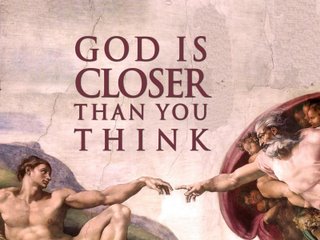
God Is Closer Than You Think #6 – What Is Sin?

I. INTRO

Romans 5:12-21 (emphasis added)

Therefore, just as through one man sin entered into the world, and death through sin, and so death spread to all men, because all sinned— 13 for until the Law sin was in the world, but sin is not imputed when there is no law. 14 Nevertheless death reigned from Adam until Moses, even over those who had not sinned in the likeness of the offense of Adam, who is a type of Him who was to come.

15 But the free gift is not like the transgression. For if by the transgression of the one the many died, much more did the grace of God and the gift by the grace of the one Man, Jesus Christ, abound to the many. 16 The gift is not like that which came through the one who sinned; for on the one hand the judgment arose from one transgression resulting in condemnation, but on the other hand the free gift arose from many transgressions resulting in justification. 17 For if by the transgression of the one, death reigned through the one, much more those who receive the abundance of grace and of the gift of righteousness will reign in life through the One, Jesus Christ.

18 So then as through one transgression there resulted condemnation to all men, even so through one act of righteousness there resulted justification of life to all men. 19 For as through the one man’s disobedience the many were made sinners, even so through the obedience of the One the many will be made righteous. 20 The Law came in so that the transgression would increase; but where sin increased, grace abounded all the more, 21 so that, as sin reigned in death, even so grace would reign through righteousness to eternal life through Jesus Christ our Lord.

Christmas is coming…Suppose I purchased a gift for you and wrapped it nicely in wrapping paper with a nice ribbon and and a beautiful bow…And I even filled out one of those tags — From: Gregg and To: You and I gave the beautifully wrapped gift to you.

Now, I assume you’d be trilled and excited – and suppose you took the gift home and you placed it in a very prominent place in your home.

And when people came over to your home – you would show them the gift”  “Look Pastor Gregg gave me a gift, he must really like me…”

What’s wrong with is picture?

Right, to have been given a gift and never open it and delight in its contents is pretty dumb…But that’s what some people do with their Bibles – they don’t take the time to learn and grow.

The Bible speaks of one main gift.  That gift we’ve come to call “The Gospel.”  And the essence of the gospel is found in Romans 5:8:

“But God demonstrates His own love toward us, in that while we were yet sinners, Christ died for us.”

The word “theology” means “the study of God.”  We are all theologians.  Some people are vocational theologians.  Some have more degrees than Fahrenheit and we read their books – but we are all theologians.  (The Bible is the only book in existence that necessitates increasing intimacy with the author to fully understand its contents.)

Now the essence of theology is learning how to unwrap the gift of the gospel that God has given us.

Theology matters.  Good theology matters.

That’s why we’re taking this time to cover some of the basic, or main doctrines of the Christian faith.

And more than that, I am praying for us that everyone one of us would capture, or obtain a higher view of God. Isaiah 40:9 – “Get yourself up on a high mountain…” (Isaiah 6 as well – Isaiah is undone by a view of the holiness of God…)

This is why I am asking all of us to be praying Ephesians 1:17-19:

“That the God of our Lord Jesus Christ, the Father of glory, may give to you a spirit of wisdom and of revelation in the knowledge of Him. 18 I pray that the eyes of your heart may be enlightened, so that you will know what is the hope of His calling, what are the riches of the glory of His inheritance in the saints, 19 and what is the surpassing greatness of His power toward us who believe. These are in accordance with the working of the strength of His might…”

The main gift the Bible speaks about is the Person of Jesus Christ.  And that because of His great love for you, He condescended to come and live a perfect sinless life and die a horrendous, torturous, murderous death that we might gain access to the very presence of God. The most holy place – the holy of holies.  Hebrews 10:19 says it this way:

“We [now] have confidence to enter the holy place by the blood of Jesus.”

What Jesus Christ has done, we call the gospel, or good news.

Many long-time churchgoers have thought of the gospel as the doorway through which we enter the Christian life.  What we’ve been trying to say for the last 18 months here at Southside (our theological “reboot”) is that the gospel is not just the doorway, it’s the whole house.

What we’ve been saying is that the whole Bible – from Genesis to Revelation, only has one main, or primary, storyline – and that is: redemption (found in the gospel). There are four sub-themes:

  • Our need for redemption
  • Our longing for redemption
  • The act of our redemption
  • And the calling to live in remembrance of our redemption…

Our passage this morning (Rom 5:12-21) contains three paragraphs.  Each of these paragraphs say basically the same thing.  Paul is very carefully repeating himself to make sure the people understand the gospel.  Also, we will see that each paragraph has little different twist to it.

The first paragraph (vs. 12-14) tells us that through one man (Adam) sin entered the world and death spread to all people – “even over those who had not sinned like Adam sinned.”  (Now you might be thinking, one guy blew it and we all pay the price? – We’ll get to that…)  This paragraph also tells us plainly that Adam is a “type” (or foreshadowing) of Jesus Christ.  In Jesus Christ we have a greater Adam – a perfectly obedient Adam.

The second paragraph (vs. 15-17) tells us the same thing – that by the “transgression” (or sin) of the one (Adam) God’s “judgement arose” (or was imposed) and humankind was condemned to die in their sinful condition.  Now the twist in this paragraph is that it clearly states what Jesus Christ has accomplished on behalf of the human race.  Notice that between verses15-17 the word “gift” is used five times.  The fifth use of the word gift identifies what’s in the package: “the gift of righteousness” (notice also that “abundance of grace” is included in the gift package).

The third paragraph (vs. 18-21), again tell us basically the same thing…one sin resulted in the condemnation of the whole human race (again, you might be thinking that is unfair), but here we see yet another facet of the gospel: …Through one act of righteousness there resulted justification of life to all [people].

19 For as through the one man’s disobedience the many were made sinners, even so through the obedience of the One the many will be made righteous. 20 [the purpose of the Law] The Law came in so that the transgression would increase [there are 613 commandments listed in the Hebrew Scriptures]; but where sin increased, grace abounded all the more, 21 so that, as sin reigned in death, even so grace would reign through [Christ’s gift of] righteousness to eternal life through Jesus Christ our Lord.

II. BODY

With the remainder of our time this morning I’d like to ask and answer 4 questions:

  1. What is sin?
  2. Where did sin come from?
  3. How does sin affect us?
  4. What has Jesus done?

1. What is sin?

Sin is any failure to conform to the moral law (or standard) of God in act, attitude [i.e., doing the right thing for the wrong reason], or nature.[1]

Sin is defined as a source of action, or an inward element producing [outward] acts.  This is what Rom 5:12 means when Paul states, “death spread to all people.”

Grudem describes sin as “the internal character that is the essence of who we are.”[2]

The reason God hates sin is that it directly contradicts everything God is.[3]

2. Where did sin came from?

Satan was the originator of sin. There are three passages that seem to describe  the heart of Satan – and the fallen angels who followed him:

Isaiah 14:12-15 “How you have fallen from heaven, O star of the morning, son of the dawn! You have been cut down to the earth, You who have weakened the nations! 13 “But you said in your heart, ‘I will ascend to heaven; I will raise my throne above the stars of God, And I will sit on the mount of assembly In the recesses of the north. 14 ‘I will ascend above the heights of the clouds; I will make myself like the Most High.’”

2 Peter 2:4 — “For if God did not spare angels when they sinned, but cast them into hell and committed them to pits of darkness, reserved for judgment.”

Jude 6 – “And angels who did not keep their own domain, but abandoned their proper abode, He has kept in eternal bonds under darkness for the judgment of the great day.”

Demons and demonic power are real.  Demons oppose and try to destroy every work of God.  However, they are limited by God’s control and have limited power (i.e., Job).

(A brief theology of spiritual warfare – don’t attempt to cast out, or fight, the darkness but turn on the Light – invite Jesus.  When Light dawns, darkness must flee.)

God has never sinned, nor did God create sin.  (Deut 32:4 – “His work is perfect…”). First it was Satan and the other fallen angels, then Adam sinned in the garden.  So, we can say that God allowed sin to enter the cosmos – and then the world, but He did not create sin.  We call this a paradox – a seeming contradiction – at first glance it appears to be contradictory, but in the end, it is not…

3. How does sin affects us?

Adam’s sin calls into question the very basis for all morality because it gave a different answer to the question, “What is right, and true, and good?”

Sin affects us in that it introduces lust into the human heart. The essential difference between lust and love is that lust is characterized by getting and love is characterized by giving.

Adam’s sin also gave a different answer to the question, “Who am I?”  They succumbed to the temptation to “be like God” (Gen 3:5) – attempting to put themselves in the place of God.  We are created creatures, not the Creator.

Romans 5 tells us we have what theologians describe as “inherited guilt.”  (This is a better term than “original sin”…)

God counted us guilty because of Adam’s sin (Rom 5:18-19).

When Adam sinned God thought of all who descended from Adam as sinners (Rom 5:8 – “While we were yet sinners, Christ died for us”).

All members of the human race were represented by Adam in the time of testing in the Garden (there’s Eden & Gethsemane).

Adam’s sin was imputed to us – God counted Adam’s guilt as belonging to us.

We have been represented by both Adam and Jesus.  If we don’t own-up to Adam’s sin, then we cannot receive Christ’s gift…

4. What has Jesus Christ done?

2 Cor 5:21 — He [God] made Him [Christ] who knew no sin to be sin on our behalf, so that we might become the righteousness of God in Him.

Here is the apostle Paul’s most succinct statement about the meaning of the cross. This could be the shortest, simplest verse among many in the Pauline epistles that help us to define and understand justification.

Its meaning can be summed up in a single principle: substitution.

It describes an exchange that took place through the atonement that Christ offered—our sin for Christ’s righteousness.

Jesus took the place of sinners so that they might stand in His place as a perfectly righteous person.

Please take notice the graphic language: He was made sin (that’s the very epitome of all that is despicable and odious),

So that we might be made righteousness (that’s everything that is good and pure and acceptable in God’s estimation).

This was the exchange: our sin for His righteousness.

Our sin was charged to His account and His righteousness was credited (imputed) to our account.

III. CONCLUSION

The effects of what Christ has done on those who believe…

  • When we do sin our legal standing before God remains unchanged (Rom 6:23; 8:1).
  • When we sin our fellowship with God is disrupted and hindered (Eph 4:30; Rev 3:19)
  • Westminster Confession of Faith Chap 11, Sec 5:

Although they never can fall from a state of justification, yet they may, by their sins, fall under God’s fatherly displeasure, and not have the light of His countenance restored unto them, until they humble themselves, confess their sins, beg pardon, and renew their faith and repentance.

  • There is a danger of some being “Unconverted Evangelicals”…

While a genuine Christian who sins does not lose his or her justification or adoption before God, there needs to be a clear warning that mere association with an evangelical church and outward conformity to “accepted” “Christian” patterns of behavior does not guarantee salvation.[4]

A consistent pattern of disobedience to Christ coupled with a lack of the elements of the fruit of the Holy Spirit is a warning signal that a person is probably not a true Christian inwardly.


[1] CB: 62.

[2] Christian Beliefs: 62.

[3] CB: 62.

[4] Grudem, Systematic Theology.

The Upside Down Life #4 – Blessed Are Those Who Mourn

I. Intro

Matthew 5:4; Hebrews 12:14-17

Today we will continue in our series The Upside Down Life, looking at the first 16 verses of Matt 5.  Today we will do some review work and unpack a few concepts in Matt 5 and then we will move into Heb 12.

(Review) Both Gene and Chris did an excellent job defining the words “blessed” (and what it means to be “poor.”)  Those notes are available here on the blog…

Review “poor in spirit”

  • Two weeks ago Chris said being “poor in spirit” is seeing our desperate need for God.
  • And then last week Gene said some pretty heavy things…
    • He said that as a church we are to be thankful that SBF has been privileged to go through all the struggles we have. God must be thrilled that there is somebody here who is broken and hungry for more… (Heavy words…a perfect message to begin our week-long fast as a church).
    • Gene went on to say SBF has lost pastors, people, programs, reputation, visible success, and a downward trend in the bank account…  [God comforts the afflicted – and afflicts the comfortable]
    • Your church is flat broke, you do not have it all together, you do not have it all figured out, and you cannot muscle, or buy, your way out of this one.
    • Blessed are those bankrupt in spirit, because they are entering the eternal reserves of the reservoirs of the God of true riches.
    • As a church we’ve been taken out to the woodshed…we’ve been spanked. Are you glad yet?  [I have a tremendous amount of respect for those of you who have stayed.]

Where do we go from “bankrupt in spirit”?  We mourn…

Today, we will look at 5:4 “Blessed are those who mourn for they will be comforted”

Once we see and acknowledge our deep spiritual poverty, it gives way to a deep and utter repentance.  (There’s a difference between repentance and “relentance.”)

There is a transforming grief, or repentance, that surfaces – not only for our own lives, but also for the injustice, greed, and suffering that grips our world.  (“Meanwhile we groan.”)

I’ve titled the message this morning, The Unlikely Route To Joy (borrowed from a chapter heading in Dan Allender’s’ book Wounded Heart).

  • In order to become rich, we need to acknowledge and own our poverty.
  • And in order to know “joy inexpressible and full of glory” (1 Pet 1:8) we must mourn.  This is the essence of living the upside down life (or counterintuitive).

I would like us to refer to mourning as a lifestyle of repentance.

For those of us who have read Pete Scazzero’s book, The Emotionally Healthy Church, we remember that the 3rd principle of the EHC is to live in brokenness and vulnerability.

This means living and leading out of our failure and pain, questions and struggles…[1]

This is how Paul led.  In 2 Cor 12 – Paul speaks of being caught-up to the third heaven – and then he shares about his thorn in the flesh“a messenger of Satan to torment me—to keep me from exalting myself! 8 Concerning this I implored the Lord three times that it might leave me. 9 And He has said to me, “My grace is sufficient for you, for power is perfected in weakness.”

Dr. Dan Allender – “An about face movement from denial and rebellion to truth and surrender… Repentance involves the response of humble hunger, bold movement, and wild celebration when faced with the reality of our fallen state and the grace of God…It is a shift in perspective as to where life is found…It is melting into the warm arms of God, received when it would be so understandable to be spurned.” (Wounded Heart)

**Mourning, or lifestyle repentance, is living WITH our failures, but not UNDER them.

II. BODY

With that said please turn to Hebrews 12…

If we had to boil down the book of Hebrews to a one-word description, the word would be perseverance. It is written specifically for a group of Christians who were about to quit.

Vs. 14-17 are full of some very specific admonitions to help us with engaging in a lifestyle of repentance…

14Pursue peace with all [people], and the sanctification without which no one will see [to perceive, to know, to become acquainted with by experience] the Lord.

15See to it [Looking diligently – episkapao] that no one comes short of the grace of God; that no root of bitterness springing up causes trouble, and by it many be defiled [stained];

16that there be no immoral or godless person like Esau, who sold his own birthright for a single meal.

17For you know that even afterwards, when he desired to inherit the blessing, he was rejected, for he found no place for repentance [NIV – he could bring about no change of mind], though he sought for it with tears.

This is a heavy passage: Esau found no place for repentance – even though he sought for it with tears.  (What are we supposed to do with this text?)

This passage offers us some insight into the reasons for Esau’s inability to come to a place of true repentance – and I believe it will help us to consider some possible issues that may be keeping us from fully knowing the privilege of repentance.

Listed in this passage are (at least) 6 admonitions that will move us toward embracing a lifestyle of true repentance…

1.  Pursue peace with all people.

Pursue: to run swiftly [NIV –  Make every effort]

Peace: from a primary verb eirēnē (harmonized relationships)

“If therefore you are presenting your offering at the altar, and there remember that your brother has something against you, leave your offering there before the altar, and go your way; first be reconciled to your brother, and then come and present your offering.”  Matthew 5:23,24 (NAS)

Roms 12:18 – “If possible, so far as it depends on you, be at peace with all men.”

(In a few weeks we’ll be talking about Mat 5:9 – Peacemaker vs. peacekeeper.)

I once flew from Reno, NV to Tulsa, OK and then rented a car and drove 3 hours just to ask someone’s forgiveness after reading this passage and taking it to heart.

2.  Pursue sanctification.

Sanctification: hallowed [NIV – Make every effort… to be holy] The Lord’s Prayer (Mat 6) hagiasmos (Heb 12 – noun), hagiazō (Mat 6 – verb)

We have positional sanctification and progressive sanctification

The Gospel Is for Believers.  We Christians need to hear the gospel all of our lives because it is the gospel that continues to remind us that our day-to-day acceptance with the Father is not based on what we do for God but on remembering what Christ did for us.  (That is what communion is all about…)

**Esau was rejected by God because he steadfastly refused to serve the purpose of God and instead served his lust for the immediate and the tangible.

3.  Pursue grace.

“See to it that no one comes short of the grace of God.” (v.15)

Grace: All that God is lavishly poured into you. If God has acted lavishly toward you, could you not be lavish to others?  Or yourself??

Jerry Bridges, in his masterpiece says, “The idea portrayed here is analogous to the ocean waves crashing upon the beach. One wave has hardly disappeared before another arrives.[2]

Pursue the truth in love (Eph 4:15).

“See to it that…no root of bitterness springing up causes trouble, and by it many be defiled.”  (v.15)

Notice the word, “many.”

Like a small root that grows into a great tree, bitterness springs up in our hearts and overshadows even our deepest relationships.

A “bitter root” comes when we allow disappointment or expectations to grow into resentment, or when we nurse grudges over past hurts.

Eph 4:15: But speaking the truth in love we are to grow up…” In my view this passage speaks to the epitome of what it means to be spiritually and emotionally healthy

5.  Pursue purity.

“See to it that…there be no immoral…person like Esau.” (v.16)

pornos – male prostitute.  Again, Esau steadfastly refused to humble himself to serve the purpose of God.  Instead he served his lust for the immediate and the tangible.

6.  Pursue God.

Instead of being godless (or, “unhallowed, profane” – Vine’s]

Esau found no place for repentance (metanoia), though he sought for it with tears.

We usually associate tears with repentance.  And it’s true that tears very often accompany true repentance.  But here we have the instance of Esau crying for repentance but not finding it.  Why?  Esau was in “relentance,” not true repentance.

III.CONCLUSION

“Repent therefore and return, that your sins may be wiped away, in order that times of refreshing may come from the presence of the Lord.”   Acts 3:19 (NAS)

Nothing will cause a renewed soul to hate sin so much as a realization of God’s grace; nothing will move him to mourn so genuinely over his sins as a sense of Christ’s dying love. It is that which breaks his heart: the realization that there is so much in him that is opposed to Christ. But a life of holiness is a life of faith (the heart turning daily to Christ), and the fruits of faith are genuine repentance, true humility, praising God for His infinite patience and mercy, pantings after conformity to Christ.  —The Doctrine of Sanctification by A.W. Pink.


[1] EHC: 110.

[2] Jerry Bridges, Transforming Grace.