The Person and Ministry of the Holy Spirit

I. INTRO

Today we are studying the Person and ministry of the Holy Spirit.  We want to establish an ongoing theological[1] dialogue (vs. discussion).

Picture a continuum:

  • On one end of the continuum is what John MacArthur has called, “Charismatic Chaos.”
  • On the other end of the continuum is 2 Tim 3:5 – holding to a form of godliness, although they have denied its power.”

We don’t want to base our theology and practice solely on what we’re against, but what we are for – what we can embrace theologically.

My personal core values (unapologetically): As an active intentional follower of Christ, as a husband, as a father, as a grandfather, as a pastor, as a friend/mentor/coach:

  1. Theological – The study (and subsequent worship) of God is our highest calling.
  2. Relational – We are to love God, one another, and “seek the welfare of our city.”
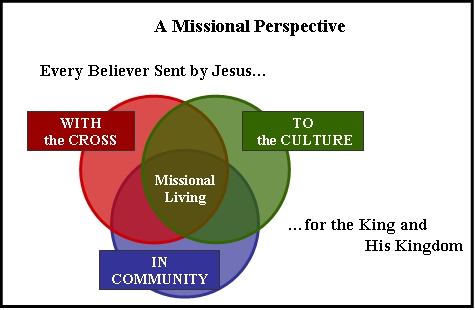
  3. Missional – We serve a missionary God and we are called to be on mission with Him.

What will be our guidelines for theological engagement at SBF?

We want to work with what the Bible clearly and plainly teaches (today we will, eventually, consider the biblical phrase: baptism of the Holy Spirit).

First, I would like to define some terms:

Three primary (and overlapping) theological camps in U.S. Protestantism:[2] Fundamentalism (“orthodoxy in confrontation with modernity” -James Davison Hunter), Evangelicalism ( Biblicism, Christocentrism, Crucicentrism, Conversionism, Activism),[3] and Liberalism (individualism, ecumenism, empericalism, skepticism, anthropological optimism, rationalism, ethicalism, social idealism, immanencism). Within Evangelicalism there is also three main camps (think of them as state boarders vs. national boarders…):

1.  Dispensationalism  –

Sees God as structuring His relationship with humankind through several stages of revelation. Each dispensation amounts to a “test” of humankind to be faithful to the particular revelation given at the time.

Dispe1nsationalism holds to a literal meaning behind all the figurative passages.

As a result of this literal interpretation of Scripture, dispensationalism holds to a distinction between Israel (even believing Israel) and the church. On this view, the promises made to Israel in the OT were not intended as prophecies about what God would do spiritually for the church, but will literally be fulfilled by Israel itself (largely in the millennium). For example, the promise of the land…

2.  Covenant Theology

Covenant theology believes that God has structured His relationship with humanity by covenants rather than dispensations. Old Covenants (OT) and the New Covenant (NT). These covenants are not new tests, but are rather differing administrations of the single, overarching covenant of grace.

Adam sinned and broke the initial, or old, covenant, and thereby subjected himself and all his descendants to the penalty for covenant-breaking — which is condemnation.

God in His mercy instituted the “covenant of grace,” through Jesus Christ, which is the promise of redemption and eternal life to those who would believe in the (coming) redeemer.

3.  New Covenant Theology

The essential difference between New Covenant Theology (NCT) and Covenant Theology (CT) concerns the Mosaic Law. CT holds that the Mosaic Law can be divided into three groups of laws: a) civil law, b) ceremonial law, and c) moral law. According to CT the ceremonial law and civil law are no longer in force because they were fulfilled in Jesus, but the moral law continues.

NCT argues that we cannot divide the law up in that way – so, the whole Mosaic Law is canceled by the coming of Christ (Christ Event) and is no longer binding on the believer.  The Mosaic Law has been replaced by the law of Christ.  Love God and love your neighbor as your self.  Proponents of NCT might say something like, “Love God with all your heart, mind, and soul – and do whatever you want…”  They may also quote 1 Cor 6:12: All things are lawful for me, but not all things are profitable.”

Do we have to choose one — Dispensational, Covenant, or New Covenant?? No, it’s just good to be aware of these distinctions as we build a theological framework.  Can we achieve doctrinal certainty?  Not completely on this side of eternity.  God and theology are much deeper and more mysterious that we could ever hope to grasp.

Having said that, the Five Solas are five Latin phrases (or slogans) that emerged from the Protestant Reformation that are intended to summarize the Reformers’ basic theological principles in contrast to certain teachings of the Roman Catholic Church of the day. “Sola” is Latin meaning “alone” or “only” and the corresponding phrases are:

  • Sola Fide, by faith alone.
  • Sola Scriptura, by Scripture alone.
  • Solus Christus, through Christ alone.
  • Sola Gratia, by grace alone.
  • Soli Deo Gloria, glory to God alone.

These solas will hold us in good stead as we refurbish our theological base during this transition season.  Can we move toward doctrinal clarity?  Yes!

4.  Eschatology — Greek éschato: last + -logy. 

We do not need to get caught-up in the rapture debate.

Mat 24:44 – “For this reason you also must be ready; for the Son of Man is coming at an hour when you do not think He will.”

As a church we will teach people to endure tribulation – and if Jesus come early, it won’t matter.

We will encourage our congregation to read Revelation devotionally.  Encounter the risen Christ in Rev 1…

5.  Holy Spirit Empowered Gifts

Cessationism – The spiritual gifts, primarily those listed in 1 Cor 12:4-11, have ceased.  The key verse is 1 Cor 13:10 —  but when the perfect comes, the partial will be done away.”

1 Cor 14:1: “Pursue love, yet desire earnestly spiritual gifts, but especially that you may prophesy.”

James 5:14-15: “Is anyone among you sick? Then he must call for the elders of the church and they are to pray over him, anointing him with oil in the name of the Lord; 15 and the prayer offered in faith will restore the one who is sick, and the Lord will raise him up, and if he has committed sins, they will be forgiven him.”

While fear of a loss of control or emotionalism my drive some cessationists, their overwhelming desire is to protect the unique authority of the Bible and to protect the closed canon and not to have anything compete with Scripture in authority in our lives.

Continuationism – All the gifts are for today.  Consider  the context: 1 Cor 11, 12, 13, & 14…

II.  BODY

The Person of the Holy Spirit

“The Trinity: God eternally exists as three persons, Father, Son, and Holy Spirit, and each person is fully God, and there is one God.  -Wayne Grudem

“In no other subject is error more dangerous, or inquiry more laborious, or the discovery of truth more profitable.”  –Augustine, On The Trinity[4]

C.S. Lewis described the Trinity as a “dance” saying, “God is not a static thing…but a dynamic, pulsating activity, a life, almost…a kind of dance.”[5]

Tim Keller elaborates on this concept in the Reason for God in Chapter 14 – The Dance of God.[6]

The early leaders of the Greek NT church had a word for this – perichoresis.  Notice the root of our word ‘choreography’ within it. It means literally to “dance or flow around.”

The Father…Son…and Holy Spirit glorify each other…At the center of the universe, self-giving love, joy, delight – perfect fellowship is the dynamic currency of the Trinitarian life of God. The persons (not personalities) within the God-Head exalt, commune with, and defer to one another…

When early Greek Christians spoke of perichoresis in God they meant that each divine person harbors the others at the center of His being. In constant movement of overture and acceptance each person envelops and encircles the others.

When Jesus died for you He was, and is, inviting you into the dance…when we discern Jesus moving toward us and encircling us with infinite, self-giving love, we are invited to put our lives on a whole new foundation…

Since the Holy Spirit is the third person of the Trinity and is true and eternal God, then we must invoke, worship, and serve the blessed Holy Spirit, even as we do God the Father and God the Son.

Jesus taught us to do this in Mat 28:19 (The Great Commission): Go therefore and make disciples of all the nations, baptizing them in the name of the Father and the Son and the Holy Spirit.”

Now let’s consider the phrase “baptized with the Holy Spirit.”

The Holy Spirit is to be more than a doctrine.  The Holy Spirit is to be experienced.

Gordon Fee wrote, God’s Empowering Presence: The Holy Spirit in the Letters of Paul.  It’s 992 pages; Fee highlights, analyzes, exegetes, and summarizes every mention of the Holy Spirit in Paul’s writings. Pneumatology (the study of the Holy Spirit).

His findings can be reduced to three words:  “God’s empowering presence.”

Fee concludes that, for Paul, the Holy Spirit was more real and evident than we can possibly imagine in our day and age, the vital and experienced presence of the Holy Spirit was an assumed reality.

How do we experience the Holy Spirit?  Gal 5 is about “walking in the Holy Spirit.”  Paul says in the first 12 verses that they have opted for legalism (or moralism).

Then in verses 13-14 Paul lays it out: “…but through love serve one another. 14 For the whole Law is fulfilled in one word, in the statement, “YOU SHALL LOVE YOUR NEIGHBOR AS YOURSELF.”  Paul takes them back to the Great Commandment: Love God with your whole heart, soul, and mind – and love your neighbor as yourself.”

And then here is the evidence of the Holy Spirit…Paul calls it “fruit.”  “But the fruit of the Spirit is love, joy, peace, patience, kindness, goodness, faithfulness, 23 gentleness, self-control” (Gal 5:22-23).

The baptism of the Holy Spirit means to be immersed in the Holy Spirit.  No power, no Spirit.  (Holy Spirit power is different than will-power.)

Four Reasons Why It Is Appropriate To Expect To Experience the Holy Spirit Baptism:[7]

1.  Terminology — The very term “baptized in the Holy Spirit” implies an immersion in the life of the Spirit. (Refer to hand out…)

2.  Power, Boldness, and Confidence

Jesus says in Acts 1:5 and 8 that baptism in the Holy Spirit means, “You shall receive power…and you shall be my witnesses.”

This is an experience of holy boldness, confidence, and victory over sin.

A Christian without power is a Christian who needs a baptism in the Holy Spirit.

Eph 5:18 – we are to be continually and regularly “filled with the Holy Spirit.”  The verb filled has an imperative mood meaning it is a command and addresses the volition and the will.  Why?  Because we leak…

There is no reason to think that for Paul the baptism in the Holy Spirit was limited to the initial moment of conversion. And for sure in the book of Acts the baptism in the Holy Spirit is more than a subconscious divine act of regeneration—it certainly seems to be a conscious experience of power (Acts 1:8).

3.  The Testimony of Acts — In Acts the Holy Spirit is not a silent influence but an experienced power. Believers experienced the baptism in the Holy Spirit. They didn’t just believe it happened because an apostle said so.

4.  It Is The Result of Faith

The fourth reason we should stress the experience of baptism in the Holy Spirit is that in Acts the apostles teach that it is a result of faith.

In Acts 11:15–17 Peter reports how the Holy Spirit fell on Cornelius just as on the disciples at Pentecost. “As I began to speak, the Holy Spirit fell on them just as on us at the beginning. I remembered the word of the Lord, how he said, ‘John baptized in water, but you shall be baptized in the Holy Spirit.’ If then God gave the same gift to them as he gave to us, when we believed in the Lord Jesus Christ, who was I that I should withstand God?” 

Notice that the gift of the Spirit, or baptism in the Holy Spirit, is preceded by faith. The NASB correctly says in v. 17 that God gave the Holy Spirit after they believed.

How to Receive the Gift of the Holy Spirit.[8]  Peter’s instructions for how to receive the gift of the Holy Spirit in Acts 2:38–41…

1.  The Word of God Must Be Heard.  Peter has preached that in God’s plan Jesus was crucified, raised, and exalted as Lord over all the universe and that forgiveness of sin and spiritual renewal can be had from Him. God’s Word has been heard.

2.  God Must Call People To Himself.

The sovereign God must call men and women to himself, or we will never come. Verse 39: “The promise is to you and to your children and to all that are far off, everyone to whom the Lord our God calls to him.”

No one comes to faith in Christ unless the Father draws him (John 6:44, 65). The proclaimed gospel is heard with conviction and power only when the effectual call of God lays hold on the hearers.

3.  We Must Receive the Word.

Third, we must “receive the word.” Verse 41: “So those who received his word were baptized.”

Receiving the Word means that it becomes part of us so that we trust the Christ it presents.

  • We trust His provision for your forgiveness.
  • We trust His path for your life.
  • We trust His power to help you obey.
  • And we trust His promises for your future.

Radical commitment to Christ always involves repentance—a turning away from your own self-wrought provisions, paths, powers, and promises. And when we really turn to Christ for new paths, power, we open yourself to the Holy Spirit, because it is by His Spirit that Christ guides and empowers.

4.  We Express Our Faith Through Water Baptism.

Finally, we give an open confession and expression of faith in the act of water baptism (full immersion – like with the Holy Spirit, do you want to be sprinkled or immersed?) in obedience to Jesus Christ.

Baptism was the universal experience of all Christians in the New Testament. There were no unbaptized Christians after Pentecost. Christ had commanded it (Matthew 28:18f.) and the church practiced it. So we do today.

III. CONCLUSION

Finally, let’s affirm and critique the Charismatic and Pentecostal Movements:

Affirmation:

The most positive thing about the moderate Charismatic/Pentecostal teaching is that it is theologically appropriate to stress the experiential reality of receiving the Holy Spirit.

When we read the NT honestly, we can’t help but notice a BIG difference from a lot of our contemporary Christian experience.

For them the Holy Spirit was a fact and reality of experience.  For many Christians today it is only a fact of doctrine.  The Charismatic renewal has something to teach us here.

Critique:

That the unity of their fellowship is too often based around their experience – not theology.

Whether Paul sought to bring encouragement or correction to the churches in the NT, he wrote theological essays… Paul generally spends the first half of his letters laying out theology and the second half he describes how to implement, or engage, the theology.

When Paul wanted to go to the church in Rome and develop them into a missional sending church (for his intention to travel to Spain), what did he write?  Theology.  Experience is the fruit of biblical theology, not the goal.  Our impatience tends to confuse fruit for goals (e.g., love, joy, peace, etc. cannot be pursued on their own accord, they are the “fruit” of the settled presence of Christ in our hearts/lives).

This brings me to my second critique:  The gifts of the Holy Spirit were given for the purpose of mission and not personal gratification.  One good description of the kingdom of God is:  speaking the words of Jesus and doing the works of Jesus.  Words and works help to make the invisible kingdom visible.

We serve a missionary God:

The Father sent the Son, the Son sent the Holy Spirit, and the Holy Spirit sends you.

The ministry of the Holy Spirit is, basically, 4-fold: He 1) Saves, 2) Seals, 3) Sanctifies, and 4) Sends.

My prayer for us as a community of believers: “That we would experience Jesus Christ, the sovereign, risen, living, Lord of the universe; and that He would continue to become THE source and content of our real hope and joy.”

This coming Sunday:  Beatitudes.  Read Matthew 5:1-12.  See you then!!


[1] Theology means the study of God.

[2] Protestant Reformation – Martin Luther is regarded as the primary catalyst when he nailed his Ninety-Five Theses to the church door at Wittenberg for the in 1517.  (While Pope Leo was corrupt, the upshot of Luther’s theses was that followers of Christ are saved by grace alone, through faith alone.)

[3] Triperspectivalism (cut-and-paste this word and search for it on this blog and you will find an article).

[4] Book 1.3.5.

[5] Mere Christianity: 136.

[6] Pgs 214-221.

[7] Adapted from John Piper.

[8] Also adapted from John Piper.

Believing the Gospel Is the Work of Sanctification

by Tullian Tchividjian

When it comes to measuring spiritual growth and progress, our natural instincts revolve almost exclusively around behavioral improvement.

“Only the ‘toxin’ of God’s grace can reverse the way we typically think about Christian growth.”

For example, when we read passages like Colossians 3:5–17, where Paul exhorts the Colossian church to “put on the new self” he uses many behavioral examples: put to death “sexual immorality, impurity, passion, evil desire, and covetousness, which is idolatry.” He goes on and exhorts them to put away “anger, wrath, malice, slander” and so on. In v.12 he switches gears and lists a whole lot of things for us to put on: “kindness, humility, meekness, and patience,” just to name a few.

But what’s at the root of this good and bad fruit? What produces both the bad and good behavior Paul addresses here?

A Matter of Belief

Every temptation to sin is a temptation, in the moment, to disbelieve the gospel–the temptation to secure for ourselves in that moment something we think we need in order to be happy, something we don’t yet have: meaning freedom, validation, and so on. Bad behavior happens when we fail to believe that everything we need, in Christ we already have; it happens when we fail to believe in the rich provisional resources that are already ours in the gospel. Conversely, good behavior happens when we daily rest in and receive Christ’s “It is finished” into new and deeper parts of our being every day.

Colossians 3:5–17 provides an illustration of what takes place on the outside when something deeper happens (or doesn’t happen) on the inside.

Going Backward for Progress

In Philippians 2:12, when Paul tells us to “Work out your own salvation with fear and trembling,” he’s making it clear we’ve got work to do—but what exactly is the work? Get better? Try harder? Clean up your act? Pray more? Get more involved in church? Read the Bible longer? Clearly, it’s not a matter of whether or not effort is needed. The real issue is: Where are we focusing our efforts? Are we working hard to perform? Or are we working hard to rest in Christ’s performance for us?

He goes on to explain: “For it is God who works in you, both to will and to work for his good pleasure” (2:13). God works his work in you—which is the work already accomplished by Christ. Our hard work, therefore, means coming to a greater understanding of his work. In his Lectures on Romans, Martin Luther wrote, “To progress is always to begin again.” Real spiritual progress, in other words, requires a daily going backwards.

The Work of Belief

Christian growth does not happen by working hard to get something you don’t have. Rather, Christian growth happens by working hard to daily swim in the reality of what you do have. Believing again and again the gospel of God’s free, justifying grace every day is the hard work we’re called to.

This means that real change happens only as we continuously rediscover the gospel. The progress of the Christian life is “not our movement toward the goal; it’s the movement of the goal on us.”

Sanctification involves God’s attack on our unbelief—our self-centered refusal to believe that God’s approval of us in Christ is full and final. It happens as we daily receive and rest in our unconditional justification. As G. C. Berkouwer said, “The heart of sanctification is the life which feeds on justification.”

Growth in Grace

2 Peter 3:18 succinctly describes growth by saying, “But grow in the grace and knowledge of our Lord and Savior Jesus Christ.” Growth always happens “in grace.” The truest measure of our growth is not our behavior, it’s our grasp of grace — a grasp which involves coming to deeper and deeper terms with the unconditionality of God’s love.

It’s also growth in “the knowledge of our Lord and Savior Jesus Christ.” This doesn’t simply mean learning facts about Jesus. It means growing in our love for Christ because of what he has already earned and secured for us and then living in a more vital awareness of that grace. Our main problem in the Christian life is not that we don’t try hard enough to be good, but that we haven’t believed the gospel and received its finished reality into all parts of our life.

Take the Focus Away from You

Gerhard Forde insightfully (and transparently) calls into question the ways in which we typically think about sanctification and spiritual progress when he writes:

Am I making progress? If I am really honest, it seems to me that the question is odd, even a little ridiculous. As I get older and death draws nearer, I don’t seem to be getting better. I get a little more impatient, a little more anxious about having perhaps missed what this life has to offer, a little slower, harder to move, a little more sedentary and set in my ways. Am I making progress? Well, maybe it seems as though I sin less, but that may only be because I’m getting tired! It’s just too hard to keep indulging the lusts of youth. Is that sanctification? I wouldn’t think so! One should not, I expect, mistake encroaching senility for sanctification! But can it be, perhaps, that it is precisely the unconditional gift of grace that helps me to see and admit all that? I hope so. The grace of God should lead us to see the truth about ourselves, and to gain a certain lucidity, a certain humor, a certain down-to-earthness.

Remember, the Apostle Paul referred to himself as the chief of sinners at the end of his life. It was his ability to freely admit that which demonstrated his spiritual maturity—he had nothing to prove or protect because it wasn’t about him!

“Our main problem in the Christian life is not that we don’t try hard enough to be good, but that we haven’t believed the gospel and received its finished reality into all parts of our life.”

The more I focus on my need to get better, the worse I actually get. I become neurotic and self-absorbed. Preoccupation with my performance over Christ’s performance for me makes me increasingly self-centered and morbidly introspective. After all, Peter only began to sink when he took his eyes off Jesus and focused on how he was doing. As my friend Rod Rosenbladt wrote to me recently, “Anytime our natural incurvitas (fixture on self) is rattled, shaken, turned from itself to that man’s blood, to that man’s cross, then the devil take the hindmost!”

It Truly Is Finished

By all means work! But the hard work is not what you think it is; the hard work is washing your hands of you and resting in Christ’s finished work for you. Progress in obedience happens when our hearts realize God’s love for us does not depend on our progress in obedience.

This is a partial repost from Tullian Tchividjian’s blog Rethinking Progress. To read it in full click here.

The Great Commandment Pt 2 – Matthew 22:39

Love Your Neighbor as Yourself

I.   INTRO/REVIEW

A.   We have been looking at what the Bible refers to as the Great Commandment, which is for us, important preliminary vision passage because it synthesizes so much of the Scripture into two VERY straightforward commands.

B.    (It is quite important for us to understand that when the NT authors declare God’s commands for us to be holy and to love our neighbor, etc. These commands are not there to show our ability, but to reveal our inability – and to remind us of our continual dependence on the grace of God to do in us and through us what we cannot do on our own.)

C.    Matthew 22:33-40 (NAS): “Teacher, which is the great commandment in the Law?” And He said to him, “ ‘YOU SHALL LOVE THE LORD YOUR GOD WITH ALL YOUR HEART, AND WITH ALL YOUR SOUL, AND WITH ALL YOUR MIND.’ This is the great and foremost commandment. The second is like it, ‘YOU SHALL LOVE YOUR NEIGHBOR AS YOURSELF.’ On these two commandments depend the whole Law and the Prophets.” (Notice the order – and notice that Jesus was asked to answer with one commandment, but He gave them two…)

D.   We have multiplied this passage into two messages…

  1. Last week: “You shall love the Lord your God with all your heart, and with all your soul, and with all your mind – this is the great and foremost commandment.” (Click here to read that post.)
  2. Review of last week: How do we love God?
  • Come alive to God.
  • Find your true joy and delight in the message of the Gospel – and the Person of Jesus Christ.
  •  Come to grips with the idolatry that grips ALL of our lives.

(i)    Idolatry is not just a failure to obey God; it is setting our heart and affections on something, or someone other than God.

(ii)  This cannot be remedied by repenting that you have an idol – or by engaging willpower to try and live differently.

(iii) If we uproot our idols (through repentance) but fail to plant the love of God (or, delight in God) in its place, the idol will grow back – like mowing a weed.  Repentance and rejoicing must go together.

E.  This week: (v. 39)“You shall love your neighbor as yourself.”  And here’s the questions we’re asking as we unpack these verses…

  • What is God’s heart/vision for Southside Bible Fellowship?
  • And for you?

II.  BODY

A.   The life-changing context of this commandment:

 ‘YOU SHALL LOVE YOUR NEIGHBOR AS YOURSELF.’ 40 On these two commandments depend the whole Law and the Prophets.”

  1. The overwhelming commandment to “neighbor love.”  Who is my neighbor?  This passage retold in Luke 10 – and is followed by Jesus unpacking the Good Samaritan and Mary and Martha.
  2. John Piper: This is a staggering commandment. If this is what it means, then something unbelievably powerful and reconstructing will have to happen in our souls.  It seems to demand that I tear the skin off my body and wrap it around another person so that I feel that I am that other person; and all the longings that I have for my own safety, health, success, and happiness I now feel for that other person as though s/he were me.

B.    Loving God is invisible. It is an internal passion of the soul. But it comes to expression when we love others.  (Similar to James 2:18: “I will show you my faith by my works.”)

  1. Idolatry and pride are at the root of our sinfulness.  Pride is the desire for our own happiness apart from God and apart from the happiness of others in God.
  2. Pride is the pursuit of happiness anywhere but in the glory of God and the good of other people.

C.   So, Jesus says, “Love your neighbor as yourself.”  How do we get there from here? Four points (adapted from John Piper):

1.     Understand that our self-love is a creation of God.

  • Jesus says in effect: I start with your inborn, deep, defining human trait—your love for yourself.  It’s a given.  Jesus is saying, I don’t command it — I assume it.
  • We all have a powerful instinct of self-preservation and self-fulfillment. We all want to be happy, to live and love with satisfaction, we want enough food, we want enough clothes, we want a place to live, we want protection from violence, we want meaningful or important work, we want sincere and meaningful friendships, and we want our lives to count!  All this is self-love.
  • Self-love is the deep longing to diminish pain and to increase joy. That’s what Jesus starts with when he says, “as yourself.”
  • This is common to all people. We don’t have to learn it, it comes with our humanity. Our Father created it. These longings are natural…

2.     Make your self-seeking the measure of your self-giving.

  • When Jesus says, “Love your neighbor as yourself,” the word “as” is very radical: That’s a BIG word: It means: If you are energetic in pursing your own happiness, be AS energetic in pursuing the happiness of your neighbor. If you are creative in pursuing your own happiness, be AS creative in pursuing the happiness of your neighbor. If you are persevering in pursuing your own happiness, be AS persevering in pursuing the happiness of your neighbor.
  • In other words, Jesus is not just saying: seek for your neighbor the same things you seek for yourself, but also seek them in the same way—with the same zeal, energy, creativity, and perseverance. The same life and death commitment when you are in danger.  Make your own self-seeking the measure of your self-giving.
  • Here’s where this gets difficult: We feel that if we take Jesus seriously, we will not just have to love others “as we love ourselves,” but we will have to love others “instead of loving ourselves.”
  • See the handout: “Developing Practical Skills to Love Well”… (This handout should be in the foyer at SBF.)

3.     It’s the first commandment that makes the second doable.

  • This is why the first commandment is the first commandment.
  • If we try to accomplish the 2nd Commandment without FULLY engaging the 1st it will become the suicide of our own happiness.
  • The 1st commandment is the basis of the 2nd commandment. The 2nd  commandment is a visible expression of the 1st commandment.

4.     Make God the focus of your self-seeking.

  • Take all your self-love—all your longing for joy, hope, love, security, fulfillment, and significance—take all that, and take it to God, until He satisfies your heart, soul, and mind.
  • What you will find is that this is not a canceling out of self-love. This is a fulfillment and transformation of self-love. Self-love is the desire for life and satisfaction rather than frustration and death.
  • God says, “Come to me, and I will give you fullness of joy. I will satisfy your heart, soul, and mind with My glory. This is the first and great commandment…
  • And with that great discovery—that God is the never-ending fountain of our joy—the way we love others will be forever changed.
  • Our quest for joy and happiness becomes a life-long quest for God. And He can be be found [only] in the Person Jesus Christ.  (I wish “all paths” led to God, but they do not…)

III. CONCLUSION

A.   As we bring this to a close, we can say that our ultimate GOAL is to love God with all of our heart, soul, and strength – and the FRUIT is that we will splash His love onto people.

B.    God’s word for us this morning is that we embrace these commandments with tremendous focus and authenticity during this season of learning to express the redemptive love of God in and through SBF.

C.    Let these verses deeply touch and challenge your soul – and remake your priorities.

D.   Get alone with God and deal with Him about these things. Let’s not assume that we fully know what love is – or that love has the proper centrality in our lives.

E.    God is saying:  All of Scripture, all God’s plans for history, hang on these two great purposes: that 1) he be loved with all our heart, and 2) that we love each other as we love ourselves.

F.    A closing verse:  Gal 6:10 – “So then, while we have opportunity, let us do good to all people, and especially to those who are of the household of the faith.”

“Seeking the welfare” of the city of Manchester…

Below is an excellent quote from Howard Snyder that helps us to distinguish between church and kingdom.  We have started to learn the difference at Southside…

Basically kingdom ministry is the goal and and church becomes the fruit, or receptacle, of kingdom ministry.  What is kingdom ministry?  One of the most basic of definitions is: speaking the words and doing the works of Jesus.  Jesus spoke truth at all times, and His words emanated from a heart filled with of deep compassion, empathy, and unconditional love.  The works of Jesus include loving, serving, feeding, prayer for healing, washing feet, speaking the truth in love, a sensitivity to the heart of the Father, etc.  Someone has humorously stated that, “Jesus came to comfort the afflicted and afflict the comfortable.”

Here’s what Paul told the Corinthians:

“For what have I to do with judging outsiders? Do you not judge those who are within the church?”  1 Corinthians 5:12

Our goal and motivation with outsiders is to speak and act in such a way as to point them to a loving Creator God who is alive and available for an intimate relationship.  (Who wouldn’t want that!?!?)  Notice there is judgement for those of us inside the church.  The Greek word is krinō and it basically means “to call into question” (see also Acts 23:6, 24:21).  There is accountability for our actions as members of God’s Church.

Kingdom is a gospel word — along with grace and cross.  It’s when we hold these three gospel words in appropriate tension that we engage the appropriate biblical expression of the Gospel (e.g. kingdom and grace without the cross will lead us into pluralistic liberalism, kingdom and cross without grace will lead us into moralistic legalism).

With all this in mind consider Snyder’s words:

“The church gets in trouble whenever it thinks it is in the church business rather than the kingdom business. In the church business, people are concerned with church activities, religious behavior in spiritual things. In the kingdom business, people are concerned with kingdom activities, all human behavior and everything God has made, visible and invisible. Kingdom people see human affairs as saturated with scriptural meaning and kingdom significance. Kingdom people seek first the kingdom of God and its justice; church people often put church work above concerns of justice, mercy and truth. Church people think about how to get people into the church; Kingdom people think about how to get the church into the world. Church people worry that the world might change the church; Kingdom people work to see the church change the world… If the church has one great need, it is this: to be set free for the kingdom of God, to be liberated from itself as it has become in order to be itself as God intends.”[1]

Southside: Lets “go ye…” to Manchester.

If you haven’t already, grab one of those Missional Prayer Guides in the foyer and fill it out (it’s pretty self-explanatory), place it in your Bible, and pull it out a few times a week to pray acquaintances, friends, and family across the page (right to left).  And don’t forget to use a pencil…


[1] Howard A. Snyder. Liberating the Church, The Ecology of Church and Kingdom, Inter-Varsity Press 1983:11.