The Discomforting Comfort of Turning to God

Hebrews 12:14-17

14Pursue peace with all [people], and the sanctification without which no one will see the Lord.

15See to it that no one comes short of the grace of God; that no root of bitterness springing up causes trouble, and by it many be defiled;

16that there be no immoral or godless person like Esau, who sold his own birthright for a single meal.

17For you know that even afterwards, when he desired to inherit the blessing, he was rejected, for he found no place for repentance, though he sought for it with tears.

Hindrances to True Repentance
Jacob and Esau were the twin sons of Isaac and Rebekah (see Genesis 25:19-34), as well as grandsons of Abraham and Sarah. Esau sold his birthright to his younger brother Jacob for a meal. (The birthright meant eventual headship of the family and a double share of the inheritance.) He also sought for repentance with tears but he could not (allow himself?) get there and was rejected by God. Why? I believe that the writer of the letter to the Hebrews displays deep prophetic insight into Esau’s psyche and identifies specific hindrances to Esau’s repentance. Repentance, is sometimes a last ditch effort to comply with our perception of God’s standards in order to avoid God’s wrath and punishment. However, the above description would more accurately characterize relentance and not repentance. In reality, repentance is one of the grand privileges of the Christian faith. So what is true biblical repentance?

Repentance Defined: not only a turning away from sin, but also a turning to God
In his book The Wounded Heart, Dan Allender records some penetrating yet refreshing definitions: “Repentance is an about-face movement from denial and rebellion to truth and surrender…repentance involves the response of humble hunger, bold movement, and wild celebration when faced with the reality of our fallen state and the grace of God…It is a shift in perspective as to where life is found…It is melting into the warm arms of God, received when it would be so understandable to be spurned.”

These are recorded for us as six specific admonitions:
1. Pursue peace with all people (v.14) – [To run swiftly in order to catch] [Peace — the harmonized relationships between God and humankind, the sense of rest and contentment. The corresponding Heb. word shalom primarily signifies “wholeness:”] Roms 12:18 – If possible, so far as it depends on you, be at peace with all [people].

2. Pursue sanctification (v.14) – [Sanctification is to set apart our heart’s and life for God’s purpose.] Esau was rejected by God because he steadfastly refused to serve the purpose of God and instead served his lust for the immediate and the tangible.

3. See to it that no one comes short of the grace of God (v.15) – [Exercising oversight] [The merciful kindness by which God; exerting holy influence upon souls; turns them to Christ; keeps, strengthens, increases them in Christian faith, knowledge, affection; and kindles them to the exercise of the Christian virtues] We are to deposit the grace of God into everybody’s account! Titus 2:11,12 asserts, “For the grace of God has appeared, bringing salvation to all [people], instructing us to deny ungodliness and worldly desires and to live sensibly, righteously and godly in the present age.”

4. See to it that no root of bitterness springs up – causing trouble and defiling many (v.15) – [Metaphor for extreme wickedness] [To dye with another color, to stain; to defile, pollute, sully, contaminate, soil] Deuteronomy 29:18-20 defines a root of bitterness as, “walk(ing) in the stubbornness of my heart.” Unforgiveness and unresolved hurt &/or anger combine to create a deadly poison. We must take the time to resolve our misunderstandings and differences. (Matthew 18:15-17 identifies the biblical pattern for conflict resolution)

5. Immorality (v.16) — Proverbs 5:9 tells us that in immorality, “you give your vigor to others and your years to the cruel one” (Satan). Hardly worth it for a few moments of sensual gratification.

6. Godlessness (v.16) — Most followers of Christ think they are immune to this admonition, yet we need to ask ourselves this question: Do I invite the wisdom and counsel of God to accompany me as I move throughout my days? Proverbs 3:6 (TLB) tells us, “In everything you do, put God first, and He will direct you and crown your efforts with success.”

Esau found no place for repentance, though he sought for it with tears. I want my heart to remain soft and pliable before the Lord through humility, honesty, and integrity – quick to identify, confess, and forsake my sins. I want to live my life in grateful surrender to the plans and purposes that God has ordained for my life. I want to experience the blessings of being in right relationship with the King of kings and the Lord of lords through the privilege of repentance! This concept has come to be know as “walking in brokenness and vulnerability.” It is the counterintuitive way of the Christ-follower – and the unlikely route to joy (a chapter title in Allender’s book).

Romans 2:4 – the kindness of God leads us to repentance
Art, Truth, & Creativity

Did you know that about 30% of the Bible is poetry?

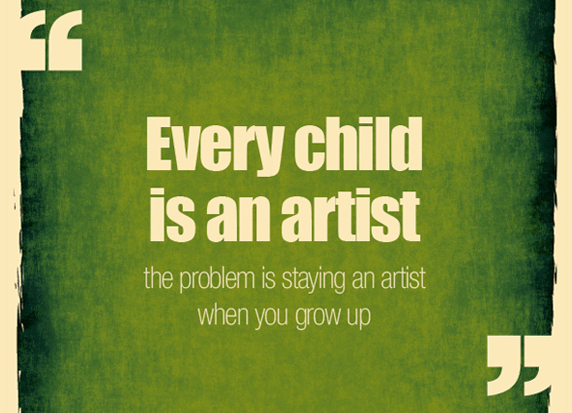
We need the artists to help us unpack the truths in the Bible. We have gotten very good at slicing and dicing the Bible through the transliteration of biblical languages. While this has been – and will continue to be – immensely helpful to biblical scholarship, we also need the nuance of the artists to help us see what only they can see.

The artists are often the first to see and feel a truth – active intentional followers of Christ, or not. They bring it out of their subconscious and into their art – even when they have no idea what they are really doing and cannot fathom the depths of truth their art is expressing. John Wimber used to say that while the Bible is all truth, not all truth is in the Bible.

Having said that, we certainly need a grid to run truth through… For me that includes Scripture and counsel from those whom I respect and admire in the Lord.

Back to art… C. S. Lewis said that art is often a backdoor to truth – and that his imagination was baptized when he was still an atheist because of excellent art.

The creativity that forms art is certainly biblical. The first sentence in the Bible speaks to its prominence:

“In the beginning, God created…” God initiates creativity.

Jesus modeled artful creativity as well. He was always changing his approach to expressing the gospel narrative.

He did not say anything to them without using a parable” (Matt. 13:34).

He spoke in many different venues and employed many different object lessons including drawing in the sand, turning over tables, picking up a coin, pointing to a sower, and setting a child on his lap.

Just some thoughts…

The 10 Symptoms of Emotionally Unhealthy Spirituality

Linda and I would like to start a time-defined group in Santa Barbara to develop some relationships and consider the topic of emotionally healthy spirituality.  We anticipate using Peter Scazzero‘s book Emotionally Healthy Spirituality.  The following is a quick overview of an article he wrote…

A person can grow emotionally healthy without Christ. I can think of a number of non-Christian people who are more loving, balanced and civil than many church members I know. At the same time a person can be really into prayer, silence, Scripture, and other Xian disciplines and be emotionally immature and socially maladjusted.  It is the 2 together – emotional health and contemplative spirituality – that release great power to transform our spiritual lives, our small groups and our churches.

The pathway out of this disconnect is radical. That is, it very likely cuts to the root of your entire approach to following Jesus. Trimming a few branches by, for example, attending a prayer retreat or adding a couple of new spiritual disciplines to an already crowded life will not be enough. The enormity of the problem is such that only a revolution in our following of Jesus will bring about the lasting, profound change we long for in our lives.

Before I prescribe this pathway, it is essential for us to clearly identify the primary symptoms of emotionally unhealthy spirituality that continue to wreck havoc in our personal lives and our churches. The following are the top ten symptoms indicating if I am suffering from a bad case of emotionally unhealthy spirituality.

  1. Using God to run from God (e.g. applying Scripture selectively to suit my own purposes, not me doing God’s will.
  2. Ignoring the emotions of anger, sadness, and fear (e.g. not being honest with myself and/or others about the feelings, hurts and pains beneath the surface of my life).
  3. Dying to the wrong things (e.g. denying healthy, God-given desires and pleasures of life (friendships, joy, music, beauty, laughter, nature) while finding it difficult to die to my self-protectiveness, defensiveness, a lack of vulnerability and judgmentalism).
  4. Denying the past’s impact on the present (e.g. not considering how my family of origin and significant  people/events from my past have shaped my present).
  5. Dividing life into “secular” and “sacredcompartments (e.g.  compartmentalizing God to “Christian activities” while usually forgetting about him when I am working, shopping, studying or recreating).
  6. Doing for God instead of being with God (e.g. evaluating my spirituality based on how much I am doing for God).
  7. Spiritualizing away conflict (e.g. Missing out on true peace by smoothing over disagreements, burying tensions and avoiding conflict – rather than disrupting the false peace like Jesus).
  8. Covering over brokenness, weakness, and failure (e.g. not speaking freely about my weaknesses, failures and mistakes).
  9. Living without limits (e.g. “trying to do it all” or “bite off more than I can chew”).
  10. Judging the spiritual journeys of others (e.g. finding myself occupied and bothered by the faults of others).

What God did in our lives spilled out into the church immediately, beginning with our staff team, then our elder board and eventually the rest of our leadership.

The result has been a rippling effect, very slowly, through the entire church.

Beginning with the staff and elders, interns, ministry and small group leaders– directly and indirectly–we have intentionally integrated the principles that are explained more fully in The Emotionally Healthy Church (Zondervan 2003) and Emotionally Healthy Spirituality (Nelson, 2006).

Once you go through the door and leave what I am calling “emotionally unhealthy spirituality,” there is no turning back. It is the beginning of a journey that will change your life, your marriage, your church and, ultimately, your ministry!

To see the full article click here.