The Elements of a Missional Church (Pt 3)

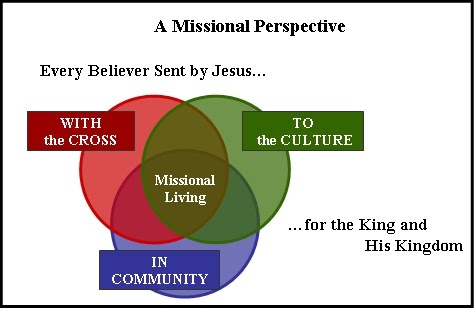
The above graphic is an overview of the process of a missional perspective.


Keller identifies 5 elements of a missional church. Today we’ll look at the first two…

1. Discourse in the vernacular.

  • In ‘Christendom’ there is little difference between the language inside and outside of the church. Documents of the early U.S. Congress, for example, are riddled with allusions to and references from the Bible. Biblical technical terms are well-known inside and outside. In a missional church, however, terms must be explained.
  • The missional church avoids ‘tribal’ language, stylized prayer language, unnecessary evangelical pious ‘jargon’, and archaic language that seeks to set a ‘spiritual tone.’
  • The missional church avoids ‘we-them’ language, disdainful jokes that mock people of different politics and beliefs, and dismissive, disrespectful comments about those who differ with us. [Sound like the health-care debates??]
  • The missional church avoids sentimental, pompous, ‘inspirational’ talk. Instead we engage the culture with gentle, self-deprecating but joyful irony the gospel creates. Humility + joy = gospel irony and realism.
  • The missional church avoids ever talking as if non-believing people are not present. If you speak and discourse as if your whole neighborhood is present (not just scattered Christians), eventually more and more of your neighborhood will find their way in or be invited.
  • Unless all of the above is the outflow of a truly humble-bold gospel-changed heart, it is all just ‘marketing’ and ‘spin.’

2. Enter and re-tell the culture’s stories with the gospel

  • In “Christendom” it is possible to simply exhort Christianized people to “do what they know they should.” There is little or no real engagement, listening, or persuasion. It is more a matter of exhortation (and often, heavy reliance on guilt.) In a missional church preaching and communication should always assume the presence of skeptical people, and should engage their stories, not simply talk about “old times.”
  • To “enter” means to show sympathy toward and deep acquaintance with the literature, music, theater, etc. of the existing culture’s hopes, dreams, ‘heroic’ narratives, fears.
  • The older culture’s story was–to be a good person, a good father/mother, son/daughter, to live a decent, merciful, good life.
  • Now the culture’s story is– a) to be free and self-created and authentic (theme of freedom from oppression), and b) to make the world safe for everyone else to be the same (theme of inclusion of the ‘other’; justice).
  • To “re-tell” means to show how only in Christ can we have freedom without slavery and embracing of the ‘other’ without injustice.

The Need for a ‘Missional’ Church (Pt 2)

This is from an article by Tim Keller, pastor of Redeemer Presbyterian Church in NY, NY. He gives an excellent overview of the “why” and “how” of the missional church…

In the West for nearly 1,000 years, the relationship of (Anglo-European) Christian churches to the broader culture was a relationship known as “Christendom.” The institutions of society “Christianized” people, and stigmatized non-Christian belief and behavior. Though people were “Christianized” by the culture, they were not regenerated or converted with the Gospel. The church’s job was then to challenge persons into a vital, living relation with Christ.

There were great advantages and yet great disadvantages to ‘Christendom.’ The advantage was that there was a common language for public moral discourse with which society could discuss what was ‘the good.’

The disadvantage was that Christian morality without gospel-changed hearts often led to cruelty and hypocrisy. Think of how the small town in “Christendom” treated the unwed mother or the gay person.

Also, under “Christendom” the church often was silent against abuses of power of the ruling classes over the weak. For these reasons and others, the church in Europe and North America has been losing its privileged place as the arbiter of public morality since at least the mid 19th century. The decline of Christendom has accelerated greatly since the end of WWII.

The British missionary Lesslie Newbigin went to India around 1950. There he was involved with a church living ‘in mission’ in a very non-Christian culture. When he returned to England some 30 years later, he discovered that now the Western church too existed in a non-Christian society, but it had not adapted to its new situation. Though public institutions and popular culture of Europe and North America no longer ‘Christianized’ people, the church still ran its ministries assuming that a stream of ‘Christianized’, traditional/moral people would simply show up in services. Some churches certainly did ‘evangelism’ as one ministry among many. But the church in the West had not become completely ‘missional’–adapting and reformulating absolutely everything it did in worship, discipleship, community, and service–so as to be engaged with the non-Christian society around it. It had not developed a ‘missiology of western culture’ the way it had done so for other non-believing cultures.

One of the reasons much of the American evangelical church has not experienced the same precipitous decline as the Protestant churches of Europe and Canada is because in the U.S. there is still a ‘heartland’ with the remnants of the old ‘Christendom’ society. There the informal public culture (though not the formal public institutions) still stigmatizes non-Christian beliefs and behavior. “There is a fundamental schism in American cultural, political, and economic life. There’s the quicker-growing, economically vibrant…morally relativist, urban-oriented, culturally adventuresome, sexually polymorphous, and ethnically diverse nation…and there’s the small town, nuclear-family, religiously-oriented, white-centric other America, [with]…its diminishing cultural and economic force….[T]wo nations…” (Michael Wolff, New York, Feb 26 2001, p. 19).

In conservative regions, it is still possible to see people profess faith and the church grow without becoming ‘missional.’ Most traditional evangelical churches still can only win people to Christ who are temperamentally traditional and conservative. But, as Wolff notes, this is a ‘shrinking market.’ And eventually evangelical churches ensconced in the declining, remaining enclaves of “Christendom” will have to learn how to become ‘missional’. If it does not do that it will decline or die.

We don’t simply need evangelistic churches, but rather ‘missional’ churches.

More tomorrow…

Becoming MISSIONAL

There is a major shift occurring in the Church today. Some would call it a SEAM in history. Approximately every 500 years, the Church goes through a sweeping change in its attempt to live in the tension of adjusting to the times (i.e., contextualization) while remaining theologically orthodox. Here’s an overview of the 4 major shifts: Constantine in the late 4th century, early 5th; the Great Schism of the 11th century; the Reformation in the 16th century; and now the Postmodern era in the 21st century have all been points of reference for these changes. A significant part of this current transition is a shift from what has been called an “attractional model” to a “missional model” of church…

Missional means being willing to adapt and reformulate everything we do in worship, discipleship, community, and service so as to be engaged with the non-churched culture around us (adapted from a definition by Tim Keller; download his article here).

With this blog I will begin a blog series about this dramatic transition in the Church…

10 THINGS ANYONE WHO JOINS IN A TWENTY-FIRST CENTRUY MISSIONAL CHURCH SHOULD NOT EXPECT:

  1. Should not expect to regularly come to church for just one hour, get what you need for your own personal growth and development, and your kid’s needs, and then leave til next Sunday. Expect mission to change your life. Expect however a richer life than you could have ever imagined.
  2. Should not expect that Jesus will fit in with every consumerist capitalist assumption, lifestyle, schedule, or accoutrement you may have adopted. Expect to be freed from a lot of crap you will find out you never needed.
  3. Should not expect to be anonymous, unknown, or be able to disappear in this church Body. Expect to be known, loved, and supported in a glorious journey.
  4. Should not expect production style excellence all the time at Sunday worship gatherings. Expect organic, simple, and authentic beauty.
  5. Should not expect a raucous “light out” youth program that entertains the teenagers, puts on a show that gets the kids “pumped up,” all without parental involvement. Instead as the years go by, with our children as part of our life, worship, and mission expect our youth to have an authentic relationship with God thru Christ that carries them through a lifetime of journey with God.
  6. Should not expect to always “feel good,” or ecstatic on Sunday mornings. Expect that there will ALSO be times of confusion, confession, lament, self-examination, and just plain silence.
  7. Should not expect a lot of sermons that promise you God will prosper you with “the life you’ve always wanted” if you’ll just believe him and step out on faith and give some more money for a bigger sanctuary. Expect sustenance for the journey.
  8. Should not expect rapid growth whereby we grow this church from 10 to a thousand in three years. Expect slower organic inefficient growth that engages people’s lives where they are at and sees troubled people who would have nothing to do with the gospel marvelously saved.
  9. Should not expect all the meetings to happen in a church building. Expect a lot of the gatherings will be in homes, or sites of mission.
  10. Should not expect arguments over style of music, color of carpet, or even doctrinal outlier issues like dispensationalism. Expect mission to drive the conversation.

O AND BY THE WAY … Should not expect that community comes to you…true community in Christ will take some “effort” and a reshuffling of our priorities. We must learn that the answer to all those things is to enter into the practices of “being the Body” in Christ including — eating, sharing, praying, and playing together.

As C. S. Lewis wrote in The Weight of Glory: “We are far too easily pleased. We have become satisfied with mere church, mere religious exertion, mere numbers and buildings—the things we can do. There is nothing wrong with these things, but they are no more than foam left by the surf on the ocean of God’s glory and goodness.”

THE KINGDOM OF GOD

We often confuse the fruit for the goals…

  1. Instead of trying to be good, it’s better to focus our energy on aiming to be surrendered to God (that’s why it’s a fruit of the Spirit!)
  2. Unity is not a goal, but a fruit…
  3. Church is not a goal, but a fruit…

“And Jesus was going about in all Galilee, teaching in their synagogues, and proclaiming the gospel of the kingdom, and healing every kind of disease and every kind of sickness among the people.” Matthew 4:23

Additionally, when we pray the Lord’s Prayer, we ask for God’s kingdom to come and for his will to be done (Matt 6:10)

Today we’ll review what it means for God’s kingdom to come…

Consider some additional kingdom verses…

  1. “’The time has come,’ he said. ‘The kingdom of God is near. Repent and believe the good news!’” (Mk 1:15)
  2. “He told them, “The secret of the kingdom of God has been given to you. But to those on the outside everything is said in parables” (Mk 4:11).
  3. “He appeared to them over a period of forty days and spoke about the kingdom of God” (Act 1:3)
  4. “For two whole years Paul stayed there in his own rented house and welcomed all who came to see him. Boldly and without hindrance he preached the kingdom of God and taught about the Lord Jesus Christ” (Acts 28:30-31)

Apprehending a biblical view of the present reality of the kingdom of God will enhance our faith and expectation for God to move in love and power upon those we minister to. With the coming of Jesus the Messiah, there was a gushing forth of the mercies of God. In the coming of Jesus, the kingdom of God was established with great power to confront and overcome sickness, sin, death, and the devil.

World-View
Most of us have a western, rational, highly materialistic worldview which acts as a lens through which we view our world. The worldview of most westerners does not readily acknowledge the supernatural: healing, release from demonization, spiritual giftings, etc. The result is that most westerners do not expect God to break into day-to-day situations with supernatural power. Without a growing expectation of God’s desire to move in love and power we are relegated to life on a purely natural level: reasoning with people, persuading them with arguments, comforting them when they are sick, etc. (2 Timothy 3:5 – having a form of godliness but denying its power).

Wimber used to say, “Expectation releases the power of God.”

To make a conscious decision to expand our worldview is sometimes referred to as a paradigm shift – like getting a new pair of glasses.

An approach to the New Testament
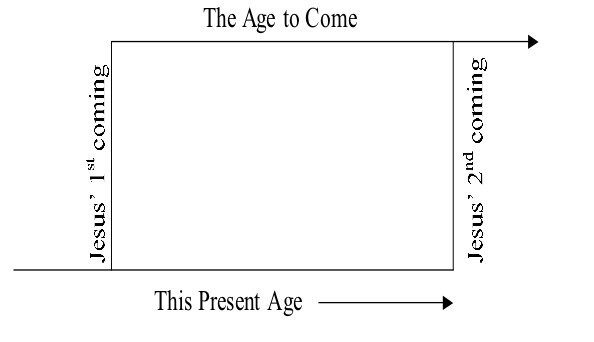
The Old Testament describes God’s dealings with Israel in the context of an ever-increasing prophetic hope that a day will come when God, as King, will personally establish a Kingdom upon the earth. This would mark the beginning of a new Age, or life. The basic framework of the two Ages begins to emerge in the Bible – this Present Age and the Age to Come. It is important to know the basic dualistic frame¬work of the Bible (this Age and the Future Age) to have an appropriate understanding of what it is saying. With a rise of the concept of God’s Kingdom ushering in a new Age, there was also the rise of an awareness of the devil and his evil deeds; the cataclysmic clash between light and darkness. The Christ-event interrupted history with a victory over Satan and his hordes.

We can now define the Kingdom of God as the dynamic rule and reign of God, the assertion of God’s authority over the evil one and his deeds. In the New Testament the dualistic framework of “this present evil age” (Gal. 1:4) and the “age to come” (Eph. 1:21) is established, but in a new way. The New Testament teaches that in the coming of Jesus Christ the Future Age has come into the present. The Kingdom of God has been fulfilled, but not yet consum¬mated; thus it is both present and future. We are living in the “already” and the “not yet.” The New Testament teaches both now and future. This is sometimes referred to as paradox (seeming contridiction).

We live in a divine tension

  1. Salvation – we are saved, yet being saved (posi¬tional vs. experien¬tial truth)
  2. Holy Spirit – we are filled, yet being filled
  3. Faith vs. works – not one or the other, but both.

Our western rational (modernistic) mind-set encourages us to choose one or the other because we’re not comfortable living in tension.

Oscar Cullman in his book Christ and Time writes about WW II:

  1. D-Day – June 6, 1944 (the bloody but successful invasion broke the back of Hitler’s army and was the beginning of the end of the war; likened to the establishment – or inbreaking – of the Kingdom of God in and through Jesus Christ)
  2. VE-Day – May 7/8, 1945 (when the Allied troops marched on Berlin; likened to the second coming of Jesus to receive His own).
  3. Some of the fiercest fighting of World War II took place between D-Day and VE-Day; (likened to this present Church Age – we are in a war!)

George Ladd in The Gospel of the Kingdom defines the Kingdom of God as the “rule and reign of God.” Another description, or definition would be the words and works of Jesus. There were WORDS designed to tell us how to enter the Kingdom (Matt. 5:20; 7:21), and WORKS that demonstrated the Kingdom had come (Matt. 12:28). (A heart-breaking biblical pattern: We have continually traded the presence of God for the knowledge of God.)

The parables teach the mysteries of the Kingdom of God (Matt. 13:11); his prayers taught the disciples to desire the coming (in-breaking) of the Kingdom (Matt. 6:10). The Christ-event raises us up to be instruments of the Kingdom, while his second coming promises the consummation of the Kingdom (Matt. 25:31,34). The New Testament was written from this point of view: the overlapping of the two Ages. God’s Kingdom had interrupted human history and was now spreading like leaven and growing like a seed – it is seen with the eyes of faith. This approach helps us to have an under¬standing of the prospect of supernatural activity in the New Testament, i.e. spir¬itual gifts and healing must be interpreted in the light of the Kingdom of God.

Since the presence of the Kingdom is so central to the New Testament, we must allow it to shape our world view. The Kingdom of God involves the rule and reign of God breaking into Satan’s world and releasing people from Satan’s grip. The Christ-event empowers us to become the instruments of the Kingdom of God. We are not living in a time of promise, but of fulfillment. The full reign of God and His resources are available to us today. Jesus has given us:

  1. His power over sin (Mk. 10:45)
  2. His power over disease (Lk. 13:10-17)
  3. His power over demons (Mk. 1:21)
  4. His power over nature (Mk. 4:35-41)
  5. His power over death (Lk. 7:11-17)

Our conversion to Christ marks the transition from Satan’s kingdom into the Kingdom of God; from this present Evil Age into the Age to Come.