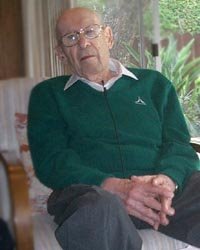
Peter Drucker On Leadership

There is a great article “Peter Drucker On Leadership” discussing the leadership principles of the late Peter Drucker, some of his ideas from the article that stood out to me are below:

  • What Needs to Be Done: “Successful leaders don’t start out asking, ‘What do I want to do?’ They ask, ‘What needs to be done?’ Then they ask, ‘Of those things that would make a difference, which are right for me?’ They don’t tackle things they aren’t good at…..”
  • Check Your Performance: “Effective leaders check their performance. They write down, ‘What do I hope to achieve if I take on this assignment?’ They put away their goals for six months and then come back and check their performance against goals. This way, they find out what they do well and what they do poorly. They also find out whether they picked the truly important things to do. I’ve seen a great many people who are exceedingly good at execution, but exceedingly poor at picking the important things….”
  • Mission Driven: “Leaders communicate in the sense that people around them know what they are trying to do. They are purpose driven–yes, mission driven. They know how to establish a mission. And another thing, they know how to say no. The pressure on leaders to do 984 different things is unbearable, so the effective ones learn how to say no and stick with it…”
  • Creative Abandonment: “A critical question for leaders is, ‘When do you stop pouring resources into things that have achieved their purpose?’ The most dangerous traps for a leader are those near-successes where everybody says that if you just give it another big push it will go over the top. One tries it once. One tries it twice. One tries it a third time. But, by then it should be obvious this will be very hard to do. So, I always advise my friend Rick Warren, ‘Don’t tell me what you’re doing, Rick. Tell me what you stopped doing.’”
  • How Organizations Fall Down: “Make sure the people with whom you work understand your priorities. Where organizations fall down is when they have to guess at what the boss is working at, and they invariably guess wrong. So the CEO needs to say, ‘This is what I am focusing on.’ Then the CEO needs to ask of his associates, ‘What are you focusing on?’ Ask your associates, ‘You put this on top of your priority list–why?’ The reason may be the right one, but it may also be that this associate of yours is a salesman who persuades you that his priorities are correct when they are not. So, make sure that you understand your associates’ priorities and make sure that after you have that conversation, you sit down and drop them a two-page note–’This is what I think we discussed. This is what I think we decided. This is what I think you committed yourself to within what time frame.’ Finally, ask them, ‘What do you expect from me as you seek to achieve your goals?’”

As always Peter Drucker provides some great insights into leadership effectiveness.

7 Thoughts on Transformational Leadership – Aiming to Create A Synergy of Energy

“Managers are people who do things right, while leaders are people who do the right thing (transforming others).” Warren Bennis, On Becoming a Leader

Charles Handy, in his book, The Age of Paradox, states that lifecycle curves (of organizations started by baby-boomers) are free-falling everywhere, so that this moment in time is characterized by the transitioning of a very significant period in our history. He says that this difficult period is marked by fear, confusion, and faltering new steps as we attempt new life curves. (This is a good reason to consider the wisdom of a bailout for the big-3 automakers and the plethora of financial institutions in the US and around the world. New and transforming leadership is needed for this moment in history.)

Transformational leadership is a style where one or more persons engage with others in such a way that leaders and followers raise one another to higher levels of motivation and integrity. James MacGregor Burns (1978) first introduced the concepts of transformational leadership in his treatment of political leadership, but this term is now used in organizational psychology as well. Transformational leaders offer a purpose that transcends short-term goals and focuses on higher order intrinsic needs.

Consider the seven principles listed below and evaluate yourself by responding honestly to the statements made. A good understanding of our strengths and weaknesses will help us to become more effective transformational leaders.

1. Clarity – Successful leadership begins with a compelling vision, which reflects the shared purpose. The ability to articulate a clear, practical, transformational vision which answers the question, “How will we accomplish our mission?” Illustrations teach this idea – the stonecutters’ tale: The first stonecutter says, “I’m cutting stone,” the second says, “I’m carving a cornerstone,” but the third says, “I’m building a cathedral.” The third has vision. For any team, dialoguing about vision, goals, and objectives unifies the members.

Self-Assessment: Transformational leaders are able to articulate a clear, practical, and transformational vision.

I clearly articulate a clear, concise, and compelling vision to others:

X ———————————————————X
NEVER——————SOMETIMES——————REGULARLY

2. Motivation – The ability to gain the agreement and commitment of other people to the vision. Once the transformational leader is able to bring synergy to the organization s/he must then use various means to energize (motivate) the core. General ways to motivate others is to challenge them, provide ample opportunity to join the creative process, and give them the credit.

Self-Assessment: Transformational leaders are highly effective at gaining the agreement and commitment of other people.

I am able to gain the agreement and commitment of others to my vision:

X ———————————————————X
NEVER——————SOMETIMES——————REGULARLY

3. Facilitation – The ability to effectively facilitate the learning of individuals, teams, and other reliable resources. Peter Senge in The Fifth Discipline says the primary job of leadership is to facilitate the learning’s of others. The organizational quest to learn becomes the leaders greatest asset to address organizational challenges. Transformational leaders have been given a sacred trust of being stewards of their core’s intellectual capital.

Self-Assessment: The ability to effectively facilitate the learning of individuals, teams, and other reliable and reputable resources.

I am facilitating the learning of others:

X ———————————————————X
NEVER——————SOMETIMES——————REGULARLY

4. Innovation: The ability to boldly initiate thoughtful change when needed. An effective and efficient organization requires participants to anticipate change and not fear it. Leaders must initiate and respond quickly to change. Team members successfully influence one another to assimilate change because the transformational leaders have built trust and fostered teamwork.

Self-Assessment: The ability to boldly initiate thoughtful change to fulfill the vision.

I am able to initiate thoughtful change effectively:

X ———————————————————X
NEVER——————SOMETIMES——————REGULARLY

5. Mobilization – The ability to recruit, train, deploy, monitor, and nurture (RTDMN) others to fulfill the vision. Transformational leaders look for willing participants who have already been given formal leadership responsibilities and also among people who have not. They desire leadership at all levels, so they find ways to invite and ignite leadership all levels. They introduce simple baby steps to enlist larger participants.

Self-Assessment: The ability to enlist, equip and empower others to fulfill the vision.

I am creating a critical mass of leadership around the stated vision:

X————————————————————————-X
NOT AT ALL—————SOME LEADERSHIP —————CRITICAL MASS

6. Preparation – To become a life-long learner. Transformational leaders realize that the transformation they pursue in is a reflection of their own quest for learning — that they must serve the world through their giftedness because that is the only way they truly fulfill their life life mission. With this mindset, moments of being stuck become moments of total dependence (on God). This is such a rigorous path of learning that transformational leaders must be in thriving relationships with others pursuing transformation. It is within these vital relationships, life opportunities, and obstacles that leaders gain the perspective and authority to lead effectively. “To reach the port of heaven, we must sail sometimes with the wind and sometimes against it – but we must sail, and not drift, nor lie at anchor.” (Quoted in Visionary Leadership, by Nanus, p.43.)

Self-Assessment: The ability to never stop learning about themselves with and without the help of others.

I am learning new skills and improving myself:

X———————————————————-X
NOT REALLY ——————REGULARLY——————DAILY

7. Principle of Determination – The ability to finish the race. A leader’s mission is sometime difficult and our journey often lonely. Leaders depend on stamina, endurance, courage, and strength to finish each day. Because our focus is not only on raising our own leadership but the development of others, the most rigorous and humbling of all human endeavors, transformational leaders experience times of self doubt, grief, and fatigue. Transformational leaders have to develop spiritual, emotional, and physical disciplines to sustain a high level of commitment to the cause.

Self-Assessment: The ability to finish the race.
I am completely sold-out to my life mission:

X———————————————————————————–X
NOT REALLY ———SOME COMMITMENT ———COMPLETELY COMMITTED

Core Concepts of Leadership

I have found there is no such thing as hard and fast rules when it comes to leadership. Leadership is an art form as much as it is science. Every organization, circumstance, and leadership opportunity may call for a distinctive course of action. Some would describe this as situational leadership.

What are the core concepts of leadership? My current thinking is listed below. I have even attempted to place them in an order of importance.

1. Emotional Health. Emotional health is concerned with such things as: naming, recognizing, and managing our own feelings; identifying with and having active compassion for others; initiating and maintaining close and meaningful relationships; breaking free from self-destructive patterns; being aware of how our past impacts our present; developing the capacity to express our thoughts and feelings clearly, both verbally and nonverbally; respecting and loving others without having to change them; asking for what we need, want, or prefer clearly, directly, and respectfully; accurately self-assessing our strengths, limits, and weaknesses and freely sharing them with others; learning the capacity to resolve inevitable conflict maturely, and negotiate solutions that consider the perspectives of others; distinguishing and appropriately expressing our sexuality and sensuality; and grieving well. Effective leaders, first and foremost, model the capacities listed above and then they develop a learning system within their organization to assist members in measuring and growing in emotional health. (In a Christian organization, this would be an essential component of the discipleship process. In my opinion this critical piece of discipleship has been severely over-looked in the Church.)

2. Life-Long Learning. With the meteoric advance of technology there is an accompanying realization that formal learning, typically concentrated in the earlier stages of life, can no longer sustain an individual or organization throughout their lifecycle. Peter Senge, in his book The Fifth Discipline, describes this concept as developing a learning community. Senge defines a learning community as one that is continually expanding its capacity to create its future. Other definitions include:

  • An organization that achieves its goals by providing an environment conducive to the continuous learning and development of individuals, teams, and the organization.
  • An organization in which people at all levels individually and collectively are continually increasing their capacity to produce the results they really care about.
  • An organization that when a mistake is made notices the mistake, fixes it, figures out what caused the problem and corrects the root cause.

3. Developmental Empowerment. This concept is related, or we might say, the outcome of the previous two concepts. Developmental empowerment encourages and supports the importance of human responsibility in both the development and the interactive nature of growth. Developmental empowerment encourages growth in stages, looks for and quantifies evidences that accompany transformations from stage to stage, and understands the process as being lifelong, with milestones representing fundamental change. Committed to holism, developmental empowerment sees all aspects of life influencing and interacting with each other. This is a distinct shift for most organizations (including the church).

4. Calculated Delegation. Delegation is both a word and a skill that we have all heard of, yet few understand well. Effective delegation can be a dynamic tool for motivating and training team members to realize their full potential. Artful delegation underpins a style of management that allows staff members to use and develop their gifts, callings, and passion to full potential. Delegation is primarily about entrusting our authority to others, granting authority equal to responsibility.

5. Strategic Mapping. Members of an organization are more able to adapt to changes if there is a generated map of intent laid out (a map is generally more flexible than a plan). Mapping is crucial in effective leadership because it provides the organization with a direction and quantitative means to achieve its goals. Effective leaders initiate the mapping process and exert effort in communicating those plans as clearly (and redundantly) as possible.

These five principles: emotional health, life-long leadership, developmental empowerment, calculated delegation, and strategic mapping are all important in improving leadership skills. But these are not enough. The success of leadership will ultimately depend on the way we recognize our organization’s needs and how we can adapt our leadership style to those needs. In the same way that we would evaluate our team’s performance, also regularly evaluate and reflect on our own. Only you can tell what appropriate leadership is for your situation.

44 Lessons On Church Leadership From Lyle Schaller: A Compilation (4 of 4)

You might ask, “Who is Lyle Schaller?” Quite simply, he may be America’s best church strategist in the last 30 (or so) years. He has a demonstrated genius for practical solutions to a myriad of organizational issues and problems. Schaller, a Methodist, has over 140 titles listed on Amazon.com. My assumption is that he is mostly retired now. What follows are the final of 44 lessons for church leaders…

35. The least happy staff arrangements “tend to be those that include two or more first-born staff members or an only-born senior ministry and an only-born associate….The happiest staff combinations tend to be those that include a middle-born senior minister and a middle-born associate minister….The most relaxed and the least competitive staff teams include a last-born senior pastors and a last-born associate minister….The most effective ministerial teams tend to be composed of a middle-born senior minister and a first-born associate.” The Multiple Staff and the Larger Church, p. 102.

36. “The larger the congregation, the more important it is to build a staff that complements and reinforces the priorities of the senior minister.” The Multiple Staff and the Larger Church, p. 81.

37. “In the smaller congregations the role of the patriarch, or tribal chief, usually is filled by an older lay person. The minister is the visit medicine man. Tribal identity is in the laity, not in the pastor. By contrast, in congregations with a multiple staff, and especially the huge and mini-denomination size churches, the role of the tribal chief is filled by the senior ministry. Frequently the corporate identity of the very large church is in the personality of the senior ministry who has served that congregation for a decade or longer.” The Multiple Staff and the Larger Church, p. 41.

38. “The larger the congregation, the more vulnerable that church is to an inappropriate match of pastor and people.” The Multiple Staff and the Larger Church, p. 25.

39. “The larger the congregation, the greater the expectations that institution placed on the senior minister to be the initiating leader.” The Multiple Staff and the Larger Church, p. 19.

40. “The ability to understand, accept and enjoy the ambiguity may be one of the most important characteristics of the happy and effective pastor of the middle-sized congregation.” The Middle-Sized Church, p. 17.

41. “In the best of…churches…leaders have created, sometimes over a period of several generations, a rich tapestry of symbols, parables, folk sayings, favorite expressions, beliefs, legends, stories, rituals, customs, and festivals which reinforce the feeling that indeed this is a unique congregation. By contrast, the weak churches are swathed in layers of gray cloth—ready for their funeral. The congregational culture gives meaning to life for many of the members.” The Middle-Sized Church, p. 30

42. The greatest measurable difference that distinguishes congregations is whether they are accumulating capital or living off the accumulated capital. The Middle-Sized Church, p. 33.

43. “Don’t Be The First Associate! Be The Third!” Survival Tactics in the Church, Chapter 6, pp. 166ff.

44. “Very few chapters in an effective pastorate extend beyond three or four years.” Survival Tactics in the Church, p. 29.