Gospel Shaped Core Values (Overview of Acts 1-2 developing some key core implicit values)

I.     INTRO – Sermon notes from May 8, 2011

A.  Diagnostic weekend – June 9th-12th.

B.  A team of about 7 people will be here to interview as many people from Southside as they can

C.  There will be an all-church meeting on Sun, June 12th where an initial oral report will be presented.

D.  We’ll be asking a lot of you that weekend to come in for an interview and then attend the all-church meeting to participate in the report.

E.  Why study Acts?

  1. Intro Acts Series: The Gospel Chronicles: How God Shapes and Builds the Church.  A Study in the Book of Acts Part 1 – Part 1 (Acts 1-9).
  2. We will be in Acts 1&2 for the next 3 weeks.
  3. In addition to the themes covered in the first few chapters of Acts (that Dana spoke about last week), I can think of at least 3 similarities between Acts 1 and SBF…
  • The Christ followers were a people in transition…as we’ll see, things didn’t turn out the way they expected.
  • In the midst of some anxiety and disappointment, they began to connect the dots and run with a vision they never expected.
  • A relatively few people (120) blossomed into a church that reached its full redemptive purpose.

F.    7 Refocusing questions that we will address here at Southside during this transition season:

  1. Who has God shaped us to be? (Core Values)
  2. Why do we exist as a church? (Biblical Mission)
  3. Where is God leading us in the future? (Fresh Vision)
  4. Whom has God called us to reach? (Ministry Focus)
  5. Which ministry model best facilitates our vision? (Building authentic community)
  6. What ministry goals can we believe God for?
  7. What is our plan for ministry for the next 2-3 years? (Strategic map)

G.    What’s a Core Value?  An enduring belief, a preferred choice.  Core values are the essence of a church’s identity.

  1. Those few, select distinctives that are non-negotiable.
  2. Where is Southside’s God-given potential for greatness?
  3. There is a difference between stated values and practiced values.  Stated values are often religious values that people/churches think they should
    have.  Practiced values are the unique distinctives that a church is actually doing.  Practiced values ask the question, “What are we currently doing that has the potential for greatness?”
  4. There is a difference between implicit values and explicit values.  Implicit values are implied values – while they may be clearly formed or articulated, they are not stated.  Explicit values are definitive and clearly stated.  Churches, with explicit, practiced values know who they are and who they aren’t.  All opportunities for ministry are evaluated in the light of God given values, mission, and vision.

H.   Today we will look at some of the practiced, implicit values that launched the church in Acts.  These implicit values are salted through the first 2 chapters.

I.   We can think of it like a football game – we don’t know what play they called in the huddle, but when they run the play we find out what play was called.

II.   BODY

A.    Implicit Values of Acts (Alternatively known as The Church I Would Join)

1.     They were Kingdom Focused — Acts 1:3 (NAS) “To these He also presented Himself alive, after His suffering, by many convincing proofs, appearing to them over a period of forty days, and speaking of the things concerning the kingdom of God.”  

a.     The Kingdom of God – Quite simply is: The rule and reign of God.

  • The KOG is our destination.
  • Jesus established the Kingdom at his first coming and will consummate the Kingdom at his second coming. Jesus reaches into eternity and pulls it into the present – and stakes it into the ground with the Cross.  “We live in the presence of the future.”  “The already and the not yet.” 
  • As we live in the presence of the future there is paradox (seeming contradiction).  We are saved, but working out our salvation; we are sanctified, yet being sanctified; we are healed yet being healed. It’s both present and future
  • One of the most dynamic aspects of the present reality of the KOG, is that within it is the power that raised Jesus from the dead is made available to us.  The Greek word is dunamis – the same word we get “dynamite” from – and which we find in Acts 1:8. 
  • The Church is the fruit of kingdom activity.
  • The demands of the Kingdom are that we repent; we are to place God first, and follow him at any cost.

b.  Kingdom is a gospel word – along with the Cross and Grace that form a theological construct to help us see the under-girding of the gospel throughout the Bible from Genesis to Revelation:

  • The Cross – Speaks of the Atoning Work of Jesus Christ
    • This is shorthand for the “5-Fold Christ Event”: 1) Virgin Birth, 2) Miraculous Ministry, 3) Degrading Death, 4) Victorious Resurrection, 5) Missional Ascension of Jesus Christ. 
    • Apart from the atoning work of Christ, we would be forever guilty, ashamed, and condemned before God.
    • The way of God is suffering/humility – and then glory.  This is what baptism is supposed to be about – I will die to my previous life and come alive to God – and the gospel of Jesus Christ.
  • Grace – The unmerited favor of God.  Acceptance is given to us freely at God’s expense.  Martin Luther calls it, “the great exchange.”
    • It’s important that we understand there is common grace and saving grace happens when we take up residence within the KOG.  
    • Definition: All that God is, lavishly poured into you. 
    • Jonathan Edwards speaks of grace as, “the very Holy Ghost dwelling in the soul and acting there as a vital principle.”[1]

2.     They were Humble, Prayerful, & Unified“And when they had entered, they went up to the upper room, where they were staying…14These all with one mind were continually devoting themselves to prayer, along with the women, and Mary the mother of Jesus, and with His brothers.”   Acts 1:13, 14 (NAS)

a.     Humble prayers of confession and repentance before/with God and one another.

b.     Corporate prayer leading to intercession – reminding the Lord of His word/promises.

c.     Unity is a fruit, not a goal

3.     They were Holy Spirit Empowered

1:4Gathering them together, He commanded them not to leave Jerusalem, but to wait for what the Father had promised, “Which,” He said, “you heard of from Me; 5forJohn baptized with water, but you will be baptized with the Holy Spirit not many days from now.”

2:1,4And when the day of Pentecost had come, they were all together in one place…4And they were all filled with the Holy Spirit…

a.     John 4:24 — God is spirit, and those who worship Him must worship in spirit and truth.

b.     Eph 5:17-21 –  17So then do not be foolish, but understand what the will of the Lord is.

18And do not get drunk with wine, for that is dissipation, but be filled with the Spirit, [we apparently need to be continually, or regularly, filled with the HS – Why?  Because we leak!]

19speaking to one another in psalms and hymns and spiritual songs, singing and making melody with your heart to the Lord;

20always giving thanks for all things in the name of our Lord Jesus Christ to God, even the Father;

21and be subject to one another in the fear of Christ.

    c.  Two points

  • (Jn) We are to seek to live in the healthy tension of spirit and truth.
  • (Eph) HS infilling occurs when our hearts are worshipful, when we are grateful, and we walk in mutual submission.

d.  John Piper: “Mission exists because worship doesn’t.” (Supremacy of God In Missions)

4.  They delivered Contextualized Gospel Presentations16No! What you see this morning was predicted centuries ago by the prophet Joel”   Acts 2:15,16 (TLB)

5.  They engaged in Honest/Straightforward Gospel Presentations – Acts 2:23, 36…

23this Man, delivered over by the predetermined plan and foreknowledge of God, you nailed to a cross by the hands of godless men and put Him to death.

36“Therefore let all the house of Israel know for certain that God has made Him both Lord and Christ–this Jesus whom you crucified.”

6.  They were Outward Focused (Missional)“Those who accepted his message were baptized, and about three thousand were added to their number that day.”   Acts 2:41 (NIV)

a.     There is a missional refocusing going on in the Church today.
b.     We are all called to be missionaries.  The Father sent the Son, the Son sent the Holy Spirit, and the Holy Spirit send us.
c.     Changing metrics…

7.     They were Intentional About Discipleship and Authentic Community (They lived Community in the context of Discipleship) – Acts 2:42-47

And they were continually devoting themselves to the apostles’ teaching and to fellowship, to the breaking of bread and to prayer. 43And everyone kept feeling a sense of awe; and many wonders and signs were taking place through the apostles.  44And all those who had believed were together, and had all things in common;  45and they began selling their property and possessions, and were sharing them with all, as anyone might have need.  46And day by day continuing with one mind in the temple, and breaking bread from house to house, they were taking their meals together with gladness and sincerity of heart, 47praising God, and having favor with all the people. And the Lord was adding to their number day by day those who were being saved.

8.     As a result of living out these values – they were Fruitful

a.     “A sense of awe,” or a healthy fear of the Lord (v.43)

b.     Wonders & signs (v.43)

c.     Community (vs.44-47)

  • Identification
  • Equality
  • Unity
  • Enthusiastic joy
  • Praise
  • Favor with all the people
  • Salvation’s (v.47)

III. CONCLUSION

A.   What does it mean to be Gospel centered? (Or, Christ centered?)

B.    My experience is that the North American Church has lost, or squandered, much of the power – and the breadth of the Gospel.

  1. I have been reminded recently that the Gospel is not advice – it is news.  It is, in fact, the ultimate Good News. Sunday mornings are not the place to give advice.
  2. Gospel-centered ministry is rooted in remembrance.  On Sunday mornings we are to remind one another primarily of what Jesus Christ has done, not what we must do.

C.    Many of us have tended to view the Gospel a message that we responded to many years ago – and then moved on from.  Yet the Gospel is more like an ocean.  It is deep, and wide, and vast.

  1. We are called to view, and engage, and respond to the gospel with every passage of Scripture we read, or study.
  2. I would suggest that the essence of Christian maturity is when the Gospel itself gets worked in – and through our lives.
  3. Here is my goal for you – and for Southside: My aim is that you would experience Jesus (my goal for you is experiential) as the sovereign, risen, living, Lord of the universe – and as the source and the content of your real hope and joy. Two things are necessary:
  • God’s liberating truth
  • God’s liberating grace.

4.  What is the evidence of salvation?

  • Fruitfulness
  • What is your deepest desire?
  • True Christians have conflicted desires to be sure.  True Christians struggle, and sin, and mess up – to be sure. Yet, the deepest desire of the true Christian is for Jesus and the unfolding of the gospel.
  • Non-Christians – and you could say false Christians also have conflicted desires, yet their deepest desire is for themselves, or for ease, or comfort – something other than the person of Jesus Christ.  (The simplest definition of idolatry is making a good thing an ultimate thing.)

Next week: Persistent and Passionate Prayer (Acts 1: 13-14).


[1] Jonathan Edwards, TREATISE ON GRACE.

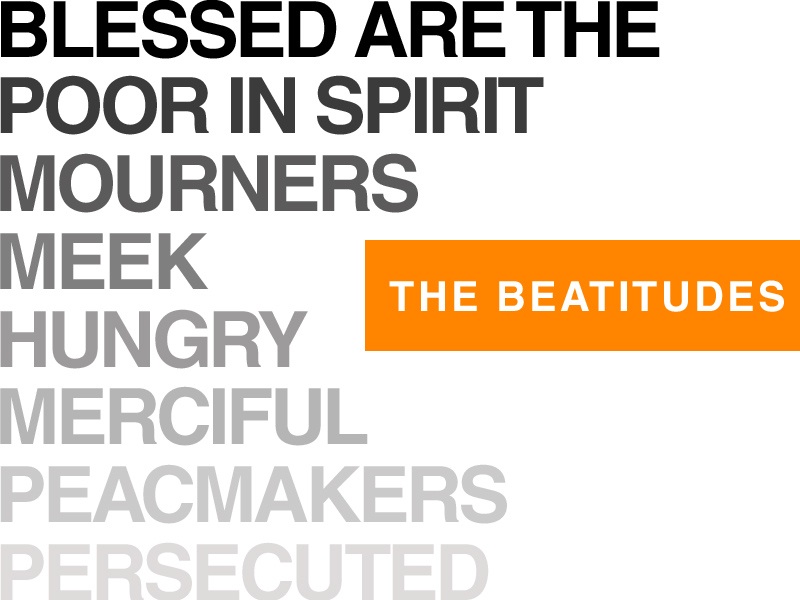
The Gospel and the Beatitudes (Matthew 5:3-10)

This is a sermon I spoke at three services at Shiloh Community Church in Orleans MI last weekend (Palm Sunday).  I focused primarily on poor in spirit, mourning, and peacemaking

It’s Palm Sunday and we are remembering and celebrating the triumphal entry of The Servant King Jesus – arriving into Jerusalem to the praise and adulation of the multitude — and less than a week later, he is to be brutally and shamefully murdered…

  1. Next week is the high point of the Christian calendar as we celebrate the resurrection of Jesus Christ from the dead.
  2. Jesus triumphed over death and hell and bridged the gap between our utter depravity and God’s standard of holiness. (To miss the mark by even a little is still to have missed the mark.)
  3. We call this sacrifice the Gospel – or Good News.

I believe it is Tim Keller who reminds us that the Gospel is not advice, it is news.  It is the ultimate Good News.  He suggests that weekend services are not primarily the place to give advice… Gospel-centered (or Christ-centered) change is rooted in remembrance. We are to remind one another of what Christ Jesus has done, not what we must do.

We cannot commend what we do not cherish.  -John Piper

The essence of Christian maturity is when the Gospel – or, what Christ has done — gets worked in – and then through our lives, which is what I’d like to spend our remaining time considering.

Turn to Matthew 5 where we will take a look at the Beatitudes.  While you’re turning, allow me to offer a few introductory thoughts.

What is Christian conversion? Christian conversion, or salvation, occurs when genuine repentance and sincere faith in Jesus intersect.

  1. These are not two separate actions – but one motion with two parts:
    • As we turn to Christ for salvation we turn away from the sin that we are asking Jesus Christ to forgive us from. (Rom 3:23 – All have sinned and fallen short of God’s standard.)
    • Neither repentance nor faith come first – they must come at the same time.
  2. They are two sides of the same coin.[1]

Contained in the Beatitudes are eight qualities that characterize the life of Jesus Christ, and therefore, through conversion, they begin to characterize our life in Jesus Christ.  Jesus calls us to follow him through life and to depend upon his strength and power.

The word beatitude comes from the Latin word meaning “blessed.”

  1. More specifically the word means exalted joy, or true happiness. (Joy is calm delight in even the most adverse circumstances.  Joy fueled Paul’s contentment.)
  2. With the beatitudes, Jesus dives into our innermost being probing the heart and raising the question of motive.
  3. What made Jesus a threat to everyone and the reason He was eventually killed was that in His encounters with people (particularly the religious leaders), He exposes what they were on the inside.  Some people find it liberating – others hate it.

The Beatitudes, I have come to see, are our surrendered response to the Gospel.  I view the Beatitudes as a step-by-step spiritual formation process that moves us toward spiritual depth and maturity.  This becomes cyclical as we grow deeper and deeper in our faith.  The Beatitudes become the outworking of the Gospel in and through our lives.

Matthew 5:3-10…

3“Blessed are the poor in spirit, for theirs is the kingdom of heaven.

 4“Blessed are those who mourn, for they shall be comforted.

 5“Blessed are the meek (gentle), for they shall inherit the earth.

 6“Blessed are those who hunger and thirst for righteousness, for they shall be satisfied.

 7“Blessed are the merciful, for they shall receive mercy.

 8“Blessed are the pure in heart, for they shall see God.

 9“Blessed are the peacemakers, for they shall be called sons of God.

 10“Blessed are those who have been persecuted for the sake of righteousness, for theirs is the kingdom of heaven.

Following is an overview and how one unfolds into the next…The first two are foundational to the Gospel blossoming in and through our lives…

1.  Blessed are the poor in spirit…

a.  “You’re blessed when you’re at the end of your rope.  With less of you there is more of God and his rule.” (MSG)
b.  Another translation renders this verse, “Happy are those who know their need for God.” (JBP)
c.  What does it mean to be “poor in spirit”?  A desperateness of soul that is weary of living in it’s own strength and longs for God’s mercy and grace to come and refresh the soul.  In a word, it is DESPERATION.
d.  Consider the Prodigal Sons (Lk 15)…

2.  Blessed are those who mourn…

a.  I have a river of sin in my life – with 3 primary tributaries…

#1 – Original sin (Adam & Eve traded the presence of God for the knowledge of God – and that’s been our core tendency ever since…

#2 – Family of origin issues

#3 – My own dumb choices.

b.  As we are honest about the sin that has infected us there will be a transforming grief and accompanying repentance, that surfaces – not only for our own lives, but also for the injustice, greed, lust, and suffering that grips our world.

c.  I want to own my sin everyday.[2]

d.  This is counter intuitive (paradox – seeming contradiction).  We go down to go up; death precedes resurrection; we get to joy by traveling through grief.  Our soul wants to find a way around grief, but God says, “No, you must travel through grief – and the good news is, He says, “I’ll go with you and we will do it in My strength and power.”

e.  The way of the Gospel is a death and resurrection cycle…

f.  The gospel has the greatest potential to captivate us when we understand that we are more depraved than we ever realized and simultaneously more loved that we ever dared to imagine.

g.  I don’t mind inviting you to question your own salvation today.  If our default mode is, “I’m basically a good person…” then we simply have not understood the gospel.

3.  Blessed are the meek…

a.  Rick Warren would say, “Meekness is not weakness, but the power of your potential under Christ’s control.”

b.  The concept of meekness describes a horse that has been broken.  We can either surrender to Christ and invite the breaking, or remain the undisciplined and wild stallion.

c.  Grieving over sin and suffering grows meekness in us and delivers us into a humble learning posture (disciple means learner).

4.  Blessed are those who hunger and thirst for righteousness…Spiritual hunger and thirst is the growing desire to be empty of those things that don’t reflect God, and initiates a deep longing for wholeness in our lives.

5.  Blessed are the merciful…

a.  Mercy is entering into another persons feelings – attempting to see things from another person’s perspective – all with understanding AND acceptance…just like Jesus has done for us.

b.  As we receive God’s mercy we begin to give mercy – to ourselves and to others.

6.  Blessed are the pure in heart…

a.  Mercy cleanses our heart and restores purity to our lives.

b.  Did you know that your (spiritual and emotional) virginity CAN be restored?

2 Cor 11:2For I am jealous for you with a godly jealousy; for I betrothed you to one husband, so that to Christ I might present you as a pure virgin.

7.  Blessed are the peacemakers…

a.  Purity gives way to a personal serenity and peacefulness.  Peace is not the absence of conflict, but the absence of anxiety in the midst of inevitable conflict – and when others encounter it, they want it too.

b.  Our Western concept of peace needs to be considered in the light of the ancient Hebrew concept of peace, which is SHALOM — and means more than our limited understanding of peace (i.e., the lack of conflict).

Biblical SHALOM speaks of a universal flourishing, wholeness and delight; a rich state of affairs in which natural needs are satisfied, natural gifts a fruitfully employed — all under the arc of God’s love. Shalom is the way things ought to be.

Neal Plantinga – “the webbing together of God, humans, and all creation in equity, fulfillment, and delight.”

c.  There is a difference between a peacemaker and a peacekeeper.

To be a peacemaker does not mean peace at any cost.

Peacekeeping creates a false peace.

Many of us live out our lives with this false peace and say nothing or do nothing to change it—in churches, homes, work places, and our marriages.

Examples:

(i)  A family member makes a scene at a family gathering.  It embarrasses you, the rest of the family, but you say nothing.  You keep the peace because to go there would unearth a lot of stuff that you just aren’t willing to deal with.

(ii) Your spouse makes insulting remarks to you or humiliates you publicly through critical tone of voice.  It grates on you.  But you keep silent because you want to keep the peace.

d.  We struggle with this false peace because the conventional wisdom of the day is that its better to keep the peace than to make the peace and there is a very real difference.

e.  Keeping this false peace insures that real issues, real concerns, and real problems are never dealt with.

f.  A façade, or veneer, of peace in that there is calm but the reality is the tension is still there.

g.  True peacemakers will challenge and disrupt the false peace.

h.  Jesus didn’t have a problem disrupting the false peace of his day.

i.  The whole history of redemption, climaxing in the death and resurrection of Jesus is God’s strategy to bring about a just and lasting peace between rebel man and himself and between man and man (Eph 2:14-22)

j.  Colossians 1:19-20 puts it like this,

“For God was pleased to have all his fullness dwell in him, and through him to reconcile to himself all things, whether things on earth or things in heaven, by making peace through his blood, shed on the cross.”

k.  True peacemakers will give people the benefit of the doubt while graciously bringing up concerns

l.  But true peacemakers will deal with what is real.  FIRST IN THEIR OWN LIVES…

m.  True peacemakers will steward the conflict they find themselves in because God will often use conflict to develop things in our lives that are developed in no other way.

8.  Blessed are the persecuted… Living life from a kingdom of God perspective will place us in conflict with those that oppose it (often times it’s “religious” people!).

Without the knowledge of our extreme sin, the payment of the Cross seems trivial and does not electrify or transform.

But without the knowledge of Christ’s completely satisfying life and death, the knowledge of sin would crush us – or move us to deny and repress it. By walking the way of the Beatitudes we hold our depravity and the Cross in a healthy and dynamic tension that will lead to transformation and renewal.


[1] Wayne Gudem, Systematic Theology, p. 713.

[2] “None is righteous, no, not one.” Romans 3:10 (ESV)
And you were dead in the trespasses and sins in which you once walked, following the course of this world, following the prince of the power of the air, the spirit that is now at work in the sons of disobedience.” Eph 2:1-2 (ESV)

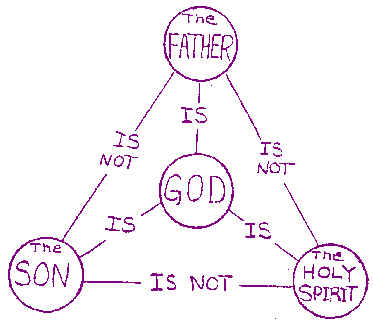
Trinitarian Dance

C.S. Lewis described the Trinity as a “dance” saying, “God is not a static thing…but a dynamic, pulsating activity, a life, almost…a kind of dance” (Mere Christianity, p 136).

Tim Keller elaborates on this concept in the Reason for God in Chapter 14 – The Dance of God (pgs 214-221):

I believe that Christianity makes the most sense out of our individual life stories and out of what we see in the world’s history. In the last six chapters I have been arguing that the Christian understanding of where we came from, what’s wrong with us, and how it can be fixed has greater power to explain what we see and experience than does any other competing account. It is time to draw together the various threads of the narrative we have been examining and view the story line of Christianity as a whole. The Bible has often been summed up as a drama in four acts – creation, fall, redemption and restoration.

The divine dance
Christianity, alone among the world faiths, teaches that God is triune. The doctrine of the Trinity is that God is one being who exists eternally in three persons: Father, Son and Holy Spirit. The Trinity means that God is, in essence, relational.

The Gospel writer John describes the Son as living from all eternity in the ‘bosom of the Father’ (John 1:18), an ancient metaphor for love and intimacy. Later in John’s Gospel, Jesus, the Son, describes the Spirit as living to ‘glorify’ him (John 16:14). In turn, the Son glorifies the Father (17:4) and the Father, the Son (17:5). This has been going on for all eternity (17:5b).

What does the term ‘glorify’ mean? To glorify something or someone is to praise, enjoy and delight in them. When something is useful you are attracted to it for what it can bring you or do for you. But if it is beautiful, then you enjoy it simply for what it is. Just being in its presence is its own reward. To glorify someone is also to serve or defer to him or her. Instead of sacrificing their interests to make yourself happy, you sacrifice your interests to make them happy. Why? Your ultimate joy is to see them in joy.

What does it mean, then, that the Father, Son and Holy Spirit glorify one another? If we think of it graphically, we could say that self-centeredness is to be stationary, static. In self-centeredness we demand that others orbit around us. We will do things and give affection to others, as long as it helps us meet our personal goals and fulfils us.

The inner life of the triune God, however, is utterly different. The life of the Trinity is characterized not by self-centeredness but by mutually self-giving love. When we delight and serve someone else, we enter into a dynamic orbit around him or her, we centre on the interests and desires of the other. That creates a dance, particularly if there are three persons, each of whom moves around the other two. So it is, the Bible tells us. Each of the divine persons centers upon the others. None demands that the others revolve around him. Each voluntarily circles the other two, pouring love, delight and adoration into them. Each person of the Trinity loves, adores, defers to and rejoices in the others. That creates a dynamic, pulsating dance of joy and love. The early leaders of the Greek church had a word for this – perichoresis. Notice the root of our word ‘choreography’ within it. It means literally to ‘dance or flow around’.

The Father…Son…and Holy Spirit glorify each other…At the center of the universe, self-giving love is the dynamic currency of the Trinitarian life of God. The persons within God exalt, commune with, and defer to one another… When early Greek Christians spoke of perichoresis in God they meant that each divine person harbors the others at the center of his being. In constant movement of overture and acceptance each person envelops and encircles the others. (In The Reason For God, Keller quotes from Cornelius Plantinga – Engaging God”s World, from which the above paragraph is taken.)

In Christianity God is not an impersonal thing nor a static thing – not even just one person – but a dynamic pulsating activity, a life, a kind of drama, almost, if you will not think me irreverent, a kind of dance. . . . [The] pattern of this three-personal life is . . . the great fountain of energy and beauty spurting up at the very centre of reality.

The doctrine of the Trinity overloads our mental circuits. Despite its cognitive difficulty, however, this astonishing, dynamic conception of the triune God is bristling with profound, wonderful, life-shaping, world-changing implications.

The dance of love
If there is no God, then everything in and about us is the product of blind impersonal forces. The experience of love may feel significant, but evolutionary naturalists tell us that it is merely a biochemical state in the brain.

But what if there is a God? Does love fare any better? It depends on who you think God is. If God is unipersonal, then until God created other beings there was no love, since love is something that one person has for another. This means that a unipersonal God was power, sovereignty and greatness from all eternity, but not love. Love then is not of the essence of God, nor is it at the heart of the universe. Power is primary.

However, if God is triune, then loving relationships in community are the ‘great fountain…at the center of reality’.

When people say, ‘God is love,’ I think they mean that love is extremely important, or that God really wants us to love. But in the Christian conception, God really has love as his essence. If he was just one person he couldn’t have been loving for all eternity. If he was only the impersonal all-soul of Eastern thought, he couldn’t have been loving, for love is something persons do. Eastern religions believe the individual personality is an illusion, and therefore love is, too. Chesterton wrote, ‘For the Buddhist…personality is the fall of man, for the Christian it is the purpose of God, the whole point of his cosmic idea.’ It is the purpose of God because he is essentially, eternally, interpersonal love…

The dance of creation
Jonathan Edwards on reflecting on the interior life of the triune God, concluded that God is infinitely happy. Within God is a community of persons pouring glorifying, joyful love into one another…

Returning to the dance
…When Jesus died for you he was, as it were, inviting you into the dance…when we discern Jesus moving toward us and encircling us with infinite, self-giving love, we are invited to put our lives on a whole new foundation…

BTW, you can find an excellent unpublished essay on the Trinity by Edwards here.

Random Thoughts From My Stickies

I use the application “stickies” on my Mac to make notes to myself and to collect random thoughts, quotes, or pithy sayings to contemplate or study. Following are some random thoughts from the last few weeks. Sorry I didn’t always record the source…

*God’s perfection doesn’t merely reject or punish evil: it overwhelms it with good.

*Grace – God’s love for tomorrow coming into our life today

*Love – Shared hope (Kim McManus)

*There is a difference between obligation obedience and covenantal obedience

*Shalom results from living in the tension of…

  1. Contentment (Phil 4:6-7)
  2. Justice – making things right (Lk 18:7b-18a) “Shalom-makers”
  3. Righteousness – right relationship, navigate the relationship (Rom 8:31-39)
  4. Loyalty
  5. Community (Col 3:12-17)
  6. Wholeness
  7. Integrity
  8. Salvation

*Paradigm shift  — Gap between stimulus and response (Covey)

*Rules keep us immature

*Virtue comes as a result of moral effort – It’s like learning a new language, it becomes second nature

*We don’t need to learn our love language as much as we need to learn the language of love

*Learn to think Christianly

*The nature of virtue ethics

*The Spirit works to re-humanize us

*Love is not our duty, it is our destiny

*Take a nurturing response toward your emtional self, listen to the emotional self in the presence of God (Ps 139:1-3), draw your emotional self toward God, stay and wait/receive in God’s presence (Ps 46:10; Lk 10:42) — It is scary to be deeply revealing in God’ presence.

*Soul ache

*God comes to you disguised as your life. –Paula D’Arcy

*Every person we meet is Jesus in a distressing disguise.  –Mother Theresa

*Worship is the primary means to transformation

*Gideon and God test one another. God is available for interaction. Invitation to be bold (vs foolish). We are free to be bold.

*God “tests” us to reveal our hearts to ourselves (he already knows).

*OT is brutal and filled with war. The NT concept is that our battle is NOT against flesh and blood (Eph 6).

*Glory of God is among the poor.  –Joel Green

*Take calcium to sleep better

*Spiritual Formation – Intentionally partnering with the work of the Holy Spirit to help people learn to love the Lord their God with all of their heart, mind, soul, and strength.

*Joy does not mean the absence of sorrow, but the capacity to rejoice in the midst of it.  –Gordon Fee

*Bidden or not bidden, God is present. Erasmus/Jung

*God is the goal of God – John Piper

The embrace of faith, like any embrace, is visible.  –Scot McKnight, Dancing Grace (Chap 13)

*Marriage is a duel to the death which no man of honour should decline.
I refuse to die while I am still alive.
–GK Chesterton – Man Alive