It’s Not Our Righteousness But Christ’s

I came across John Piper’s summary of the first five chapters of Paul’s letter to the church at Rome – and found it to be excellent and worth passing on…

There is none righteous, no not one (Romans 3:10). All are guilty before God because of union with Adam in his first sin (5:12-14). And we all become our “own little Adams” when our depravity meets the Law of God and overflows in specific acts of transgression (5:16, 20). Therefore, there is no getting right with God – no justification – on the basis of deeds done by us in righteousness (3:20). Instead there is one and only one hope for sinners: a second Adam, Jesus Christ, has come into the world and provided both blood (5:9) and righteousness (5:18). Blood to cover all our sins, and righteousness so that our account is not empty but filled with perfect obedience – the obedience of Jesus (5:19). Therefore, it is by faith and by faith alone that we receive this grace of justification (3:28; 5:17) and obtain eternal life – the hope of glory.

What are some strategic implications?

  • Our right (or legal) standing with God is based on who God is and what he has done, not on who we are or what we have done – or, not done.
  • God credits to us his own righteousness in Christ through our faith in his righteousness.
  • For hundreds of years theologians have used the phrase “imputed righteousness.” This simply means that God imputes, or attributes, or deposits his righteousness to your account through faith because of Jesus Christ’s obedience.
  • This is a HUGE concept – to see that what we have access to is Christ’s righteousness. It doesn’t get better when our faith is strong. It doesn’t get worse when our faith is weak. It is perfect, because he is perfect.
  • Our faith is not our righteousness. Our faith unites us to Christ so that God’s righteousness in Christ is credited to us.

For Martin Luther and John Bunyan the discovery of the imputed righteousness of Christ was the greatest life-changing experience they ever had. Luther said it was like entering a paradise of peace with God. For Bunyan it was the end of years of spiritual torture and uncertainty.

What Luther and Bunyan discovered was the Gospel message in its entirety. They discovered that the good news was, not only the sacrificial death of Christ on the cross as payment for their sins (which is certainly great news), but they also discovered that Christ’s perfect life of responsive obedience to his Father was imputed to their account.

One final thought…the word “gospel” simply means “good news” and this concept, or doctrine, of imputed righteousness is a key ingredient (see Rom 1:16-17).

The Missional Reorientation of the Church

I was recently a part of a diagnostic team that conducted an in-depth analysis of a church on the east coast. One of the important recommendations is for them to turn outward in some fresh new ways. The following article will be included in the final report as an appendix resource…

Missional means adopting the posture of a missionary, learning and adapting to the culture around you while remaining biblically sound. (from Planting Missional Churches by Ed Stetzer)

For the church, the concept of maintenance is the one-word summary of the Christendom church paradigm that has been in place for some 1,710 years since Constantine became Roman emperor[1]and made Christianity the “state religion.” In Western Christendom, the church existed in a friendly environment and occupied the seat of influence, if not power. Today the church has been marginalized, pushed to the edge of western society.[2] The good news for us as 21st century followers of Christ is that God inspired marginalized people to write the Bible to other marginalized people. This is key, and holds great promise and adventure for us in these days ahead.

Intentionally moving from maintenance mode to missional mode involves a theological reorientation that proactively shifts from an ecclesiocentric[3] understanding of mission to a theocentric[4] reconceptualization of Christian mission.[5] In other words, the church becomes the fruit of missional activity, not the goal. As this new paradigm forms, a radical shift begins as missional praxis (practice) takes on fresh perspective. In this sense missional praxis includes missions–and much more. It brings together evangelism and social action and invites every member of the church to contextualize the gospel of Jesus Christ into the subcultures where our lives are spent beyond the church property – neighborhoods, extended family, the workplace, clubs, and other social groupings. Every member becomes a missionary.

The mission of the church, according to the late missiologist Lesslie Newbigin, is not merely an interpretation of history; it is a history making force.[6] Newbigin also noted, that the real challenge for Christianity is the conversion of a culture. During the Enlightenment there was a shift in the location of reliable truth from the story told in the Bible to the “eternal truths of reason,”[7] of which the mathematical physics of Newton offered the supreme model. These “eternal truths of reason,” required no faith and doubted everything except what could be measured and proved.

This emerging missional perspective is further enhanced by author and professor Charles Van Engen’s definition of mission, “God’s mission works primarily through the people of God as they intentionally cross barriers from Church to non-church, faith to non-faith, to proclaim by word and deed the coming of God in Jesus Christ.”[8]

Each local church becomes a missional community described as the pilgrim people of God who are on a journey towards the fullness of the reign of God.[9] Missional communities of faith no longer see the church service as the primary connecting point with those outside the community (of faith). Connecting with those outside happens during the week with those whom God has sovereignly placed in our lives within the various sub-cultures of our own local community. As we personally and authentically engage Christ – and then listen to, serve, love, and share the gospel with those around us, we act as missionaries to our culture.

As churches see their present community as a mission field. Leadership of a mission outpost is practiced with faithfulness and on-going compassion, knowing that for many years to come it will remain a mission outpost. It does not have the goal of becoming a churched-culture local church. The spirit of a mission outpost is one of mission, whereas the spirit of a churched-culture local church is one of maintenance focused on membership vs. salvation, maintenance vs. societal outreach, and dollars vs. meeting specific human hurts and hopes.[10]

Most traditional mission sending agencies in North America and Europe have, in general, failed to recognize that the most urgent contemporary mission field can now be found in our own back yards, and that the most aggressive paganism with which we have to engage is the ideology that now controls the “developed” world.[11]

The entire Bible is to be viewed as a “manual in mission,” or as one missiologist has said, “There is only one scriptural symbol that corresponds to the question of the dynamic and functional relation of the Church to the world. That symbol is mission.”[12] Finally, Van Engen also suggests that leadership effectiveness, as we move toward a missional praxis mindset, need not be measured by accomplishments, but how God’s people are equipped, empowered, inspired, and organized to participate with God’s mission.[13]

Congregations should no longer expect the community to exclusively come to us.  The Great Commission (Mat. 28:18-20) calls us to go.  There is a difference between a go ye church and a come ye church. Local missional praxis ministry involves the people of God crossing barriers to serve the other.  For congregations with well cared for facilities, mix missional outreach with ministries that go off-campus as well as workshops and classes that showcase the campus.

In measuring its effectiveness, the maintenance congregation asks, “How many visitors have we attracted?” The missional praxis congregation asks, “How many members have we sent?”

Unchurched adults interested in finding a congregation aren’t nearly as likely to visit one in person as a churched person who is shopping for a new congregation. This means effective evangelism must begin outside the church building in relationships between Christians and unbelievers, according to research the attractional model of Church (come ye) generally attracts transfer growth, while a missional model of Church (go ye) generally attracts a higher conversion growth percentage. It’s not either-or, but both-and.


[1] Ogden, Greg. Unfinished Business: Returning the Ministry To the People of God. Zondervan, Rev. 2003.

[2] A primary reason for this is that the church has lost much of its moral authority due to imposing a “Christian” moralism without gospel-changed hearts, which often led to cruelty, hypocrisy, and the abuse of power and authority.

[3] Or, church-centered.

[4] To God-centered.

[5] Guder, Darrell L., and Lois Barrett. Missional Church: A Vision for the Sending of the Church in North America. Grand Rapids, MI: Eerdmans 1998:4.

[6] Newbigin, Lesslie. The Gospel in a Pluralist Society. Grand Rapids, MI: Eerdmans 1989: 131.

[7] Newbigin, Lesslie. Proper Confidence: Faith, Doubt, and Certainty in Christian Discipleship, Eerdmans 1995:73.

[8] Fuller Theological Seminary: MP502, Lecture 1.

[9] Guder: 204

[10] Freeman, Robert E., Fuller Theological Seminary: ML525 Leadership Selection and Training in the Info-Tech Age. Lesson 1 — PARADIGMS OF ADULT TRAINING IN MISSION.

[11] Newbigin, Lesslie. The Open Secret: An Introduction to the Theology of Mission (Revised). Grand Rapids, MI: Eerdmans, 1995:10.

[12] Bosch, David J. The Why and How of a True Biblical Foundation for Mission. Reprinted as Hermeneutical Principles in the Biblical Foundation for Mission, Evangelical Review of Theology 17(4): 437-451, Oct. 1993.

[13] Van Engen, Charles. God’s Missionary People: Rethinking the Purpose of the Local Church. Grand Rapids, MI: Baker, 1991: 176.

Top 10 Church Trends

I am in the process of updating content on the PRISM website and have been researching church trends. The following are my top 10 picks to pay close attention to in these interesting days…

1. Attendance: The average number of people at U.S. Protestant church services has been declining: 1992:102, 1997:100, 1998:95, 1999:90, 2000:90, 2003:89.[1]

2. 68 million 10-35 year-olds are not believers and basically see the Church as meaningless and irrelevant. This is the emergence of the largest generational mission field in over a century. According to research, there are 80 million comprising the “Millennial Generation” (those born between the mid-70’s and early 2000’s). Estimates are that only 15% are Christian. The dominant attitude of this huge generation toward Christianity will be largely indifferent. Only 13% of the Millennials rank any type of spiritual matter as important to their lives. They are not angry at churches and Christians. They simply ignore us because they do not deem us as meaningful or relevant.[2]

3. “Moralistic therapeutic deism.” Having said the above, religion matters to many American teenagers. However, what most American teenagers call faith has been dubbed, “moralistic therapeutic deism, an interpersonal riff on American civil religion that tends to masquerade as Christianity but bears few similarities to the historic teachings of the Christian church and is mostly used to lubricate relationships.”[3]

4. Baby Boomers have tried it “all” and found no joy. The large Boomer generation may become more receptive to the gospel. This trend may counter other trends where adults tend to become less receptive to the gospel as they age.[4]

5. Family will be a key value for both Millennials and Boomers. For the Millennials, family is their most important value. Nearly 80% ranked family as the important issue in their lives. They said they had healthy relationships with their parents who, for the most part, are Boomers. Some churches say they are family friendly, but few actually demonstrate that value. Churches that reach both of these generations will make significant changes to become the type of churches that foster healthy family relationships.[5]

6. Neo-Calvinism, a cousin to the Reformation’s Lutheranism, is making a comeback – where glorifying God fulfills our satisfaction and purpose. In the 1700’s, Puritan preacher Jonathan Edwards promoted (his adaptation of) Calvinism, yet in the U.S. it was soon overtaken by movements like Methodism that were more impressed with human will. Evangelicalism suffered a loss of appetite for rigid doctrine – and the triumph of a friendlier, yet fuzzier Jesus.[6]

7. Missional and multi-site. The church of the 21st century will focus on reaching an area for Christ, instead of building a particular church. This makes the size and sometimes the location of a church irrelevant. Because of the changing zoning laws and the cost of construction, churches have more than one location and meet in buildings once used for something else. Stained glass windows, steeples, and pews are shifting from trends to fads.[7]

8. American Christians are biblically illiterate. Although most of them contend that the Bible contains truth and is worth knowing, and most of them argue that they know all of the relevant truths and principles, yet research shows otherwise. And the trend line is frightening: the younger a person is, the less they understand about the Christian faith.[8]

9. Conversion growth will replace transfer growth. Churches with a missional mindset will develop ministries for unchurched people rather than for people who grew up within a churched culture.[9]

10. Moving away from the “bell curve” toward the “well curve.” A Len Sweetism meaning the population is gravitating toward the ends or extremes and is lowest in the middle (the reverse of a bell curve). The well curve helps describe a number of church trends: how the church is moving theologically liberal and conservative, with the disappearance of the moderate; how churchgoers increasingly prefer megachurches and microchurches, but not mid-sized congregations; and how the church is both growing and losing prominence within the larger society. On the local church level, pastors and other church leaders need to pay attention to the well curve for another important reason: it describes how churchgoers participate in the life of a given congregation.[10]


[1] Barna, 2003.

[2] Based on research from LifeWay.

[3] Souls in Transition: The Religious and Spiritual Lives of Emerging Adults by Christian Smith, with Patricia Snell (Oxford University Press: 2009)

[4] Based on research from LifeWay.

[5] Based on research from LifeWay.

[6] Time Magazine – 10 Ideas Changing the World (March 12, 2009)

[7] Bill Easum, 2004.

[8] Barna, 2005.

[9] Bill Easum, 2004.

[10] Leadership Journal, July 2007.

Trinitarian Dance

C.S. Lewis described the Trinity as a “dance” saying, “God is not a static thing…but a dynamic, pulsating activity, a life, almost…a kind of dance” (Mere Christianity, p 136).

Tim Keller elaborates on this concept in the Reason for God in Chapter 14 – The Dance of God (pgs 214-221):

I believe that Christianity makes the most sense out of our individual life stories and out of what we see in the world’s history. In the last six chapters I have been arguing that the Christian understanding of where we came from, what’s wrong with us, and how it can be fixed has greater power to explain what we see and experience than does any other competing account. It is time to draw together the various threads of the narrative we have been examining and view the story line of Christianity as a whole. The Bible has often been summed up as a drama in four acts – creation, fall, redemption and restoration.

The divine dance
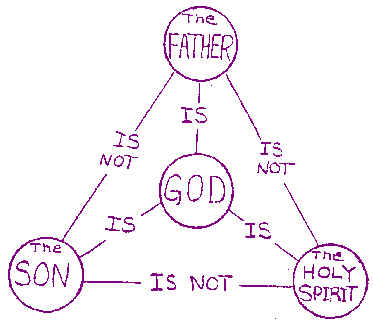
Christianity, alone among the world faiths, teaches that God is triune. The doctrine of the Trinity is that God is one being who exists eternally in three persons: Father, Son and Holy Spirit. The Trinity means that God is, in essence, relational.

The Gospel writer John describes the Son as living from all eternity in the ‘bosom of the Father’ (John 1:18), an ancient metaphor for love and intimacy. Later in John’s Gospel, Jesus, the Son, describes the Spirit as living to ‘glorify’ him (John 16:14). In turn, the Son glorifies the Father (17:4) and the Father, the Son (17:5). This has been going on for all eternity (17:5b).

What does the term ‘glorify’ mean? To glorify something or someone is to praise, enjoy and delight in them. When something is useful you are attracted to it for what it can bring you or do for you. But if it is beautiful, then you enjoy it simply for what it is. Just being in its presence is its own reward. To glorify someone is also to serve or defer to him or her. Instead of sacrificing their interests to make yourself happy, you sacrifice your interests to make them happy. Why? Your ultimate joy is to see them in joy.

What does it mean, then, that the Father, Son and Holy Spirit glorify one another? If we think of it graphically, we could say that self-centeredness is to be stationary, static. In self-centeredness we demand that others orbit around us. We will do things and give affection to others, as long as it helps us meet our personal goals and fulfils us.

The inner life of the triune God, however, is utterly different. The life of the Trinity is characterized not by self-centeredness but by mutually self-giving love. When we delight and serve someone else, we enter into a dynamic orbit around him or her, we centre on the interests and desires of the other. That creates a dance, particularly if there are three persons, each of whom moves around the other two. So it is, the Bible tells us. Each of the divine persons centers upon the others. None demands that the others revolve around him. Each voluntarily circles the other two, pouring love, delight and adoration into them. Each person of the Trinity loves, adores, defers to and rejoices in the others. That creates a dynamic, pulsating dance of joy and love. The early leaders of the Greek church had a word for this – perichoresis. Notice the root of our word ‘choreography’ within it. It means literally to ‘dance or flow around’.

The Father…Son…and Holy Spirit glorify each other…At the center of the universe, self-giving love is the dynamic currency of the Trinitarian life of God. The persons within God exalt, commune with, and defer to one another… When early Greek Christians spoke of perichoresis in God they meant that each divine person harbors the others at the center of his being. In constant movement of overture and acceptance each person envelops and encircles the others. (In The Reason For God, Keller quotes from Cornelius Plantinga – Engaging God”s World, from which the above paragraph is taken.)

In Christianity God is not an impersonal thing nor a static thing – not even just one person – but a dynamic pulsating activity, a life, a kind of drama, almost, if you will not think me irreverent, a kind of dance. . . . [The] pattern of this three-personal life is . . . the great fountain of energy and beauty spurting up at the very centre of reality.

The doctrine of the Trinity overloads our mental circuits. Despite its cognitive difficulty, however, this astonishing, dynamic conception of the triune God is bristling with profound, wonderful, life-shaping, world-changing implications.

The dance of love
If there is no God, then everything in and about us is the product of blind impersonal forces. The experience of love may feel significant, but evolutionary naturalists tell us that it is merely a biochemical state in the brain.

But what if there is a God? Does love fare any better? It depends on who you think God is. If God is unipersonal, then until God created other beings there was no love, since love is something that one person has for another. This means that a unipersonal God was power, sovereignty and greatness from all eternity, but not love. Love then is not of the essence of God, nor is it at the heart of the universe. Power is primary.

However, if God is triune, then loving relationships in community are the ‘great fountain…at the center of reality’.

When people say, ‘God is love,’ I think they mean that love is extremely important, or that God really wants us to love. But in the Christian conception, God really has love as his essence. If he was just one person he couldn’t have been loving for all eternity. If he was only the impersonal all-soul of Eastern thought, he couldn’t have been loving, for love is something persons do. Eastern religions believe the individual personality is an illusion, and therefore love is, too. Chesterton wrote, ‘For the Buddhist…personality is the fall of man, for the Christian it is the purpose of God, the whole point of his cosmic idea.’ It is the purpose of God because he is essentially, eternally, interpersonal love…

The dance of creation
Jonathan Edwards on reflecting on the interior life of the triune God, concluded that God is infinitely happy. Within God is a community of persons pouring glorifying, joyful love into one another…

Returning to the dance
…When Jesus died for you he was, as it were, inviting you into the dance…when we discern Jesus moving toward us and encircling us with infinite, self-giving love, we are invited to put our lives on a whole new foundation…

BTW, you can find an excellent unpublished essay on the Trinity by Edwards here.