Prayer of Examen

The Prayer of Examen is a daily spiritual exercise credited to Ignatius of Loyola (1491-1556), who encouraged fellow believers to engage in the practice for developing a deeper level of spiritual sensitivity and for recognizing and receiving the active presence of the Holy Spirit. At the heart of the practice is the desire to become increasingly aware of God’s presence and the Holy Spirit’s movement throughout our day.

The Daily Examen becomes a prayerful reflection on the events of the day in order to detect God’s presence and discern his commitment to us and direction for us.  The Examen is a practice for the Church that can help us see God’s hand at work in our whole experience.

Ignatius thought that the Examen was a gift that came directly from God, and that God wanted it to be shared as widely as possible. One of the few conventions of prayer that Ignatius made for the Jesuit order was a requirement that Jesuits practice the Examen twice daily—at noon and at the end of the day. It’s a habit that Jesuits, and many other Christians, practice to this day.

This is a simple version of the five-stage Daily Examen that Ignatius practiced:

  1. Become aware of God’s presence. (This is referred to in contemplative literature as “stilling,” and means to take the opportunity to dial down and become attentive to God’s presence.)
  2. Review the day with gratitude.
  3. Pay attention to your emotions.
  4. Choose one feature of the day and pray from it.
  5. Look toward tomorrow.

“Take, Lord, receive all my liberty, my memory, my understanding, and my entire will. All I have and call my own. Whatever I have or hold, you have given me. I restore it all to you and surrender it wholly to be governed by your will. Give me only your love and grace and I am rich enough and ask for nothing more.”  — Ignatius of Loyola

Check out examen.me.

Principles of Church Revitalization

Excellent…

From Embers To A Flame: Principles of Church Revitalization
by Harry L. Reeder III

1. God’s glory is revealed in our weaknesses.
2. Guard your reputation in the eyes of the community.
3. Uphold the centrality of God’s grace.
4. Leave the 99 to seek the 1 (church revitalization is seeking to save the church that is faltering).
5. Revisit to strengthen, encourage, correct and restore what is left.
6. Remember[1] from where you have fallen when Christ was leading this church.
7. Believe that the God who won the victory in the past will win the victory in the present.
8. Connect the future with past victories in Christ.
9. Repent[2] of failures in the past that controls the present.
10.  Leaders must be an example by repenting first of past failures, and then lead members to repent.
11.  Provide restitution for past sins. Ask forgiveness and make right where possible especially with those who left hurt and confused.
12.  Focus on Body health and let God handle the increase.
13.  Be faithful with little and God will give big. Do the right things at the right time in the right way for the right reasons.
14.  All biblical teaching is exploring the depth of the gospel. You never get beyond the gospel for it is the alpha and omega of God’s revealed truth in Scripture. You can only go deeper.
15.  All ministries must focus on the gospel of grace to be life changing.
16.  Prayer precedes revitalization and creates unity with God’s will. Prayer affords the privilege of participating in God’s reconciliation of His elect. Then, by faith act on your prayers.
17.  Make a list of all weaknesses and threats from Satan’s attacks and pray over this list regularly.
18.  Make a list of all Scriptures related to church revitalization and pray using the words of Scripture that God’s will be done on earth as it is in heaven.
19.  Pray thanking God for the opportunities presented by the bad that has beset your church.
20.  Make a list of all opportunities to do His will, then pray and see His power change the circumstances.
21.  Recover [3] the “First things,” get back to the basics that God blessed. Rebuild on these strengths.
22.  Godly leadership precedes God given church growth.
23.  Affirm what has been done well and identify weaknesses.
24.  Godly people follow godly leaders who follow Jesus and seek God’s glory.
25.  Resources follow Godly vision for ministry. Visualize a future blessed by God.
26.  Worship is the context in which the Great Commission operates. Do not replace worship for Christians with evangelism to “seekers.” Gather for worship, scatter for evangelism.
27.  Diversify evangelism efforts; multiply opportunities for gospel communication.
28.  Small group network is best way to assimilate new people and build community. Protect health of small group.
29.  Qualified leaders who present sound doctrine and are able to refute those who contradict it must lead small groups. Must avoid dialogue in small groups that leads to a compromise of truth or pluralism of ideas that accepts every opinion as valid. Scripture rightly interpreted must be central, then fellowship and prayer for “one another.”
30.  The Christian life is 100% dependence on God’s grace and 100% disciplined by grace.
31.  For a congregation to remain healthy church discipline must be exercised according to Matt. 18 on a regular basis. “Sin in the camp” must be confronted.
32.  A healthy Body of believers will grow as God adds those He wants discipled to maturity. Church growth is a natural by-product of spiritual health.


[1] Rev. 2:5 – Remember, Repent, and Recover is Jesus’ formula for revitalization.

[2] Ibid.

[3] Ibid.

Trinitarian Dance

C.S. Lewis described the Trinity as a “dance” saying, “God is not a static thing…but a dynamic, pulsating activity, a life, almost…a kind of dance” (Mere Christianity, p 136).

Tim Keller elaborates on this concept in the Reason for God in Chapter 14 – The Dance of God (pgs 214-221):

I believe that Christianity makes the most sense out of our individual life stories and out of what we see in the world’s history. In the last six chapters I have been arguing that the Christian understanding of where we came from, what’s wrong with us, and how it can be fixed has greater power to explain what we see and experience than does any other competing account. It is time to draw together the various threads of the narrative we have been examining and view the story line of Christianity as a whole. The Bible has often been summed up as a drama in four acts – creation, fall, redemption and restoration.

The divine dance
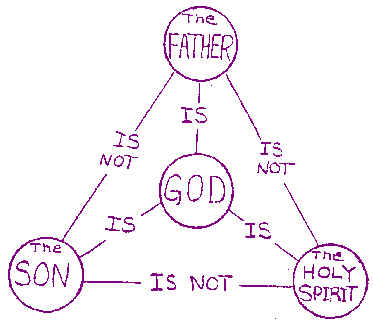
Christianity, alone among the world faiths, teaches that God is triune. The doctrine of the Trinity is that God is one being who exists eternally in three persons: Father, Son and Holy Spirit. The Trinity means that God is, in essence, relational.

The Gospel writer John describes the Son as living from all eternity in the ‘bosom of the Father’ (John 1:18), an ancient metaphor for love and intimacy. Later in John’s Gospel, Jesus, the Son, describes the Spirit as living to ‘glorify’ him (John 16:14). In turn, the Son glorifies the Father (17:4) and the Father, the Son (17:5). This has been going on for all eternity (17:5b).

What does the term ‘glorify’ mean? To glorify something or someone is to praise, enjoy and delight in them. When something is useful you are attracted to it for what it can bring you or do for you. But if it is beautiful, then you enjoy it simply for what it is. Just being in its presence is its own reward. To glorify someone is also to serve or defer to him or her. Instead of sacrificing their interests to make yourself happy, you sacrifice your interests to make them happy. Why? Your ultimate joy is to see them in joy.

What does it mean, then, that the Father, Son and Holy Spirit glorify one another? If we think of it graphically, we could say that self-centeredness is to be stationary, static. In self-centeredness we demand that others orbit around us. We will do things and give affection to others, as long as it helps us meet our personal goals and fulfils us.

The inner life of the triune God, however, is utterly different. The life of the Trinity is characterized not by self-centeredness but by mutually self-giving love. When we delight and serve someone else, we enter into a dynamic orbit around him or her, we centre on the interests and desires of the other. That creates a dance, particularly if there are three persons, each of whom moves around the other two. So it is, the Bible tells us. Each of the divine persons centers upon the others. None demands that the others revolve around him. Each voluntarily circles the other two, pouring love, delight and adoration into them. Each person of the Trinity loves, adores, defers to and rejoices in the others. That creates a dynamic, pulsating dance of joy and love. The early leaders of the Greek church had a word for this – perichoresis. Notice the root of our word ‘choreography’ within it. It means literally to ‘dance or flow around’.

The Father…Son…and Holy Spirit glorify each other…At the center of the universe, self-giving love is the dynamic currency of the Trinitarian life of God. The persons within God exalt, commune with, and defer to one another… When early Greek Christians spoke of perichoresis in God they meant that each divine person harbors the others at the center of his being. In constant movement of overture and acceptance each person envelops and encircles the others. (In The Reason For God, Keller quotes from Cornelius Plantinga – Engaging God”s World, from which the above paragraph is taken.)

In Christianity God is not an impersonal thing nor a static thing – not even just one person – but a dynamic pulsating activity, a life, a kind of drama, almost, if you will not think me irreverent, a kind of dance. . . . [The] pattern of this three-personal life is . . . the great fountain of energy and beauty spurting up at the very centre of reality.

The doctrine of the Trinity overloads our mental circuits. Despite its cognitive difficulty, however, this astonishing, dynamic conception of the triune God is bristling with profound, wonderful, life-shaping, world-changing implications.

The dance of love
If there is no God, then everything in and about us is the product of blind impersonal forces. The experience of love may feel significant, but evolutionary naturalists tell us that it is merely a biochemical state in the brain.

But what if there is a God? Does love fare any better? It depends on who you think God is. If God is unipersonal, then until God created other beings there was no love, since love is something that one person has for another. This means that a unipersonal God was power, sovereignty and greatness from all eternity, but not love. Love then is not of the essence of God, nor is it at the heart of the universe. Power is primary.

However, if God is triune, then loving relationships in community are the ‘great fountain…at the center of reality’.

When people say, ‘God is love,’ I think they mean that love is extremely important, or that God really wants us to love. But in the Christian conception, God really has love as his essence. If he was just one person he couldn’t have been loving for all eternity. If he was only the impersonal all-soul of Eastern thought, he couldn’t have been loving, for love is something persons do. Eastern religions believe the individual personality is an illusion, and therefore love is, too. Chesterton wrote, ‘For the Buddhist…personality is the fall of man, for the Christian it is the purpose of God, the whole point of his cosmic idea.’ It is the purpose of God because he is essentially, eternally, interpersonal love…

The dance of creation
Jonathan Edwards on reflecting on the interior life of the triune God, concluded that God is infinitely happy. Within God is a community of persons pouring glorifying, joyful love into one another…

Returning to the dance
…When Jesus died for you he was, as it were, inviting you into the dance…when we discern Jesus moving toward us and encircling us with infinite, self-giving love, we are invited to put our lives on a whole new foundation…

BTW, you can find an excellent unpublished essay on the Trinity by Edwards here.

Thoughts From a Dad

I was both saddened and excited by her email. Our daughter was away at college and as part of an assignment asked me to list the top five qualities that I would encourage her to look for in a spouse. My sadness stemmed from wishing we’d had this conversation sooner so that she didn’t even have to ask the question. Our kids could lead more secure and focused lives by having a clear response to this question firmly planted in their hearts as they transition from adolescence into adulthood. It didn’t take me long to respond. As the father of four children, I had intended to initiate this discussion many times, yet I never seemed to find the right moment – mostly because I was afraid that my thoughts might be perceived as manipulation. What excited me most about her email was knowing that my daughter is taking the time to cultivate her own criterion for relationships that are both healthy and holy.

Here’s my response:
1. That he share your love and passion for God. There must be a core values match in this area for a marriage partnership to flourish. My experience in ministry has taught me that couples can be unequally yoked even with other believers who do not share a parallel passion for pursuing God’s heart and ways.

2. That he be absolutely, totally, and utterly abandoned in his love and passion for you. Because you deserve it.

3. That he be able to support and even steer you toward the fulfillment of your divine destiny. To accomplish this he will need to appreciate your unique (albeit emerging) calling and spiritual gift-mix. This reflects the foundational purpose for our existence. In addition to the extraordinary opportunity for a growing friendship with God, we are invited to allow God to shape us and send us to serve humanity with wisdom, resolve, and anointing — which increases exponentially through regular affirmation and encouragement.

4. That, when he makes a mistake, it’s by giving, not by withholding. The old adage, “you can’t out-give God” is true. And remember, we don’t give to get — we give to get to give again.

5. That he would actively pursue mutually accountable relationships with other men. Most of the growth I have enjoyed has come through proactively pursuing mentoring and accountability. We all need people in our lives whom we have invited to ask us soul-searching questions – usually it’s about motives, money, and morality.

I love my children.  I may have learned more from them then they from me…