JESUS Is Both The PRICE and The PRIZE of The Gospel

Easter 2013The title of the message today is, “JESUS is Both The PRICE and The PRIZE of The GOSPEL.”[1]

Read Romans 5:6-11…

For while we were still helpless, at the right time Christ died for the ungodly. For one will hardly die for a righteous man; though perhaps for the good man someone would dare even to die. But God demonstrates His own love toward us, in that while we were yet sinners, Christ died for us. Much more then, having now been justified by His blood, we shall be saved from the wrath of God through Him. 10 For if while we were enemies we were reconciled to God through the death of His Son, much more, having been reconciled, we shall be saved by His life. 11 And not only this, but we also exult in God through our Lord Jesus Christ, through whom we have now received the reconciliation.

I find that there is much confusion regarding the meaning (or the message) of the GOSPEL – both in our culture as well as in the Evangelical Church (which is our tribe).

The word “gospel” as you probably know, means GOOD NEWS and is used about 90 times in the New Testament.

Before we get (back) to our text in Romans 5, I would like to make four points to help us grasp the uniqueness of the GOSPEL.  Hopefully, these points will set us up to more fully appreciate both the PRICE and the PRIZE of the GOSPEL…

1.  The GOSPEL represents a distinctive THIRD WAY to both view and live our lives.[2]

  • Traditionally we have tended to view only two types of people:
  • The religious/spiritual, or
  • The irreligious/secular.[3]
  • The GOSPEL is neither religious nor irreligious (secular), but is something else entirely (e.g., Prodigal Sons in Luke 15).
  • The GOSPEL is a third way of relating to God that comes to us by:  grace alone, through faith alone, through the finished work of Jesus Christ alone.
  • This third way, this “grace way,” is exclusive to Christianity.
  • The Christian GOSPEL cannot and does not mix with or blend with any other religious system or philosophy of life.
  • In fact, the GOSPEL is meant to replace the whole concept of religion.
  • I would add that the GOSPEL also does not mix or blend with political liberalism — or conservatism.

2.  The GOSPEL is not good advice, it is good news. 

  • The GOSPEL is not something that we do, but something that has been done for us – and something we must respond to. 
  • In Peter’s first sermon recorded in Acts 2 he was preaching to the gathered Jews and twice he told them, ‘you killed Christ’ (2:23, 36). (Acts 2:37: “Repent, be baptized, and you will receive the gift of the Holy Spirit.”)

3.  The GOSPEL is the good news that we can be saved, or rescued, from the coming wrath at the end of the age (1 Thess 1:10 – “Jesus…rescues us from the wrath to come”).

  • Let’s consider the word “wrath” for a moment… You might say, ‘I don’t like the idea of the wrath of God. I prefer a God of love.’
  • Tim Keller writes, “The problem is that if you want a loving God, you have to have an angry God. Please think about it. Loving people can get angry, not in spite of their love but because of it. In fact, the more closely and deeply you love people in your life, the angrier you can get. Have you noticed that? When you see people who are harmed or abused, you get mad…Your senses of love and justice are activated together, not in opposition to each other. If you see people destroying themselves or destroying other people and you don’t get mad, it’s because you don’t care…The more loving you are, the more ferociously angry you will be at whatever harms your beloved. And the greater the harm, the more resolute your opposition will be.[4]
  • God is unwaveringly holy.  The only way into His presence is sinless perfection.  And that brings us to number 4…

4.  The GOSPEL is news about what has been accomplished by Jesus Christ to reconcile our relationship with God. 

  • Jesus left the comfort and security of heaven and condescended to become a human.  He lived a sinless life so that we could be reconciled to God. The conflict has ended. 
  • Colossians 2:21-22: 21 And although you were formerly alienated and hostile in mind, engaged in evil deeds, 22 yet He has now reconciled you in His fleshly body through death, in order to present you before Him holy and blameless and beyond reproach.
  • Becoming an active intentional follower of Jesus Christ is about a change in status.  We are either “in Christ” or not.  (Used approx. 90 times; “in him” is also used about 80 times…)
  • **Once we find ourselves “IN Christ,” we no longer work FOR (religion) His acceptance (or approval), but FROM (the GOSPEL) His acceptance (and approval).
  • **Obedience is not the obligation of the GOSPEL (or the Christian).  Finding our delight, our comfort, and our JOY in Christ is the obligation of the Christ-follower.  Obedience becomes the fruit, not the goal. (God is not opposed to effort, He’s opposed to earning.) Psalm 87:7: “All my springs of joy are in you.”
  • **The GOSPEL is not about something we do, it is about what has been done for us.

With the above in mind I would like to ask and address two questions:

1.  What is the PRICE? (Rom 5:6-8)

  • The price of the gospel is the death of Jesus Christ.
  • Verse 6: “Christ died for the ungodly.”
  • Verse 8: “But God… Christ died for us.”
  • God loved us while we were still in our sin and paid a PRICE so that we might have an infinite PRIZE. That PRICE was the death of his Son. And we find PRIZE in verses 9-11…

2.  What is the PRIZE? (Rom 9-11)

  • The gospel is the good news that God in Christ paid the PRICE of suffering, so that we could have the PRIZE of enjoying Him forever. God paid the PRICE of his Son to give us the PRIZE of Himself.
    • Justification: God’s forgiveness of the past, together with His acceptance for the future (J.I. Packer).[5]
    • Freedom from the wrath of God — we are saved to BE WITH Him, who is our PRIZE.
    • Reconciliation: The removal of the barrier of sin between God and humankind and now we enjoy absolute and unhindered access to Him (2 Corinthians 5:18: “Christ reconciled us to himself and gave us the ministry of reconciliation”).
    • Exultation (NIV – boast, NKJ – rejoice): The highest good of the good news is finding our JOY in God.  The fullest, deepest, sweetest good of the gospel is God Himself, being delighted in and enjoyed by His redeemed people.
  • The PRIZE of the gospel is the Person who paid the PRICE. The gospel-love God gives is ultimately the gift of Himself. This is what you were made for. This is what Christ came to restore.
  • “In your presence there is fullness of joy; at your right hand are pleasures forevermore” (Psalm 16:11).
  • The GOSPEL message is not that if you follow Him, everything’s going to go well, everything is going to work. The good news, the gospel of Jesus Christ is that you get Him and He’s enough no matter what circumstance comes! 

CONCLUSION

“Imagine yourself as a living house. God comes in to rebuild that house. At first, perhaps, you can understand what He is doing. He is getting the drains right and stopping the leaks in the roof and so on; you knew that those jobs needed doing and so you are not surprised. But presently He starts knocking the house about in a way that hurts abominably and does not seem to make any sense. What on earth is He up to? The explanation is that He is building quite a different house from the one you thought of – throwing out a new wing here, putting on an extra floor there, running up towers, making courtyards. You thought you were being made into a decent little cottage: but He is building a palace. He intends to come and live in it Himself.”   — C.S. Lewis, Mere Christianity

Communion: Rom 5:9: We have been justified by His blood…

When we see the blood in the Bible we can know that it’s a summarized or an abbreviation of the gospel message.  (There are other words that are used by the NT writers as summations of the GOSPEL — including cross, kingdom, and grace.)

Jesus said in Matthew 26:26-28…

26 While they were eating, Jesus took some bread, and after a blessing, He broke it and gave it to the disciples, and said, “Take, eat; this is My body.” 27 And when He had taken a cup and given thanks, He gave it to them, saying, “Drink from it, all of you; 28 for this is My blood of the covenant, which is poured out for many for forgiveness of sins.

We practice an open communion… yet keep in mind 1 Cor 11:28-29:

28 But a man must examine himself, and in so doing he is to eat of the bread and drink of the cup. 29 For he who eats and drinks, eats and drinks judgment to himself if he does not judge the body rightly.


[1] Adapted from a sermon by John Piper.

[2] Adapted from Tim Keller. Center Church, Zondervan 2012:28-30.

[3] Or, moral conformity (moralism) vs. self-discovery (secularism). See Prodigal God by Tim Keller.

[4] Tim Keller. King’s Cross: The Story of the World in the Life of Jesus, Dutton 2011: 176-78.

[5] J.I. Packer. Knowing God, pp. 206-207.

Soul Shift — Lord, Teach Us To Pray #1

SoulShiftToday we begin a new series – “Soul Shift.”  I thought the title expressed well a desire for transformation.

We will be working our way through Matthew 6 – and other related passages (Luke 11 for instance).  By next Sunday we will have a curriculum available for use to follow along.  It will be able to be used in a Sunday School class, a bible study, or a community group.

If you were here the last two weeks, we listened to theologian, author, and lecturer J. Edwin Orr talk about revival, and specifically revival in America – and its relationship to prayer.

I think the most important thing J. Edwin Orr said was:

“There has never been a spiritual awakening in any country or locality that did not begin in united concerted, and sustained prayer.”

We are beginning – or returning, to some prayer initiatives here at SBF.

  • After the service.
  • On the first Sunday afternoon of each month we will gather for a concert – or concerted prayer.  This afternoon from 4-5:30pm.

I will be beginning to search out pastors prayer gatherings in and around Manchester to pray with them as well.

Last week J. Edwin Orr gave us some perspective on the history of revival – particularly as it relates to New England.  I think it’s important for us to be aware of our history here in New England.

And in the last couple of our SBF e-NEWS that goes out during the week I have spoken of a sense that there is a “quiet revival,” taking place in New England right now.  One New England pastor referred to it as a “gospel replanting” of churches.  Both formerly liberal as well as moralistically fundamental churches are undergoing a gospel-centered transformation, which is much like what has been happening here.

For most of us prayer is, without a doubt, the most difficult spiritual discipline to make good and consistent progress in.

It’s a little bit like humility – no one ever feels like they’ve “arrived.”

And, when we think about prayer it’s easy to feel very guilty very quickly.

The bottom-line definition of prayer is that it is communion with God.

I recently came across a way to think about and clarify the different aspects of prayer that I’d like to share with you – and we will come back to this over the coming weeks.

This matrix, or template, for prayer can be called 360 degree prayer, which helps us to see prayer in four ways, or dimensions:

Inward – Surrendering to God and aligning ourselves with God.  We’ll be talking about this aspect more today – and next week.  This is where we surrender ourselves into the sanctification process.  Most of the first chapter of the Sermon on the Mount is devoted to a humble surrender and reorientation through owning our own issues and mourning over the effects of sin.

Upward – Worshipful communion with God.  We lift our hearts and hands in grateful surrender, adoration, and worship.

Around – To pray with others.  The passage we’ll be studying, after all, begins with the words, “Our Father…”

Outward – To engage with the mission of God.  Asking God to send us out on mission with Him.  It’s been said that we serve a missionary God:

  • The Father sent the Son.
  • The Son sent the Holy Spirit
  • And the Holy Spirit sends us…

Some people go around the world as missionaries.  Most of us are missionaries sent to neighbors, co-workers, family, friends, acquaintances who are not yet active, intentional followers of Jesus Christ.

What we are aiming for in this series (and season of SBF’s ministry life) is for there to be a transforming shift in our soul (individually and collectively), so that prayer becomes more natural – and more normative.

I have come to see that there may be a common reason why we don’t pray more…

It’s happened to me in different seasons of my life…

Sometimes, when we have a burden to pray or a strong desire to draw closer to God, things right away, seem to get harder and more difficult – so we tend to back off of prayer.  We end-up thinking, or even saying:  “God, You just do Your thing and I’ll do mine…”  Then we don’t move into “extraordinary prayer,” we just stick to “ordinary” prayer.

I don’t want to discourage you, but I do think that often times our circumstances will get harder before they get better when we lean into God – and into prayer.

Realistically, we need to be prepared for this.

Why is it like that?  Because when we get all soft and tender before God, He begins to deal with stuff in our lives.  Someone said He “fixes a fix to fix us.”

Mostly God begins point out and put His finger on our idols – or functional saviors, which are all the earth-bound things we turn to, to quiet the longings or pain that is in our souls.

In the Bible – and in prayer, we have a language of love, trust, holy fear, hope, seeking, and serving.  These are terms describing our legitimate longings, our desires for relationship to the true God.

Then most of us have a host of false loves, false trusts, false fears, false hopes, false pursuits, and even false masters.

Idolatry describes our drift away from God, where we find ourselves serving lessor Gods.  The best working definition for idolatry is: turning a good thing into an ultimate thing…

There are personal, cultural, and religious idols…

1.  Some common personal idols include:

  • Certain relationships can become idolatrous – looking to other people to find our value or worth – and not finding that in and through good.  It may be a spouse, a parent, a boss…
  • Dysfunctional family or marital systems are often idolatrous.  The most destructive of these is the classic addict and enabler.  Did you know you can’t have an addict if there’s no enabler?
  • There are many kinds of addictions…
    • There are ingestive addictions – things like alcohol, drugs, or food.  We ingest substances to satisfy the longs and cravings of our soul.
    • There are also process addictions – things like gambling, pornography and masturbation, shopping (or spending), watching too much TV, religion can become an idol, making money – even working out can become an addiction – although most of us could use a little more time at the gym 🙂

2.  We have many cultural idols – There are famous people that we idolize.  We even have a national TV show – American Idol… What might a North Eastern cultural idol be?  (Patriots :), “Live Free or Die”?)

3.  What are some religious idols?

  • The most common is probably superstition, trying to earn God’s favor, or other forms of moralism.
  • The biblical expression of our lives and the Church through the gospel is: “I am accepted through Christ, therefore I obey.”
  • Religion alternatively says: “I obey, therefore I am accepted.”
  • The human tendency is bent toward religion, which essentially sets up rules and regulations (i.e., moralism) and we keep them to earn our righteousness before God.
  • This is exactly the “different gospel” that Paul addresses in his letter to the Galatians (1:6).  In the same verse Paul expresses amazement at how quickly they have veered and substituted religion for the gospel.  Religious practice can become our functional savior.
  • While the Galatians struggled with abuses of legalism, the Corinthians struggled with abuses of liberty.[1]
  • Both are soulish expressions of religion and not born of the Holy Spirit.  The antidote to both excessive legalism and excessive liberty is the gospel.

What am I saying with all this talk of idolatry?  If we want to learn how to pray, we must be prepared for life to get harder before it gets better.

We must be willing for God to point out our idols – and then ask us to offer them up to Him.

In the end Satan remains the enemy of our souls who wants to disrupt, discourage, distort, and divide (see Eph 6:10-12).

Prayer is not a method to get what we want from God, but THE means of getting more of God Himself, of encountering God so that He becomes the primary object we desire – God becomes the end goal of our lives.

  • Ps 63:1 – O God, You are my God; I shall seek You earnestly; My soul thirsts for You, my flesh yearns for You…
  • Ps. 42:1 – As the deer pants for the water brooks, So my soul pants for You, O God.

Here are some descriptions of prayer that have recently caught my attention:

  • Brennan Manning, prayer is “holy loitering.”
  • Anne Lamott, prayer is our real self trying to communicate with the Real.
  • Richard Rohr, prayer is disrobing our souls before God.
  • Someone has said that prayer is like good jazz – it is both structured and spontaneous; there is tempo, timing, and a key yet there is freedom to move around.
  • Shane Claiborne writes, “the cry of the Lord’s Prayer reminds us of our vocation as children of God, [we are] orphans adopted into the family of Yahweh…God comes and dwells among us as a Big Brother whom we can emulate.  From Him we learn to pray, “Our Father in heaven.”

[1] Which Paul specifically addresses in 1 Corinthians.

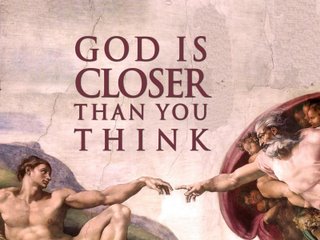
God Is Closer Than You Think #6 – What Is Sin?

I. INTRO

Romans 5:12-21 (emphasis added)

Therefore, just as through one man sin entered into the world, and death through sin, and so death spread to all men, because all sinned— 13 for until the Law sin was in the world, but sin is not imputed when there is no law. 14 Nevertheless death reigned from Adam until Moses, even over those who had not sinned in the likeness of the offense of Adam, who is a type of Him who was to come.

15 But the free gift is not like the transgression. For if by the transgression of the one the many died, much more did the grace of God and the gift by the grace of the one Man, Jesus Christ, abound to the many. 16 The gift is not like that which came through the one who sinned; for on the one hand the judgment arose from one transgression resulting in condemnation, but on the other hand the free gift arose from many transgressions resulting in justification. 17 For if by the transgression of the one, death reigned through the one, much more those who receive the abundance of grace and of the gift of righteousness will reign in life through the One, Jesus Christ.

18 So then as through one transgression there resulted condemnation to all men, even so through one act of righteousness there resulted justification of life to all men. 19 For as through the one man’s disobedience the many were made sinners, even so through the obedience of the One the many will be made righteous. 20 The Law came in so that the transgression would increase; but where sin increased, grace abounded all the more, 21 so that, as sin reigned in death, even so grace would reign through righteousness to eternal life through Jesus Christ our Lord.

Christmas is coming…Suppose I purchased a gift for you and wrapped it nicely in wrapping paper with a nice ribbon and and a beautiful bow…And I even filled out one of those tags — From: Gregg and To: You and I gave the beautifully wrapped gift to you.

Now, I assume you’d be trilled and excited – and suppose you took the gift home and you placed it in a very prominent place in your home.

And when people came over to your home – you would show them the gift”  “Look Pastor Gregg gave me a gift, he must really like me…”

What’s wrong with is picture?

Right, to have been given a gift and never open it and delight in its contents is pretty dumb…But that’s what some people do with their Bibles – they don’t take the time to learn and grow.

The Bible speaks of one main gift.  That gift we’ve come to call “The Gospel.”  And the essence of the gospel is found in Romans 5:8:

“But God demonstrates His own love toward us, in that while we were yet sinners, Christ died for us.”

The word “theology” means “the study of God.”  We are all theologians.  Some people are vocational theologians.  Some have more degrees than Fahrenheit and we read their books – but we are all theologians.  (The Bible is the only book in existence that necessitates increasing intimacy with the author to fully understand its contents.)

Now the essence of theology is learning how to unwrap the gift of the gospel that God has given us.

Theology matters.  Good theology matters.

That’s why we’re taking this time to cover some of the basic, or main doctrines of the Christian faith.

And more than that, I am praying for us that everyone one of us would capture, or obtain a higher view of God. Isaiah 40:9 – “Get yourself up on a high mountain…” (Isaiah 6 as well – Isaiah is undone by a view of the holiness of God…)

This is why I am asking all of us to be praying Ephesians 1:17-19:

“That the God of our Lord Jesus Christ, the Father of glory, may give to you a spirit of wisdom and of revelation in the knowledge of Him. 18 I pray that the eyes of your heart may be enlightened, so that you will know what is the hope of His calling, what are the riches of the glory of His inheritance in the saints, 19 and what is the surpassing greatness of His power toward us who believe. These are in accordance with the working of the strength of His might…”

The main gift the Bible speaks about is the Person of Jesus Christ.  And that because of His great love for you, He condescended to come and live a perfect sinless life and die a horrendous, torturous, murderous death that we might gain access to the very presence of God. The most holy place – the holy of holies.  Hebrews 10:19 says it this way:

“We [now] have confidence to enter the holy place by the blood of Jesus.”

What Jesus Christ has done, we call the gospel, or good news.

Many long-time churchgoers have thought of the gospel as the doorway through which we enter the Christian life.  What we’ve been trying to say for the last 18 months here at Southside (our theological “reboot”) is that the gospel is not just the doorway, it’s the whole house.

What we’ve been saying is that the whole Bible – from Genesis to Revelation, only has one main, or primary, storyline – and that is: redemption (found in the gospel). There are four sub-themes:

  • Our need for redemption
  • Our longing for redemption
  • The act of our redemption
  • And the calling to live in remembrance of our redemption…

Our passage this morning (Rom 5:12-21) contains three paragraphs.  Each of these paragraphs say basically the same thing.  Paul is very carefully repeating himself to make sure the people understand the gospel.  Also, we will see that each paragraph has little different twist to it.

The first paragraph (vs. 12-14) tells us that through one man (Adam) sin entered the world and death spread to all people – “even over those who had not sinned like Adam sinned.”  (Now you might be thinking, one guy blew it and we all pay the price? – We’ll get to that…)  This paragraph also tells us plainly that Adam is a “type” (or foreshadowing) of Jesus Christ.  In Jesus Christ we have a greater Adam – a perfectly obedient Adam.

The second paragraph (vs. 15-17) tells us the same thing – that by the “transgression” (or sin) of the one (Adam) God’s “judgement arose” (or was imposed) and humankind was condemned to die in their sinful condition.  Now the twist in this paragraph is that it clearly states what Jesus Christ has accomplished on behalf of the human race.  Notice that between verses15-17 the word “gift” is used five times.  The fifth use of the word gift identifies what’s in the package: “the gift of righteousness” (notice also that “abundance of grace” is included in the gift package).

The third paragraph (vs. 18-21), again tell us basically the same thing…one sin resulted in the condemnation of the whole human race (again, you might be thinking that is unfair), but here we see yet another facet of the gospel: …Through one act of righteousness there resulted justification of life to all [people].

19 For as through the one man’s disobedience the many were made sinners, even so through the obedience of the One the many will be made righteous. 20 [the purpose of the Law] The Law came in so that the transgression would increase [there are 613 commandments listed in the Hebrew Scriptures]; but where sin increased, grace abounded all the more, 21 so that, as sin reigned in death, even so grace would reign through [Christ’s gift of] righteousness to eternal life through Jesus Christ our Lord.

II. BODY

With the remainder of our time this morning I’d like to ask and answer 4 questions:

  1. What is sin?
  2. Where did sin come from?
  3. How does sin affect us?
  4. What has Jesus done?

1. What is sin?

Sin is any failure to conform to the moral law (or standard) of God in act, attitude [i.e., doing the right thing for the wrong reason], or nature.[1]

Sin is defined as a source of action, or an inward element producing [outward] acts.  This is what Rom 5:12 means when Paul states, “death spread to all people.”

Grudem describes sin as “the internal character that is the essence of who we are.”[2]

The reason God hates sin is that it directly contradicts everything God is.[3]

2. Where did sin came from?

Satan was the originator of sin. There are three passages that seem to describe  the heart of Satan – and the fallen angels who followed him:

Isaiah 14:12-15 “How you have fallen from heaven, O star of the morning, son of the dawn! You have been cut down to the earth, You who have weakened the nations! 13 “But you said in your heart, ‘I will ascend to heaven; I will raise my throne above the stars of God, And I will sit on the mount of assembly In the recesses of the north. 14 ‘I will ascend above the heights of the clouds; I will make myself like the Most High.’”

2 Peter 2:4 — “For if God did not spare angels when they sinned, but cast them into hell and committed them to pits of darkness, reserved for judgment.”

Jude 6 – “And angels who did not keep their own domain, but abandoned their proper abode, He has kept in eternal bonds under darkness for the judgment of the great day.”

Demons and demonic power are real.  Demons oppose and try to destroy every work of God.  However, they are limited by God’s control and have limited power (i.e., Job).

(A brief theology of spiritual warfare – don’t attempt to cast out, or fight, the darkness but turn on the Light – invite Jesus.  When Light dawns, darkness must flee.)

God has never sinned, nor did God create sin.  (Deut 32:4 – “His work is perfect…”). First it was Satan and the other fallen angels, then Adam sinned in the garden.  So, we can say that God allowed sin to enter the cosmos – and then the world, but He did not create sin.  We call this a paradox – a seeming contradiction – at first glance it appears to be contradictory, but in the end, it is not…

3. How does sin affects us?

Adam’s sin calls into question the very basis for all morality because it gave a different answer to the question, “What is right, and true, and good?”

Sin affects us in that it introduces lust into the human heart. The essential difference between lust and love is that lust is characterized by getting and love is characterized by giving.

Adam’s sin also gave a different answer to the question, “Who am I?”  They succumbed to the temptation to “be like God” (Gen 3:5) – attempting to put themselves in the place of God.  We are created creatures, not the Creator.

Romans 5 tells us we have what theologians describe as “inherited guilt.”  (This is a better term than “original sin”…)

God counted us guilty because of Adam’s sin (Rom 5:18-19).

When Adam sinned God thought of all who descended from Adam as sinners (Rom 5:8 – “While we were yet sinners, Christ died for us”).

All members of the human race were represented by Adam in the time of testing in the Garden (there’s Eden & Gethsemane).

Adam’s sin was imputed to us – God counted Adam’s guilt as belonging to us.

We have been represented by both Adam and Jesus.  If we don’t own-up to Adam’s sin, then we cannot receive Christ’s gift…

4. What has Jesus Christ done?

2 Cor 5:21 — He [God] made Him [Christ] who knew no sin to be sin on our behalf, so that we might become the righteousness of God in Him.

Here is the apostle Paul’s most succinct statement about the meaning of the cross. This could be the shortest, simplest verse among many in the Pauline epistles that help us to define and understand justification.

Its meaning can be summed up in a single principle: substitution.

It describes an exchange that took place through the atonement that Christ offered—our sin for Christ’s righteousness.

Jesus took the place of sinners so that they might stand in His place as a perfectly righteous person.

Please take notice the graphic language: He was made sin (that’s the very epitome of all that is despicable and odious),

So that we might be made righteousness (that’s everything that is good and pure and acceptable in God’s estimation).

This was the exchange: our sin for His righteousness.

Our sin was charged to His account and His righteousness was credited (imputed) to our account.

III. CONCLUSION

The effects of what Christ has done on those who believe…

  • When we do sin our legal standing before God remains unchanged (Rom 6:23; 8:1).
  • When we sin our fellowship with God is disrupted and hindered (Eph 4:30; Rev 3:19)
  • Westminster Confession of Faith Chap 11, Sec 5:

Although they never can fall from a state of justification, yet they may, by their sins, fall under God’s fatherly displeasure, and not have the light of His countenance restored unto them, until they humble themselves, confess their sins, beg pardon, and renew their faith and repentance.

  • There is a danger of some being “Unconverted Evangelicals”…

While a genuine Christian who sins does not lose his or her justification or adoption before God, there needs to be a clear warning that mere association with an evangelical church and outward conformity to “accepted” “Christian” patterns of behavior does not guarantee salvation.[4]

A consistent pattern of disobedience to Christ coupled with a lack of the elements of the fruit of the Holy Spirit is a warning signal that a person is probably not a true Christian inwardly.


[1] CB: 62.

[2] Christian Beliefs: 62.

[3] CB: 62.

[4] Grudem, Systematic Theology.
God Is Closer Than You Think #4 – What Is The Bible?

by JT Holderman

Our Topic: “God is closer than you think.” This is the title of our twelve week series on the basics of biblical doctrine, theology, what we can know about ourselves and God. This morning I have the privilege of addressing the topic: “What is the Bible?” And I am so glad to, because the Bible has transforming power. Scripture gives us wisdom, it reveals who God is, it reveals who you are, and it will transform you. Do you believe this? Gregg has taken us through “What is Man” and “What does God look like” and Jeff has taken the tough task of “what is the Trinity.” But how do we know the answers to these three sermons. Through Scripture, what God has revealed. Let’s ground our discussion of Scripture in a couple of verses.

 Scripture Reading: If you have your Bibles this, please open them up to 2 Timothy 3:14-17. Listen to the Word of God…

You, however, continue in the things you have learned and become convinced of, knowing from whom you have learned them, 15 and that from childhood you have known the sacred writings which are able to give you the wisdom that leads to salvation through faith which is in Christ Jesus. 16 All Scripture is inspired by God and profitable for teaching, for reproof, for correction, for training in righteousness; 17 so that the man of God may be adequate, equipped for every good work.

Context: We have this morning and incredibly rich passage of Scripture before us to study. Verse 16 is perhaps one of my favorite verses in the New Testament. What we have before us is a letter from the Apostle Paul, the same guy who wrote Romans and Corinthians. This letter is unique in one major way, it is written to a specific person, Timothy. Most of Paul’s letters are written to churches, to a large group of people. But here we have a unique glimpse into the correspondence between Paul and his young disciple and student in ministry Timothy. It’s a personal letter, from one friend to another. And here in our text, at the beginning of verse 14, we see that Paul is contrasting Timothy to someone else, but as for you. From the beginning of chapter three Paul lays out those who are living a godless life, those who are opposing truth and wisdom and virtue, those who are corrupted in mind, heretics. And in verses 10-13, directly preceding our passage, Paul commends timothy for being steadfast in his life as a Christian. So in v. 14 here, when Paul says but as for you, we must read him as an example in contrast to those who were against the Gospel. It is here in our passage that Paul therefore instructs Timothy, his young disciple, how he can continue to live in accordance with Jesus.

Purpose: And Paul instructs Timothy with one overriding point, really the whole purpose of this passage. Timothy is to become a mature disciple, to grow in the faith he has been brought up in. And Paul says this is primarily done through the power of the Scriptures. And this is the purpose of the text to you and I this morning, we are to become mature disciples by trusting God’s Word. I mean this is the reason that you and I come to church right? We sit under people who preach the Gospel to us for a reason don’t we? We don’t just come to have our ears itched and to hear funny stories, we come to be transformed. I think if we really ask ourselves, “Am I satisfied with who I am?” Most of us would say “no,” I would say “no.” We long to be the person God wants us to be. We are never complacent with who we are. On my drive this morning to church, I passed a pond. This was a stagnant pond, it had no fresh water flowing into it and it had no water flowing out of it. It was covered in green algae and looked disgusting. If the pond had moving water, it would become clearer. The same is true for you and I. If we are not being transformed by the Gospel, by what Jesus has done for you and I, we begin to look a lot like a stagnant pond. Think about why you came to church this morning. For many of us I’m sure it was because “well it’s just what you do on Sunday, or my wife wanted me to come, or I wanted to see friends, or I have to preach.” Think about why you came. Church is a place to worship God together and it’s also a place to grow together. We come to church because we love Jesus and we want to be transformed to be like him. If this isn’t why you come, check your heart.

Trusting in His Word: So Paul tells you and I that we grow and become mature disciples, we become more like Jesus, by trusting in His Word, in the Bible. Look at vv. 14-15. Paul instructs Timothy to become more mature by continuing to know the reality of the Gospel through Scripture. There are people, like his mother and Paul, who have instructed him as they themselves have been instructed by the Scriptures. So our call this morning, what we are primarily looking at, is the call to become mature disciples in Christ. What pictures in your mind do you associate with the word “maturity.” We think of an aged woman who simply exudes wisdom, we picture an old tree by the ocean that has withstood the trials of time, we think of a boy’s voice transitioning from really squeaky to deep, we think of composting and how it takes time for the soil to mature. I think the image of the tree is profound. The prophet Jeremiah uses an image of tree to talk about maturity, he says in Jeremiah 17:8.

And I’m sure we all have pictures of immaturity. I can remember going to a wedding once. It was a beautiful wedding. A few rows behind my wife and I there were a couple boys, maybe 8 years old. During the service I heard this sound that every 8 year old boy knows. I creaked my neck around to see them blowing on their arms like this, making fart noises. There’s something that has taken place between when we were 8 and where we are now that we know this is immature to do at a wedding. Our hope as disciples is that every day we live with our faith in Jesus that we would become more mature. This isn’t always the case. For every three steps forward we often take two backward right? I had a dry period in my faith a couple of years ago and it felt like I backslid and lost years of growth. So what is Paul’s encouragement to you and I that we may become mature? We are to trust the Scriptures. But in order to trust them, we need to look at two questions:

  1. Are the Scriptures trustworthy?
  2. Why should I trust them?

1) Are the Scriptures Trustworthy? This last year I was diagnosed with a gluten intolerance. It has been a tough transition learning how to change my diet. It was frustrating to hear, but I trusted the doctor’s diagnosis. Why? Because the doctor has an authority that I don’t have. Years of schooling, years of diagnosing health issues like mine. She had an authority that I trusted. In the same way, the Scriptures have an authority that did not come from man, like my doctor’s diplomas for med school, but from God alone. Look at v. 16a. We see here that Scripture, the Bible, attests to its own authority as being literally breathed from God. If God is real and if God is good and loving and if God has spoken, has breathed out this word, it has authority that is unparalleled. If the God that the Scriptures describe has Himself made these words come into being, there is no greater authority. Do the Scriptures have authority in your life? If God spoke them, they are worthy of our trust. It is God’s revelation to you and me of just how much He loves us. The Gospel, the good news of what Jesus Christ has done for you and I, is contained within these pages. In them we see a God who became man, forsaking His Godly powers. We see a God who in becoming man suffered and died for our sin, a God who loved us enough to die for us. It has authority not only because it is God breathed, but because of the character of God Himself.

And because God’s words are authoritative, they have power. Power and authority are synonyms. One of the most powerful pictures in Scripture that illustrates the power of God’s words is found in the Gospel of John. In chapter 11: Lazarus come out! PAINT THE SCENE. God’s words have authority, they have power to simply create life, to do things!

2) Why Should I Trust the Scriptures? We have already answered this a bit, we laid a foundation with authority. But really, of what value is the Bible to me? We should always be asking this question, it prevents us from just reading the Bible out of routine. There is a purpose God has for His Word, and we should seek it. There are two reasons we should trust the Scriptures personally.

  • First, we should trust them because they are necessary. The Bible is a necessary component in coming to love and know God. We cannot know God, as He has revealed Himself to us as a good, loving, gracious father, without seeing it in Scripture. Now don’t get me wrong, I believe in natural revelation. As a Christian when I see a sunrise or sunset, when I’m hiking with my wife, when I put my feet in the sand on the shore of the ocean, there are certain things that bring me to my knees in wonder and cry out “God made this!” There is a certain knowledge of God we can gain from the world around us, his beauty, his power. But we cannot know specific realities of who God is, or what he has done for us, apart from Scripture. It is necessary.
  • And secondly, theologians say Scripture is sufficient. Sufficient for what? If Scripture is necessary to know what God has done for you in Jesus Christ, then Scripture is sufficient for bringing you on your knees in faith, to trust in Jesus. Scripture is sufficient for salvation. Look at v. 15b.. Scripture brings about the reality of salvation, God uses it to touch your heart and reveal to you your sin and great need of redemption. But not only is it sufficient to save you, Scripture is also sufficient to mature you as a disciple. Look at vv. 16b-17. We see Paul list a few things that Scripture does, it doesn’t just fall idly by, it does stuff! Here are a few things the Bible says that it does: the bible initiates faith (Rom 10:17), the bible gives new life (1 pet. 1:23), it helps us grow spiritually (1 pet. 2:2), it searches the heart and convicts (heb 4:12), it liberates you (john 8:31-32), it refreshes and renews (ps. 119:25) and it revives and enlightens (ps. 19:7). These are just a few things the Bible says it does.

What Do I Mean By “Trust?” So remember, Paul is encouraging Timothy and You and I to become mature disciples, to become spiritually mature. He longs for us to live as a reflection of Jesus, to be like Him. And he tells us we are to do that by trusting in His word. But what do we mean by trust? Trust involves three things:

  1. For us to trust Scripture we must know it. This one is kind of a no brainer right? We can’t put any trust in the authority, necessity and sufficiency of Scripture if we haven’t read any of it, right? It would be like trying to say something intelligent in class about a book you have never read. You have to read it first in order to know what it is talking about. Now do we need to have read the entire Bible cover to cover, no, but we need to have read enough of it to see what it is about. So in order to trust the Bible we must first know it.
  2. Secondly, we must believe it. Now I think this is the most crucial step in trusting the Bible. Without a faith, a deep seated belief in what God has done for you in Jesus Christ, the words in the Bible are simply that, words on a page. They have no life. They are black pigment on a piece of paper. Our faith ignites the words on the page, bringing them to life, bringing them to reality as something worthy of our belief. Jesus Christ taking your sin on the cross and giving you a new life is something worthy of believing. A vital part of trusting the Bible is believing that in it God is speaking truly to you so that you might be transformed, you might be mature. This makes me think of the greatest theologian this world has ever known, a man named Augustine. Augustine lived in North Africa. He was a womanizer and self-confessed perverse man. He sought the comfort of women, not God with his life. But slowly over time God began to chip away at his heart. He knew the Old and New Testaments, but they were just information, literature. One day Augustine was sitting in a garden in Milan, Italy. On the bench next to him was a bound letters of Paul. He opened it up and read the first verse his eyes came across, “not in wantonness and drunkenness…” As soon as he had read this verse, he believed. The Word of God had such power in that moment to transform Augustine and give him faith. The Bible is nothing more than a textbook without faith in Jesus. It is our faith that brings this book alive!
  3. The third thing trust involves obedience. Trusting your parents when they tell you not to touch the hot stove means that you obey them, otherwise your hand is blistered and your parents are asking you why you didn’t trust them. Football season started a few weeks ago, thank goodness! Next time you watch a football game, when they cut with the camera to the coaches, look at them. What is in their hands? They hold their guide to the plays their team has learned. Many QB’s have this guide in short form on their forearm. These are the plays they have practiced and learned, the plays the team knows. When Tom Brady calls blue 42, it means a certain play. And when the team knows what to do with this play, their chances of success are much greater. But what if the players don’t obey? The play often falls dead. It doesn’t work. Likewise, obedience is a key factor in trusting what is in Scripture with our faith. But we have to be careful whenever we talk about obedience. Obedience that doesn’t first stem from love is legalism. We are not for this. Instead we should view obedience as the overflow of our heart to love and know God. Love should drive any obedience.

Conclusion: And Paul this morning wants you and I to be mature. He wants you to be continually transformed into the person God desires you to be. Maturity requires one thing from us this morning: response. Maturity beckons response. A mature person is someone who takes responsibility for their actions. And our call to be mature is grounded in our action, a call to respond to what God has done for you in Jesus Christ. Paul here specifically says that if you want to be mature, if you want to be the person God longs for you to be, trusting Scripture is essential.

Some of us need to know Scripture in order to respond to it. Some of us need to believe in what God has written for us to respond. And some of us need to simply be obedient to Scripture. Which person are you? Do you have trouble knowing what’s in the Bible? Do you have trouble believing it? Do you have trouble obeying it? I would guess we would say “JT, I have trouble with all three.” Me too. Trusting this book is difficult. But when we realize that God wants us to know Him, that He died for us to be able to know Him, it gives us a strength to grab hold of this book and love Him. Every time we read this text we are saying, “I love you God and I want to know you as you know me.” And isn’t it true that the more we love someone, the more we want to make them happy? The more I have loved my wife, the more I have realized what makes her happy and the more I want to do those things for her. And so we become mature by responding. We read the Bible not because we are supposed to, but because we love Him and want to be the person he wants us to be, mature, just like Paul wanted Timothy to be mature. Our love of God beckons a response.

I would encourage us all this morning to think deeply on our love of God. Do you love God? Do you want to grow in your relationship with Him? Then take this book and never let go. Love the Word of God and He will transform you into the person He and you long to be. “So what does this mean for how I live this week JT?” Maybe this week as you are at work, you take 5 or 10 minutes over your lunch break and you decide to work through an entire book of the bible. Maybe you choose the letter of James in the New Testament. Maybe you wake up 15 minutes earlier and spend some time reading and praying over it. Maybe when you are at school with a break you pull out your Bible and ask God to transform you, to make you a mature disciple. Maybe you think about reading through the Bible in a year, there are many great plans out there to do that. I’m doing it right now…though I’m definitely failing. If you and I do not see the value, but even more, if we don’t feel a burden of love to read the Bible, I have failed this morning. My prayer is that God would awaken you and me to a love for his Word. We must love Him in order to truly love and trust His word. Long to be mature disciples. Long to love God. And long to trust the Bible so that God may transform you into who you long to be.