

Lent Meditation – Wed 3/4

Matthew 21:28-32, NLT

“But what do you think about this? A man with two sons told the older boy, ‘Son, go out and work in the vineyard today.’ 29 The son answered, ‘No, I won’t go,’ but later he changed his mind and went anyway. 30 Then the father told the other son, ‘You go,’ and he said, ‘Yes, sir, I will.’ But he didn’t go. 31 “Which of the two obeyed his father?” They replied, “The first.” Then Jesus explained his meaning: “I tell you the truth, corrupt tax collectors and prostitutes will get into the Kingdom of God before you do. 32 For John the Baptist came and showed you the right way to live, but you didn’t believe him, while tax collectors and prostitutes did. And even when you saw this happening, you refused to believe him and repent of your sins.

I’m most like the older son. My first tendency is to react (rebellion is one of my issues). I’ve learned how to wait, think, pray, and seek input from mentors and friends. So, now I’m more responsive. I re-turn and, in the end, I usually make it to the “vineyard.”

Here’s another verse that helps us think about re-turning: God’s kindness leads us toward repentance (Romans 2:4).

It is not repentance that saves me; repentance is the sign that I realize what God has done in Christ Jesus. –Oswald Chambers

There is no justification without sanctification, no forgiveness without renewal of life, no real faith from which the fruits of new obedience do not grow. –Martin Luther

God is good.
Some Reasons We Don’t Like to Talk About Race

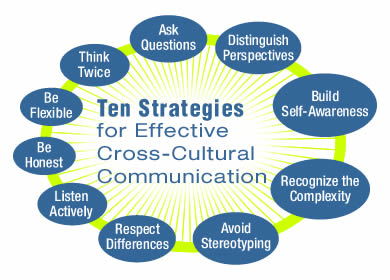
One of the things I get very excited about as I consider the opportunities before MPVCF this year is for us to engage in respectful dialogue over the issue of race. (BTW, I received some helpful input that “racism” can be a buzzword for all races and that it may be more appropriate to describe our opportunity as,”cross-cultural communication.” See above.) In this season of Lent it would be great if we took some time to think and pray about how we, as individuals and as a church, might make a way for an open respectful dialogue to take place?? What follows is a blog from a second-generation Korean-American who is a pastor named Eugene Cho. The name of the church is Quest Church and it is in Seattle. Please consider his thoughts…

One thing that is clear to me is that the church is quite silent. We talk often of reconciliation that’s necessary between God and humanity but need to keep pushing forward about how our faith informs and transforms our relationship with one another.

In Christ’s family there can be no division into Jew and non-Jew, slave and free, male and female. Among us you are all equal. That is, we are all in a common relationship with Jesus Christ. (Galatians 3.28/The Message)

Why is racism such a difficult topic and issue — including for Christians? Well, here are some of my reasons:

  1. It’s hard work. And people can be lazy. And talking about racism is an exhausting conversation because it brings up some deep questions. Reconciliation is hard work.
  2. Something called ‘Life.’ There’s lots of other things going on — umm, like the financial recession.
  3. Confusion. People don’t like confusion. Folks like clarity and certainty. We like answers.
  4. Conflict. People don’t like conflict and, well, the conversation of racism provokes conflict and strong opinions.
  5. Fear. People are afraid. Afraid to consider the possibilities that we’re racist, prejudiced, or implicated by our silence. Afraid to consider that we live as victims in a “victimized” mentality. Afraid to consider that we need to “give up” something. Afraid to “count the costs.”
  6. Apathy. People don’t care. We’re apathetic. And this is probably the scariest reason.
  7. What? We don’t think it exists. What racism? What prejudice? And this is probably as scary as #6.
  8. How? People don’t know how to talk about racism. We don’t have an agreed upon framework to engage the conversation and move toward peace and reconciliation.
  9. We want to forget the past and just “move forward.” It’s over. Heck, Obama is president. It’s a new day.
  10. [Insert additional reasons].

The topics of racism, prejudice, and reconciliation are indeed painful conversations. While I don’t necessarily believe that the answer lies exclusively with the church, I do believe the answer lies with the gospel. It lies ultimately with the message of ’shalom’ that God intended for humanity to live in fellowship with God and with one another — because we are created in the image of God.

Check out this video about one way we can engage the discussion about racism. Far too often, we end up implicating ‘the person’ leading to lots of anger, confusion, and defensiveness. Many times, it’s best to isolate the act and begin from there.

Lent Meditation – Monday, March 2nd

SCRIPTURE READING

For a long time I have kept silent, I have been quiet and held myself back. But now, like a woman in childbirth, I cry out, I gasp and pant. I will lay waste the mountains and hills and dry up all their vegetation; I will turn rivers into islands and dry up the pools. I will lead the blind by ways they have not known, along unfamiliar paths I will guide them; I will turn the darkness into light before them and make the rough places smooth. These are the things I will do; I will not forsake them (Isaiah 42:14-16, NIV).

MEDITATION

In societies of instant gratification, we often expect and even demand that God respond immediately to our expectations. Of course, He rarely does. Our hearts wonder if He loves us, really loves us. Isaiah’s complex book tells us in chapter 42 about God’s passion toward His people. It isn’t about flash emotion, but about the non-wavering resolute love of God to complete all He has promised toward us. The words at the beginning of the above passage remind us that our Lord’s love is not compromising, His intention is not negotiable.

The lyric of verse 14 is profound, “like a woman in childbirth I cry out, I gasp, I pant.” This is a passion that has been restrained, one that has a birth date of its own. As we face life, frustrated at the seeming victory of injustice, the Lord gives us a glimpse into His journal, His songbook. He expresses not proper theology, but His heart, His passion, His resolute commitment that will be completed, and one day will be unleashed. From despotic leaders, cancer, crime, broken relationships and dreams never realized, we can forget—our weak heart’s memory becoming discouraged. May God write the truth of His heart’s passion for us on our hearts, and may we remind each other of it regularly and live lives that are passionate toward Him and those He loves.

REFLECTION

  • In what circumstance are you struggling to remember that the Lord is passionate for you?
  • What events from your past remind and encourage your heart that He is passionate for you?
  • How might God be calling you to live more intimately with Him so that you can more fully experience His passion for you?

Mike Brantley, CRM