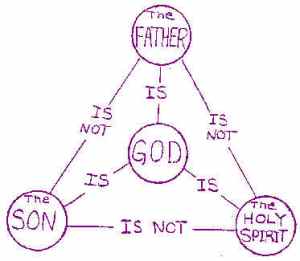
 C.S. Lewis described the Trinity as a “dance” saying, “God is not a static thing…but a dynamic, pulsating activity, a life, almost…a kind of dance” (Mere Christianity, p 136).
Tim Keller elaborates on this concept in the Reason for God in Chapter 14 – The Dance of God (pgs 214-221):
I believe that Christianity makes the most sense out of our individual life stories and out of what we see in the world’s history. In the last six chapters I have been arguing that the Christian understanding of where we came from, what’s wrong with us, and how it can be fixed has greater power to explain what we see and experience than does any other competing account. It is time to draw together the various threads of the narrative we have been examining and view the story line of Christianity as a whole. The Bible has often been summed up as a drama in four acts – creation, fall, redemption and restoration.
The divine dance
Christianity, alone among the world faiths, teaches that God is triune. The doctrine of the Trinity is that God is one being who exists eternally in three persons: Father, Son and Holy Spirit. The Trinity means that God is, in essence, relational.
The Gospel writer John describes the Son as living from all eternity in the ‘bosom of the Father’ (John 1:18), an ancient metaphor for love and intimacy. Later in John’s Gospel, Jesus, the Son, describes the Spirit as living to ‘glorify’ him (John 16:14). In turn, the Son glorifies the Father (17:4) and the Father, the Son (17:5). This has been going on for all eternity (17:5b).
What does the term ‘glorify’ mean? To glorify something or someone is to praise, enjoy and delight in them. When something is useful you are attracted to it for what it can bring you or do for you. But if it is beautiful, then you enjoy it simply for what it is. Just being in its presence is its own reward. To glorify someone is also to serve or defer to him or her. Instead of sacrificing their interests to make yourself happy, you sacrifice your interests to make them happy. Why? Your ultimate joy is to see them in joy.
What does it mean, then, that the Father, Son and Holy Spirit glorify one another? If we think of it graphically, we could say that self-centeredness is to be stationary, static. In self-centeredness we demand that others orbit around us. We will do things and give affection to others, as long as it helps us meet our personal goals and fulfils us.
The inner life of the triune God, however, is utterly different. The life of the Trinity is characterized not by self-centeredness but by mutually self-giving love. When we delight and serve someone else, we enter into a dynamic orbit around him or her, we centre on the interests and desires of the other. That creates a dance, particularly if there are three persons, each of whom moves around the other two. So it is, the Bible tells us. Each of the divine persons centers upon the others. None demands that the others revolve around him. Each voluntarily circles the other two, pouring love, delight and adoration into them. Each person of the Trinity loves, adores, defers to and rejoices in the others. That creates a dynamic, pulsating dance of joy and love. The early leaders of the Greek church had a word for this – perichoresis. Notice the root of our word ‘choreography’ within it. It means literally to ‘dance or flow around’.
The Father…Son…and Holy Spirit glorify each other…At the center of the universe, self-giving love is the dynamic currency of the Trinitarian life of God. The persons within God exalt, commune with, and defer to one another… When early Greek Christians spoke of perichoresis in God they meant that each divine person harbors the others at the center of his being. In constant movement of overture and acceptance each person envelops and encircles the others. (In The Reason For God, Keller quotes from Cornelius Plantinga – Engaging God”s World, from which the above paragraph is taken.)
In Christianity God is not an impersonal thing nor a static thing – not even just one person – but a dynamic pulsating activity, a life, a kind of drama, almost, if you will not think me irreverent, a kind of dance. . . . [The] pattern of this three-personal life is . . . the great fountain of energy and beauty spurting up at the very centre of reality.
The doctrine of the Trinity overloads our mental circuits. Despite its cognitive difficulty, however, this astonishing, dynamic conception of the triune God is bristling with profound, wonderful, life-shaping, world-changing implications.
The dance of love
If there is no God, then everything in and about us is the product of blind impersonal forces. The experience of love may feel significant, but evolutionary naturalists tell us that it is merely a biochemical state in the brain.
But what if there is a God? Does love fare any better? It depends on who you think God is. If God is unipersonal, then until God created other beings there was no love, since love is something that one person has for another. This means that a unipersonal God was power, sovereignty and greatness from all eternity, but not love. Love then is not of the essence of God, nor is it at the heart of the universe. Power is primary.
However, if God is triune, then loving relationships in community are the ‘great fountain…at the center of reality’.
When people say, ‘God is love,’ I think they mean that love is extremely important, or that God really wants us to love. But in the Christian conception, God really has love as his essence. If he was just one person he couldn’t have been loving for all eternity. If he was only the impersonal all-soul of Eastern thought, he couldn’t have been loving, for love is something persons do. Eastern religions believe the individual personality is an illusion, and therefore love is, too. Chesterton wrote, ‘For the Buddhist…personality is the fall of man, for the Christian it is the purpose of God, the whole point of his cosmic idea.’ It is the purpose of God because he is essentially, eternally, interpersonal love…
The dance of creation
Jonathan Edwards on reflecting on the interior life of the triune God, concluded that God is infinitely happy. Within God is a community of persons pouring glorifying, joyful love into one another…
Returning to the dance
…When Jesus died for you he was, as it were, inviting you into the dance…when we discern Jesus moving toward us and encircling us with infinite, self-giving love, we are invited to put our lives on a whole new foundation…
BTW, you can find an excellent unpublished essay on the Trinity by Edwards here.

 An approach to organizational transition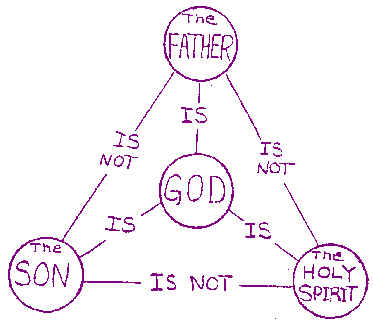
 Gregg A. Caruso