
 I came across John Piper’s summary of the first five chapters of Paul’s letter to the church at Rome – and found it to be excellent and worth passing on…
There is none righteous, no not one (Romans 3:10). All are guilty before God because of union with Adam in his first sin (5:12-14). And we all become our “own little Adams” when our depravity meets the Law of God and overflows in specific acts of transgression (5:16, 20). Therefore, there is no getting right with God – no justification – on the basis of deeds done by us in righteousness (3:20). Instead there is one and only one hope for sinners: a second Adam, Jesus Christ, has come into the world and provided both blood (5:9) and righteousness (5:18). Blood to cover all our sins, and righteousness so that our account is not empty but filled with perfect obedience – the obedience of Jesus (5:19). Therefore, it is by faith and by faith alone that we receive this grace of justification (3:28; 5:17) and obtain eternal life – the hope of glory.
What are some strategic implications?
For Martin Luther and John Bunyan the discovery of the imputed righteousness of Christ was the greatest life-changing experience they ever had. Luther said it was like entering a paradise of peace with God. For Bunyan it was the end of years of spiritual torture and uncertainty.
What Luther and Bunyan discovered was the Gospel message in its entirety. They discovered that the good news was, not only the sacrificial death of Christ on the cross as payment for their sins (which is certainly great news), but they also discovered that Christ’s perfect life of responsive obedience to his Father was imputed to their account.
One final thought…the word “gospel” simply means “good news” and this concept, or doctrine, of imputed righteousness is a key ingredient (see Rom 1:16-17).
 This is a re-post from Dawna MacLean. I was struck by how many pastors struggle with these identified leadership strategies. I also appreciate her statement (below) regarding momentum toward transparency and collaboration. For many of us this involves risk and learning new skills.
Today’s post was inspired by The 8 Stupidest Management Fads of All Time and The 5 Dumbest Management Concepts of All Time by Geoffrey James. I would respectfully disagree with some on his lists but I did enjoy his provocative perspectives. Geoffrey’s articles got me thinking about the most dim-witted leadership strategies that continue to linger in today’s business community. The good news is that there is growing momentum in our appreciation for transparency and we are finally starting to embrace the power of mass collaboration. Let’s agree to abolish these 5 useless and more often dooming leadership strategies.
#1 Command and Control
Command and control leaders might as well put a blindfold on along with some earplugs. Typically these leaders rationalize their methods emphasizing the negative outcomes of consensus based strategies. Consensus based strategies, while polar in nature, are as dysfunctional. Both strategies are negligent and like most things in life the sweet spot is somewhere in the middle. Decision makers are crucial, as are collective buy-in and the voice of the team broadly. We need more leaders that have the confidence to act and the humility to listen.
#2 Bottom Line Be All End All
Leaders that put the bottom line above all else will eventually find themselves at the bottom without the line. And assuming they defy the odds and sustain this risky strategy, they will not be maximizing their potential. They are simply gaining more than they are losing. I’m not suggesting the bottom line is not important, it is without question a key performance indicator, but it is no more significant than customer experience or employee experience and arguably less important. A healthy bottom line can be a goal, but it is not a strategy. Once again, it’s about balance, we need more leaders with the courage to focus beyond the all mighty dollar.
#3 Tradition and Prescription
While tradition might provide comfort, familiarity, and even bind groups of people, it can also inhibit and even sabotage meaningful change. I’m not suggesting all traditions be tossed, but they do need to be examined mindfully and they should never be maintained blindly. Similarly prescriptive leadership may provide consistency and reduce complexity but the reality is we do not live in a one size fits all world. It stifles creativity and fosters inflexibility. The effort required to develop a universal solution is enormous and commonly fraught with compromise on behalf of the customer. That said, highly regulated industries often require a more prescriptive approach, such as Health Care. The key is to examine all practices through the lens of your customer; it is possible to both meet regulatory demands and remain creative. Bottom line, we need more creative leaders that embrace and celebrate change.
#4 The Black Hole
Every company has a black hole, that is where all the wasted money, energy and talents fall when the are misused, misunderstood or worse unnoticed. I would bet that we could feed an entire continent, if not the world, if we could monetize this waste collectively. Every company needs a ‘waste master’, chances are they would be your most profitable investment. Leaders are often aware of some waste and blind to even more, we need leaders that have the courage and foresight to eliminate waste and in so doing maximize their potentiality.
#5 The Lone Ranger
This is the “I need to do it myself if it is going to get done right” leader. News flash, you are NOT a leader if you are doing everything and deciding everything. Being a leader is about empowering others, motivating them to act like an owner. A lone ranger may feel like a rock star but nothing could be farther from the truth. This leadership approach will chase away the talent on your team, it clearly does not scale, it is not sustainable, and it puts your business at massive risk. We need leaders that cultivate positive results from others; a smart leader surrounds themselves with those smarter then they are.
What does your top 5 dim-witted leadership strategies list look like? And what does your top 5 smartest leadership strategies list look like?
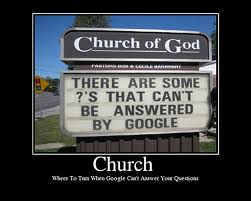 The Barna Group’s research in 2010 pointed to several major trends in American faith, none of them particularly encouraging. Overall, the survey and research found that Christians in America are increasingly looking like the culture at large. That doesn’t mean, however, that they are going into all the world and making disciples. The six “megathemes” are as follows:
The detailed list can be found on the Barna Group’s website.
 Gregg A. Caruso