Desiring God
Reply

 Repost — by Tim Chester
*******************************
Tim Chester is director of The Porterbrook Institute; a church planter with The Crowded House in Sheffield, UK; and the author of over a dozen books including Total Church and You Can Change.
 I. INTRO
A. Last Sunday we saw from verses 3 and 4 that John makes the message of Christ (call it theology, or doctrine) the basis of all significant Christian fellowship.
B. Ecc 4:12, “A cord of three strands is not quickly broken.”
C. 1:3: “What we have seen and heard we proclaim to you so that you may have fellowship with us.” In order to create and nurture deep (honest) Christian fellowship we have to acknowledge that Jesus Christ is at the center – and who He is and what He taught is both the standard and the ultimate goal of our lives.
D. This week:
1. God Is Light – 1 John 1:5-10
This is the message we have heard from Him and announce to you, that God is Light, and in Him there is no [notice John’s use of absolute terms] darkness at all. 6 If we say that we have fellowship with Him and yet walk in the darkness, we lie and do not practice the truth; 7 but if we walk in the Light as He Himself is in the Light, we have fellowship with one another, and the blood of Jesus His Son cleanses us from all sin. 8 If we say that we have no sin, we are deceiving ourselves and the truth is not in us. 9 If we confess our sins, He is faithful and righteous to forgive us our sins and to cleanse us from all unrighteousness. 10 If we say that we have not sinned, we make Him a liar and His word is not in us. [From this we get an idea of what some of the false teachers have been preaching…]
2:18 – Antichrists, 2) 2:22 – Liars/Antichrists, 3) 2:26 – Deceivers , 4) 3:7 – Deceivers , 5) 4:1 – False Prophets, 6) 4:3 – Antichrists
2. Jesus Christ Is Our Advocate (and Propitiation) — 1 John 2:1-2
[Grandpa Pastor John] 1My little children, I am writing these things to you so that you may not sin. And if anyone sins, we have an Advocate with the Father, Jesus Christ the righteous; 2 and He Himself [He became] is the propitiation for our sins; and not for ours only, but also for those of the whole world.
II. BODY
A. There are 2 parts to this message.
1. God is Light
a. Here is the overall structure of verses 5-10:
1) Verse 5 is the foundation: God is light.
2) Verses 6-7 are the application: Walk in the Light.
3) Verses 8-10 are the clarification: No one can claim to be without sin.
b. Walking in darkness destroys fellowship with God – and authentic fellowship with one another. We are as sick as our secrets.
2. Jesus Christ is our Advocate (2:1) – and our Propitiation (2:2).
B. God is light
1. We could talk about the fact that everything in the universe cycles, or circles, around the sun.
2. We could talk about photosynthesis – the chemical process that converts carbon dioxide into organic compounds using the energy from sunlight.
3. Does the Bible ever talk about what it means to “walk in the light”? Yes, Jesus, in the Sermon on the Mount is quite clear about what it means to walk in the light. View them as stepping stones – as we continuously cycle through the Beatitudes we will continue to grow deeper in God
4. The Beatitudes (Matthew 5:3-10) A lifeline to spiritual formation
a. The Beatitudes (Mat. 5:3-12) describe eight qualities that characterize the life of Jesus Christ, and therefore our life in Jesus Christ. Following is an overview of how one unfolds into the next… (This, BTW, will be the pathway for our transition season here at SBF…)
1) Blessed are the poor in spirit… [Blessed are those who know their need for God]. To enter into God’s kingdom, we are invited to admit that we have come to the end of ourselves and are in need of God’s help and care. It’s the realization that, “I can’t get there from here;” “I killed Christ;” “I am more depraved…”
2) Blessed are those who mourn… As we are honest about our own sinful tendencies there will be a transforming grief, or repentance, that surfaces – not only for our own lives, but also for the injustice, greed, and suffering that grips our world.
3) Blessed are the meek…Grieving over sin and suffering places us in a humble posture that helps us become life-long learners (disciple means learner). Meekness is not weakness, but the power of your potential under Christ’s control – like a broken horse. (Take you, break you, and give you.) As meek people we become learners (disciples).
4) Blessed are those who hunger and thirst for righteousness…To be hungry and thirsty is the desire to be empty of those things that don’t reflect God, and initiates a deep longing for wholeness in our lives.
5) Blessed are the merciful…As we receive God’s mercy we begin to give mercy – to ourselves and to others.
6) Blessed are the pure in heart… Mercy cleanses our heart and restores purity to our lives. 2 Cor 11:2 – For I am jealous for you with a godly jealousy; for I betrothed you to one husband, so that to Christ I might present you as a pure virgin.
7) Blessed are the peacemakers… Purity gives way to a personal serenity and peacefulness. Peace is not the absence of conflict, but the absence of anxiety in the midst of inevitable conflict – and when others encounter it, they want it too. Peacemakers vs. peacekeepers. False peace at any price.
8) Blessed are the persecuted… Living life from a kingdom of God perspective will place us in conflict with those that oppose it (susually it’s “religious” people!).
C. Let’s go back to 1 John and look at chapter 2:1-2. 1My little children, I am writing these things to you so that you may not sin. And if anyone sins, we have an Advocate with the Father, Jesus Christ the righteous; 2 and He Himself is the propitiation for our sins; and not for ours only, but also for those of the whole world.
1. Jesus Christ is our Advocate and our Propitiation.
a. Advocate
1) Greek: paraklētos
2) Lit., “called to one’s side,” i.e., to one’s aid. It was used in a court of justice to denote a legal assistant, counsel for the defense, or, one who pleads another’s cause, an intercessor.
3) Or Comforter when speaking of the Holy Spirit, in Jhn 14:16; 15:26; and 16:7.
b. Propitiation
1) Greek: hilasmos
2) Propitiation is a term that we don’t use regularly. It is possible to go through high school and college and never to learn the meaning of this word.
3) If we have to learn a big word, then let’s do it by giving to it a short definition: Propitiation refers to satisfaction. Remember Mick Jagger and the Rolling Stones? “I can’t get no satisfaction…” Well Mick, yes you can. Another word is appeasement.
4) The personal means by whom God shows mercy to the sinner who believes on Christ as the One provided. In the former passage He is described as “the propitiation for our sins; and not for ours only, but also for the whole world.” God is holy… God’s wrath = anger (at sin) and longing (for His children to find their comfort and joy in Him).
III. CONCLUSION
A. The final word of the text is that we must not keep this consolation for ourselves alone. “And he is not the propitiation for our sins only, but for the sins of the whole world.”
B. CS Lewis: The Christian doesn’t think God will love us because we’re good, but that God will make us good because He loves us.
C. Without the knowledge of our extreme sin, the payment of the Cross seems trivial and does not electrify or transform.
D. But without the knowledge of Christ’s completely satisfying life and death, the knowledge of sin would crush us – or move us to deny and repress it.
E. By walking in the light we hold our depravity and the Cross in a healthy and dynamic tension that will lead to transformation and renewal.
 Community Groups:
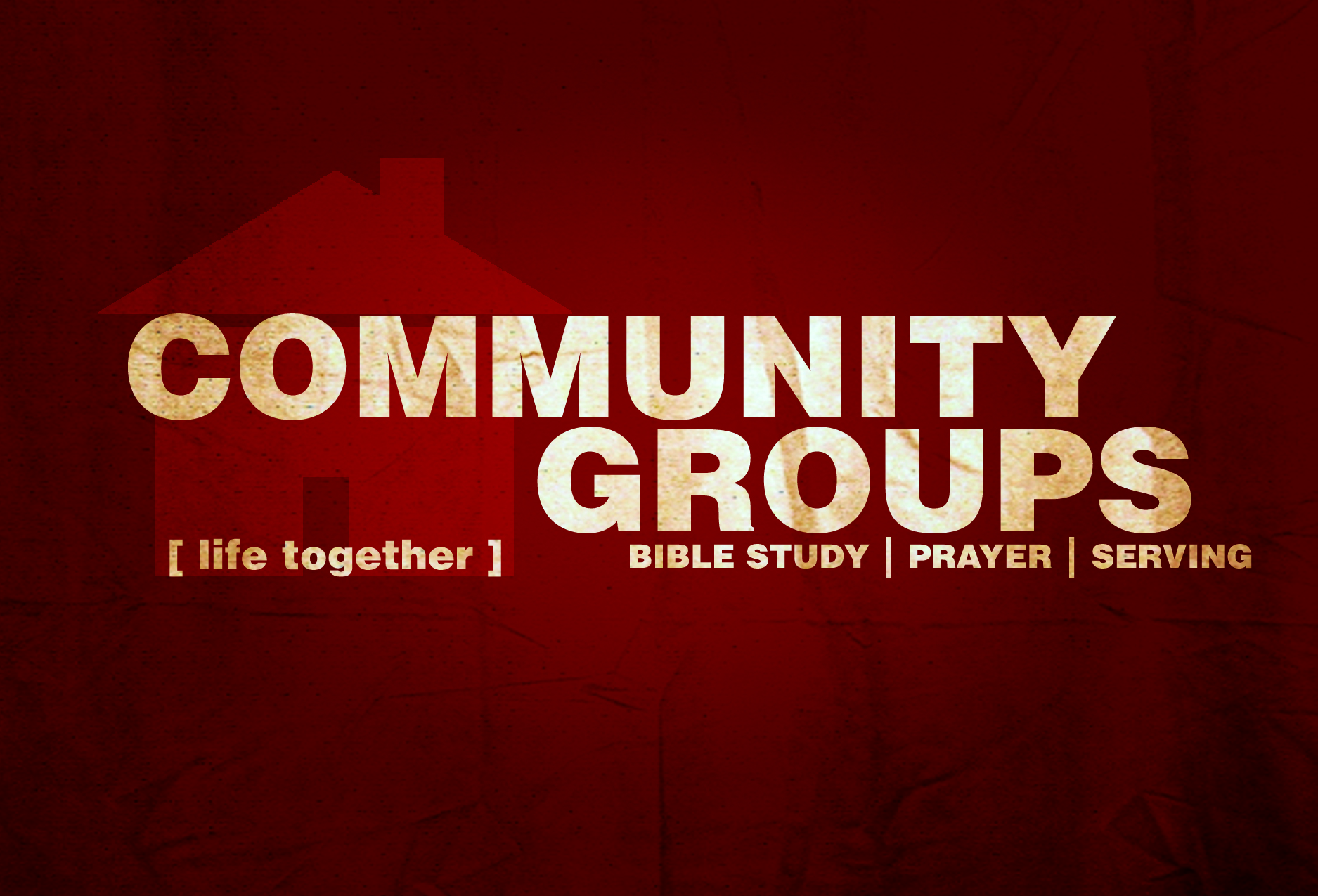
One of the goals of this transition season at Southside is to see multiple groups of individuals and families sharing life together and living life on mission – serving the city and each other. We are seeking to be theological, relational, and missional. This can occur in multiple ways.
Community Groups will be a venue in which believers and unbelievers alike can gather together to dialogue about what is being taught in our Sunday gatherings. There are at least four integral components of a community group: 1) Worship – to meet with God and to know Him is our highest priority. 2) Conversational Prayer and Mutual Ministry – having a conversation together with God is an essential way to build unity; first by praising God and then by praying in response to the needs expressed. 3) Application of the Bible – we will seek not just to talk about the Bible, or about each other. Rather, we want our groups to seek to be transformed by the truth of the Gospel. So we will do our best to apply the truths learned to our everyday lives. 4) Sharing a Life – there’s nothing like an honest testimony to illustrate what is being taught. When a person shares with the group, s/he feels more a part of the group. The objective of the leader is not to be the authority or even the teacher, but the guide.
Also, Community Groups are missional communities that will act as missionary teams, seeking the good of their unchurched family, friends, co-workers, and neighbors. They will be concerned with praying for and serving their sphere of relationships in such a way as to let them know that we are Christ’s disciples because we love one another.
Finally, and most simply stated, our community groups are networks of Christ-centered relationships. They are friends seeking to learn how to “speak the truth in love” to one another. They spend time together, meet one another’s needs, watch one another’s kids, bear one another’s burdens, encourage one another, challenge one another, hold one another accountable, rejoice with one another, weep with one another, correct one other, be corrected by one another.
This is gospel community. It is not natural. It is not easy. It is messy. It can be frustrating. But it is good, and it will change you.
Gathering for Worship:
This is perhaps what most people think of as “Going to Church.” Church, however, is not an event, or a ceremony – it is people. Those who have been saved by God’s grace have been saved into God’s family, into a community. So it is only natural for local pockets of this family to come together and celebrate what God has done in Jesus. We come together to celebrate the truth of the gospel and to rehearse the gospel by singing it, praying it, hearing it preached, and seeing it in communion and (God-willing) baptism. We come together to encourage and be equipped for lives on mission. Expect mostly expositional preaching (verse by verse through books of the bible), seeking to exalt Christ and unpack the gospel in every text. Expect communion often, if not every week, (we like remembering the gospel as many times in as many ways as possible.) Expect to be told the truth – no pulled punches. We won’t “Go to church.” The Church will gather.
Discipleship (Life-Long Learning)
We believe that gospel-centered (or Christ-centered) living will make us desperate for theology and that our worship gathering will whet your appetite for theology. However we see a huge need for an ever-increasing understanding of our faith. We live in an age of skepticism and relativity. In many places Christ and the church have been pushed to the margins of society instead of existing at the center. We believe that Christianity is a relational worldview that is complex, beautiful, and meaningful. We believe that if we are going to be effective missionaries we must understand our Bibles, love what it teaches, and proclaim its contents. We all have a lot to learn, and we envision venues within Southside that will take time to work through learning the central truths of our faith.
 Gregg A. Caruso