
New England’s Quiet Revial

Repost from Slate.

The pastor of a small church in rural Vermont is not the kind of guy you’d expect to speak with a slow North Carolina drawl. But Lyandon Warren felt a calling to New England ever since he heard a speaker in his college Christian Studies program explain that less than 3 percent of the region’s population is evangelical Christians. By his denomination’s definition, those numbers indicate an “unreached people group”—a whole population without a viable Christian community. “My heart was opened,” he says. “To be a foot-soldier on that battleground is a joy and a privilege.”

In 2006, Warren moved to Vermont to open a new Baptist church in a town whose last church had closed its doors the year before due to lack of attendance. His congregation, which meets in the closed church’s old white clapboard building, grew slowly but steadily, and in early September, Warren opened up a second new church in a nearby town. Similar churches have sprung up throughout the region: New England has become a mission field, and there are seeds of a revival sprouting.

The Northeast is the historic cradle of American Christianity, and just about every postcard-ready town here boasts a white church with a steeple. But sometime between the Second Great Awakening and today, the region evolved into the most secular part of the country. In the words of one regional missions group, “pulpits that once boasted gospel preachers like Jonathan Edwards and George Whitefield now proclaim universalism, liberalism, and postmodernism.” A Gallup poll this year found that the four least-religious states in America are in New England. For evangelicals, the issue is more pointed: Evangelical researcher J.D. Paynehas found that of the five U.S. metro areas with the lowest percentage of evangelicals, New England cities are beat only by Mormon-dominated Provo, Utah. New England is relatively wealthy and educated, and overall, its population is shrinking and aging. That’s why some Christians see New England as “hard soil”—and desperate for re-evangelizing. There’s a palpable sense of momentum growing among evangelicals in New England, who say this hard soil may soon bear fruit thanks to institutional efforts, individual leaders, and an intangible sense of energy often credited to the Holy Spirit. But do they have any hope of success in the most proudly and profoundly secular region in America?

The movement to convert New Englanders looks something like the recent evangelical focus on Western Europe, another traditionally Christian region that is now broadly unchurched. One popular approach is “church planting,” in which a pastor moves to a new location to found a new church that he hopes will eventually spawn several others, and so on. Because the method eventually produces indigenous churches, it’s considered a more reliable and organic path to growth than traditional “outsider” evangelism. To generalize broadly, church-planters tend to be young and Web-savvy, are almost always male (with a supportive wife), and often share a conviction that orthodox theology needn’t be burdened by the trappings of traditional worship. Think overhead projectors, not organs.

Many of New England’s church-planters are sent by denominations based in (or at least biggest in) the South. The North American Mission Board, the Southern Baptist church planting organization that sent Lyandon Warren to Vermont, helps plant about 20 new churches in the Northeast each year, according to Jeff Christopherson, who heads the group’s efforts in Canada and the Northeast. And that’s just one organization. The Northeast has sprouted a remarkable crop of churchplanting organizations and conferences, college campus ministries, and public events like Christian music festivals. Collin Hansen, editorial director of the Gospel Coalition, an influential national church network, recently called these “the best of times for Christians in New England.”

Stephen Um is pastor at Boston’s Citylife Presbyterian Church and a leader in the movement to re-evangelize the region. Born in Seoul but raised and educated mostly in Massachusetts, Um founded his church just over 10 years ago with a base group of 12 people. Citylife now meets in two locations in Boston, including a hotel conference center on Boston Common, and attracts between 700 and 800 people—a highly educated congregation that’s about one-half white and one-half Asian—every Sunday. Um calls what’s happening in New England a “quiet revival.” He speculates that since the drivers of the revival are small churches spread throughout a largely rural area, it doesn’t get the kind of media attention that megachurches attract.

Um is also the founder of the Center for Gospel Culture, which he calls a “catalyzing center” for mobilizing and recruiting Christian leaders in the region. The group hosted a regional conference in October with the Gospel Coalition. The event was designed “to encourage the development of this organic gospel movement.” The 1,200-person-capacity event space he reserved sold out by mid-September. The event drew representatives of about 270 different churches representatives from about 40 networks and denominations.

Um’s rapid success in expanding his own congregation is unusual here. In New England, he estimates, it usually takes a talented pastor 10 years to build a new church of 100 people. By contrast, he says, even an average pastor can plop down in South Carolina or Tennessee and grow from 50 to 300 attendees a year. “But that’s a Christendom culture,” Um says. “You set up shop and people come.” Up north, it’s a “post-church, post-Christian” environment. “You come to Boston and you see all the beautiful historic churches, but from my perspective they don’t preach the gospel.”

Though many pastors are encouraged by the changes they observe, they acknowledge that it’s more difficult to attract people to church in New England than in other parts of the country. Brandon Levering moved to the Boston suburbs from the Midwest to lead an established Evangelical Free Church last year. Levering wrote in a recent blog post for the Gospel Alliance New England (“Promoting Gospel Renewal in New England”): “Many of us came to New England specifically to see the gospel take root in what has become one of the least-reached regions in North America.” He’s happy in his church and says the people here are friendlier than he and his wife had been warned, but overall, “people just don’t seem as interested in the things of faith here.”

Still, some evangelicals are now convinced they have a real chance of long-term success in the most proudly and profoundly secular region of America. Jeffrey Bass, executive director of the Emmanuel Gospel Center in Boston, gave a talk in December to a group of church leaders in which he, like Um, described a “quiet revival” taking place in Boston. Though the population has dipped slightly below its level in 1970, the number of churches has almost doubled, and the number of people attending church has more than tripled in that same period. As evangelist Tom Miyashiro, who leads a youth outreach program that he says reaches up to 4,000 Connecticut school-age kids a year, told me, “I don’t think there’ll be a megachuch in New England anytime soon, like a Joel Osteen-type church. But a lot of leaders are attracted here because of the challenge, and a lot of young people who understand New England will grow up into Christian service. In 20 years, we’ll be dealing with a whole different beast.”

Not all Christians in New England welcome the movement with open arms. Emily Heath is pastor of West Dover Congregational Church in Vermont, which she describes as progressive and egalitarian—just the kind of place that some fear is insufficiently orthodox. Heath says she sees “a growing undercurrent of fundamentalism in New England,” and it bothers her to see her own thriving church characterized as lifeless by local conservatives. “I’ve read that on their websites, and it’s like, Huh, my church feels pretty alive. We’re growing.” On Easter Sunday this year, an evangelical church-planting team from Atlanta opened a new church the next town over.

But confronting wary locals comes with the territory of missionary work. The pastors who have come to New England say they come with a calling of love, service, and, yes, transformation. “This movement is not a political movement,” Um says. “This is happening on an organic, grassroots level from people with a burden for pursuing the common good and loving their neighbor, but still holding onto an orthodox doctrine.”

And after all, the work of spreading the gospel is not new here. The royal charter of the Massachusetts Bay Colony, drafted in 1691, states that this was the very purpose of the colony: “to win and incite the natives of the country to the knowledge and obedience of the only true God and Savior of mankind, and the Christian faith.” As some new New Englanders see it, that’s even more true today. The question is how the natives will respond.
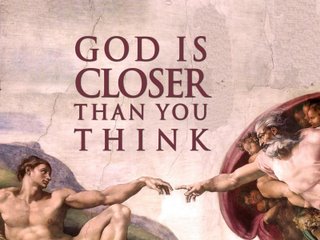

God Is Closer Than You Think #11 – What Are Sanctification & Perseverance?

I. INTRO

We are nearing the conclusion of series God Is Closer Than You Think

My overriding goal (for the series) has been for us to have a greater understanding and confidence in Who God is – and What God has accomplished on our behalf.

Studying theology and doctrine is often referred to as Systematic Theology, which means our study of Scripture is organized around fairly standard categories – or systems.  Knowing and understanding basic Bible beliefs is important for everyone of us:

People who don’t know what the Bible teaches will not be able to distinguish truth from error, staying what Paul calls in Eph 4:14 “children tossed around by waves and carried about by every wind of doctrine.”

But Christians who have a solid foundation will become more mature and will not be led astray – and will have better discernment: Hebs 5:14 says, “But solid food is for the mature, who because of practice have their senses trained to discern good and evil.”

As we begin this morning, let’s take a few moments and review what is called the Order of Salvation (or, the blessings that come to us when we become believers):

  • Election, or God’s choice of us.  Eph 1:4 — “He chose us in Him before the foundation of the world, that we would be holy and blameless before Him.”
  • The Gospel Call, where we hear the gospel message and God calls us to Himself in such a way that we respond in saving faith.  Acts 15:17 – “we are called by name…”
  • Regeneration, where God imparts new life to us so we have the spiritual ability to respond.  Titus 3:5 – “He saved us, not on the basis of deeds which we have done in righteousness, but according to His mercy, by the washing of regeneration and renewing by the Holy Spirit.”
  • Conversion = Repentance + Faith.  Repent of sin and trust in Christ for salvation.  This is our response to the gospel call.  We see Paul’s dramatic conversion detailed in Acts 9.
  • Justification – Immediately after conversion comes justification, which forever changes our legal standing before God.  God declares us not guilty but righteous because of the finished and complete work of Christ.
  • Adoption – Not only has our legal status changed but our family status is also changed as God makes us members of His family – with all the privileges of adoption.

All of the above occur at the beginning of our Christian lives – we’ve believed, we’ve been forgiven of our sins, we’ve become members of God’s family – our status and relationship are forever changed.

But what happens to us internally?

Which brings us to what we want to look at this morning:  Sanctification, which is a progressive work of God and us that makes us more and more free from sin and more like Christ in our actions.

II. BODY

Let’s begin by considering some of the major differences between Justification and Sanctification.

  • This is important because Catholics and Protestants have two very different perspectives on the difference.
    • Roman Catholic doctrine doesn’t distinguish between justification and sanctification – it mingles them together and views them as one single process.
    • In Catholic theology people are not entirely justified until they are perfect internally.
    • So, in this life Catholic theology says we can never be fully justified.  Catholics would say that the vast majority of people who physically die go to Purgatory to receive further purging or cleansing from sin until they finally we become “perfect” and are released into heaven.
    • Catholics combine justification and sanctification – we separate them.  How do we separate them?
  • As we said last week, Justification has to do with our legal standing – it’s as if God is a judge pronouncing us, “Not guilty!”  Sanctification has to do with our internal condition – What is the state of our heart?  What is the state of our internal moral status?
  • The difference between Justification and Sanctification is like the difference between a judge and a surgeon.
    • The judge declares us righteous, which is something on the outside of us and is in relationship to God’s Law.
    • But the surgeon goes inside and changes something in us, s/he fixes something.  Sanctification is God working inside to grow us up, to fix us, to make us more like Christ.
  • Justification is once for all time.  Roms 5:1 – Therefore, having been justified by faith, we have peace with God through our Lord Jesus Christ.”  But sanctification continues throughout the rest of our lives.
  • Justification is entirely God’s work, He pronounces us “Not guilty!” or, forgiven and righteous because of faith.  Sanctification is something we cooperate with.
  • Justification is perfect and complete in this life – it’s once for all time.  God declares us not guilty.  Sanctification is not perfect in this life…Sanctification is greater in some than in others.  We are to make progress in our sanctification (1 Tim 4:15).

There are three stages of sanctification:

  1. Positional Sanctification –Our sanctification has a definite beginning.  Our position of perfect acceptance with God at the moment we place our faith in Christ is where we begin.  When a person becomes a believer there is immediately a change of heart  and a growing desire to do what God wants (1 John 3:9).
  2. Progressive Sanctification — Our growth in Christ-like character and conduct during our life on this earth.  After conversion there is a new ability to change – we are no longer helpless or trapped by sin.  We have access to new power.
  3. Final Sanctification — Our ultimate perfection when we stand in Christ’s presence spotless and blameless – forever free from sin.  (Like having had a cold or allergies… and then being able to breath again.

Now, let’s take what we now know about Sanctification and look at Hebs 12:1-3…

V.1 — “Therefore, since we have so great a cloud of witnesses surrounding us, let us also lay aside every encumbrance and the sin which so easily entangles us, and let us run with endurance the race that is set before us.

  • There are two parts of the sanctification process.  Remember we said that Sanctification is a progressive work of God and us.
  • We have both an active and a passive role in our own sanctification.
  • Some churches/denominations only see one or the other…
  • Hebs 12:1 is speaking more to our active role.
  • The word “witnesses” is the same word we get our English word ‘martyr’ from.
  • The “cloud of witnesses” speaks of BOTH those who have gone before us AND those who are currently standing beside us.
  • With the testimony of those who have gone before us (including Christ) and the community of those who are standing with us, we begin to ‘lay aside’ those idols (or functional saviors) that we used to turn to in order to seek comfort and joy.
  • Now we turn to what Christ has done – and seek to find our comfort and joy in Him.
  • Remembering what He has done – and taking comfort in the witness of the saints – past and present.
  • An ‘encumbrance’ is something that we have been forgiven for but we still hold on to it.  Or, it could refer to a pattern, or tendency, that continues to pop-up in our lives.  Like a besetting sin, or family of origin issue…
  • Let us run with endurance the race that is set before us.”
  • Life is a race – regimen of difficulties. The word race (agōn) is the Greek word we get our English word ‘agony’ from.  Life is an agonizing struggle.
  • Exercise is necessary – the whole point is opposition.  When I’m doing chest presses at the gym it ‘feels’ like I’m getting weaker, but I’m actually getting stronger – in the long run.  We also wear gym clothes at the gym – and when we catch a glimpse of ourselves in the mirror we are reminded of why we are there.
  • Suffering is necessary.
  • Our faith will never grow unless it’s challenged.
  • One theologian and writer Eugene Peterson, author of the paraphrased Message, also wrote a book titled, A Long Obedience In the Same Direction.

Vs.2-3 — Fixing our eyes on Jesus, the author and perfecter of faith, who for the joy set before Him endured the cross, despising the shame, and has sat down at the right hand of the throne of God. For consider Him who has endured such hostility by sinners against Himself, so that you will not grow weary and lose heart.”

  • Hebs 12:2-3 are speaking more to our passive participation in the sanctification process…
  • We are to ‘fix our eyes on Jesus’ (v.2) and we are to ‘consider Him’ (v.3).
  • To put it simply: Jesus endured short-term pain because of the certainty of long-term gain.  Our years on earth amount to less than a breath of eternity.

III. CONCLUSION

I’d like to close with three quotes to help us gain perspective…

  • The twentieth-century British pastor D. Martyn Lloyd-Jones said, “If we only spent more of our time in looking at Christ we should soon forget ourselves.” Fixing our eyes on Christ is the first step and the entire path of the Christian life. We don’t look to Christ in faith to be saved and then look to ourselves to persevere. We trust Christ alone as our Savior and look to Christ alone and follow Him as our Lord. In order to look to Christ as our Savior and Lord, we need new eyes and a new heart.
  • The late beloved pastor James Montgomery Boice wrote that…The only thing that will ever get us moving along this path of self-denial and discipleship is fixing our eyes on Jesus and what He has done for us, coming to love Him as a result, and thus wanting also to be with Him both now and always. Jesus is our only possible model for self-denial. He is the very image of cross-bearing. And it is for love of Him and a desire to be like Him that we take up our cross and willingly follow Him (Mk 8:34, 35, 36).[1]
  • Piper — The greatest act of love that has ever been performed was sustained by the joy of hope. For the joy set before Him He died for us. How do you keep on loving people, and sacrificing to do them good, the way Jesus did? For the joy set before you, that streams back into the present and becomes your strength (Nehemiah 8:10)[2]

As we prepare our hearts for communion, let us remember that fixing our eyes means to look away from other things and steadfastly or intently toward Jesus – and what He has accomplished on our behalf.

We are sustained in the marathon of life by the joy that we find through surrendering our idols to God, wherein we begin to find our true joy and delight in Him.

And it’s only the beginning…


[1] Boice, J M and Philip G. Ryken. The Heart of the Cross, Crossway: 1999.

[2] Sermon: Be Constant in Prayer for the Joy of Hope.

God Is Closer Than You Think #10 – What Are Justification and Adoption?

I. INTRO

Today’s big idea:

  • Justification is our legal standing because of what Christ has done.
  • Adoption reveals how God feels about us.

The sermon map (Thanks to JT):

  • Over the last 19-months here at SBF, we have taught more on the doctrine of justification than we have on the doctrine of adoption.  I don’t think we should ever teach less on the doctrine of justification.  I do think, however, that we should teach more on the doctrine of adoption.
  • We cannot understand adoption apart from justification.
  • Another way to say it is: A growing understanding of justification positions us to more fully appreciate and participate in adoption.
  • So, this morning we will review justification – and then we will use Galatians 4:1-7 to help us unpack the doctrine of adoption.
  • And with the conclusion I want the Scriptures to help you understand how God feels about you.

A review of justification (Roms 3):

There is a longing in every human heart to “justify our existence.”

  • Paul speaks directly to this longing in Roms 3:21-23…(the words righteousness and justified used in this passage come from the same Greek root word[1])…

21 But now apart [distinct or separate] from the law the righteousness of God has been made known… 22 This righteousness is given through faith in Jesus Christ to all who believe[2][not just head, but head & heart[3]]. There is no difference between Jew and Gentile, 23 for all have sinned and fall short of the glory of God, 24 and all [who believe] are justified freely by His grace through the redemption that came by Christ Jesus.

  • Two weeks ago Jeff Arthurs taught on “What It Means to Be A Christian” and he clearly stated that our responsibility is to “believe.”
    • We do not work FOR our salvation, we work FROM our salvation.
    • God is not opposed to EFFORT, He is opposed to EARNING.
    • We do good deeds, not in order to EARN salvation, but because we ARE saved.
  • And then last week JT Holderman set the table for us very well as he unpacked the doctrine of the Atonement [to make amends], which is the means by which God redeems His people from sin.  JT said there are two major themes that saturate this doctrine:
    • Atonement is about God’s character: Our God will not simply let us remain in sin, but instead He is a God whose love so overflows that He must redeem His people.
    • Atonement is also about our relationship with God.  Because of the doctrine of the atonement we can be reunited in relationship with God, which is the very reason we were created.
  • Jesus condescended to leave heaven and the perfect tri-unity of the Godhead, to provide humanity with an absolutely unheard-of spirituality and an unimaginable approach to God.
  • Where God provides us with an unblemished record—absolutely free of charge.
  • Not just a good record, or even a great record – but a divine righteousness – a perfect record that comes to us, alights upon us — as a gift!
  • When we have justification it is the end of any personal struggle for validation, for worth, or worthiness, and acceptability.
  • Apart from the Christian gospel there is no other religion or belief system that offers anything like this.
  • Here is the gospel: God develops a perfect righteousness and provides it to us – and by THAT righteousness alone we are completely and eternally justified.
  • Here is how J.I. Packer says it (simply and elegantly) in his classic book Knowing God:  [Justification is] God’s forgiveness of the past, together with his acceptance for the future.[4]

II. BODY

Now, we will turn our attention toward the doctrine of adoption – turn to Galatians …The beginning of Gal 4 is a little-bit like walking up to two people who are already deep into a conversation – it will help us to have some perspective…

  • Paul is angry as he writes this letter.  It is different from his other letters to churches (or his Pastoral Epistles written to Timothy and Titus).
  • The lack of thanksgiving in his greeting reveals his unhappiness.
  • Paul follows what one commentator describes as a “standard rebuke-request format.”[5]
  • The intro/greeting is a rather terse 5 verses.
  • The rebuke section begins in 1:6 – 4:11.
  • The request section begins in 4:12-6:18.

All of chapter 3 (preceding our passage for today) is about the Law…

  • The curse of the Law
  • The temporary purpose of the Law (vs.19-20, “mediator, or v.24 “tutor” — temporary intervention).  Paul in 4:2 also uses the words, “guardians and managers…”
  • Paul is making a strong appeal to the Galatians to not return to bondage – which carries over into our Chap 4 passage.

Here is the main idea of Gal 4:1-7: God has sent His Son to offer justification to His people and God has sent His Holy Spirit into our hearts to initiate, from the center of our being, a holy and repetitive prayer (v.6): “crying[6] ‘Abba Father’” (It’s actually Trinitarian…)

1.  Vs. 1 – 3:The Law enslaves.

“Now I say, as long as the heir is a child, he does not differ at all from a slave although he is owner of everything, but he is under guardians and managers until the date set by the father. So also we, while we were children, were held in bondage under the elemental things of the world.

The Galatians were primarily Gentiles, not Jews – Paul is referring to their pre-Christian idolatry (4:8[7]).  The Judaizers were convincing them to abandon the gospel and come under the Mosaic Law.

2.  Vs. 4 – 5: The Son of God atones (or redeems) and justifies. God has graciously intervened…

But when the fullness of the time came, God sent forth His Son, born of a woman, born under the Law, so that He might redeem those who were under the Law, that we might receive the adoption as sons.

We see in this verse that Jesus Christ was uniquely qualified to be our Savior – “born of a woman, born under the Law.”

  • In order to be our Savior Jesus must be LIKE us.  This draws attention to His humanity.
  • And in order to be our Savior He must also be UNLIKE us in that He perfectly fulfilled the LAW.  2 Cor 5:21 – God made him who had no sin to be sin for us, so that in him we might become the righteousness of God.”

Jesus was truly God and fully man who defeated the power of sin.

3.  Vs. 6 – 7:The Spirit of God authenticates.

Because you are sons, God has sent forth the Spirit of His Son into our hearts, crying, ‘Abba! Father!’ Therefore you are no longer a slave, but a son; and if a son, then an heir through God.”

**Here’s what we REALLY need to see about this passage:  God’s purpose was to both redeem and to adopt“to redeem [and justify] those who were under the law, so that we might receive His adoption as sons” (v. 5).

J.I. Packer[8]:  “What is a Christian?  The question can be answered in many ways but the richest answer I know is that a Christian is one who has God as Father.  Our understanding of Christianity cannot be better than our grasp of adoption.  The truth of adoption gives us the deepest insights that the NT affords into the greatness of God’s love.

God has personal, particular, and passionate love – for you.

Churches are full of people who are not certain of God’s love for them…I hope you have been, or will be, amazed and overwhelmed by God’s love.

And if you are not an active intentional follower of Jesus Christ, I hope you are convicted of your sin and convinced of God’s love for you as revealed through the death of His Son — and that we would all experience God’s adopting grace.

III.  CONCLUSION

As we close and begin to prepare our hearts for communion I’d like for us to take a look at the phrase “Abba Father,” found here in the Galatians 4:6.  It will help us to better understand how God feels about us.

The phrase “Abba Father” is used three times in the NT:

  • “’Abba, Father,’ he said, ‘everything is possible for you. Take this cup from me. Yet not what I will, but what you will.’” Mark 14:36
  • “The Spirit you received does not make you slaves, so that you live in fear again; rather, the Spirit you received brought about your adoption to sonship. And by him we cry, ‘Abba, Father.’” Romans 8:15
  • “Because you are his sons, God sent the Spirit of his Son into our hearts, the Spirit who calls out, ‘Abba, Father.’” Galatians 4:6

According to Jewish rabbinical teachings, slaves were forbidden to address the head of the family by the affectionate title, “Abba.”

  • “Abba” approximates “papa” or “daddy” and implies unwavering trust.
  • “Father” expresses intelligent comprehension of the relationship.
  • Together the two reveal the trusting love and intelligent confidence of a secure son or daughter.

Redemption and justification are accomplished by the Son and applied to our hearts by the Holy Spirit.

J.I. Packer is again helpful: “Adoption is a family idea conceived in terms of love and viewing God as Father.  In adoption God takes us into his family and fellowship, establishes us as his children and heirs.  Closeness, affection, and generosity are at the heart of the relationship. To be right with God the judge is a good thing, but to be loved and cared for by God the Father is greater.”[9]

Jesus was sent that we might have the status of sonship, and the [Holy] Spirit was sent that we might experience it.  The inheritance is for sons; it is not for slaves!  It doesn’t come by keeping the law, but by living in the Spirit.[10]

Charles Spurgeon, “once knew a good woman who was the subject of many doubts, and when I got to the bottom of her doubt, it was this: she knew she loved Christ, but she was afraid he did not love her.  ‘Oh!’ I said, ‘that is a doubt that will never trouble me; never, by any possibility, because I am sure of this, that the heart is so corrupt, naturally, that love to God never did get there without God’s putting it there.’  You may rest quite certain, that if you love God, it is a fruit, and not a root.  It is the fruit of God’s love to you, and did not get there by the force of any goodness in you.  You may conclude, with absolute certainty, that God loves you if you love God.”[11]

That Holy Spirit’s cry, “Abba, Father” assures us of God’s love for us – and did not originate from you or within you, it is a gift from God and He gave you that gift through His Holy Spirit.  It is His means of assuring you that HE LOVES YOU!

Do not doubt and do not fear…but ask yourself this question: “Do I know the reality of the internal witness of the Spirit of God in my soul?”

In 4:15 Paul essentially asks the Galatians, “Where has your joy gone?”

  • Does your joy tend to collapse?
  • Our joy collapses, or recedes, because we forget our sonship, we forget we are fully adopted sons embraced by a Father who sent his Son to change our status into sons – and who sent His Holy Spirit to give us the experience of sonship and to offer us His strength to change and grow (next week).
  • The more we are aware of (and engaged) of God’s initiative, the more we will be overwhelmed by God’s love.
  • IF we have placed our belief and trust in what Christ has done WE ARE FULLY ADOPTED.

DO NOT allow yourselves, or this church, to move back into legalism/moralism…

Do the words closeness, affection, and generosity describe your perception and experience of God?  If not, perhaps you are more aware of your sin than you are of the adopting grace of God.

Let’s take a few moments to quietly contemplate this as we prepare our heart’s for communion…


[1] Righteousness = dikaiosynē; Justified = dikaioō.

[2] It is God who awakens belief in our hearts. Col 2:13: When you were dead in your sins and in the uncircumcision of your sinful nature, God made you alive with Christ. He forgave us all our sins.

[3] A saving faith has within it an element of yielding, a repentance of trying to be lord of one’s own life and a submission to the Lordship of Jesus. (W. E. Vine, Reflections on Words of the New Testament:132.)

[4] J.I. Packer. Knowing God, pp. 206-207.

[5] G. Walter Hansen, Galatians, IVP 1994: 14.

[6] This word in the Greek (krazō) actually refers to the constant and incessant appeal of a raven (we might be more familiar with a crow).

[7] Formerly, when you did not know God, you were slaves to those who by nature are not gods.

[8] Knowing God, InterVarsity Press 1973:181-182f.

[9] Ibid:187-188.

[10] Philip Ryken, Galatians, Reformed Expository Commentary, P&R, 2005:166.

[11] The Relationship of Marriage.

SBF eNEWS – Oct 31, 2012

In Celebration of Martin Luther’s Conviction and Courage

This Sunday we will continue in our series God Is Closer Than You Think with a message that will respond to the question, “What are justification and adoption?”  This is good timing.  495 years ago on October 31, 1517 in the little town of Wittenberg, Germany a Catholic priest nailed an invitation to debate on the church door. People immediately began to take notice and within the week, copies of his theses would be talked about throughout the surrounding regions; and within a decade, Europe itself was shaken by his act of conviction and courage.  Later generations would mark Martin Luther‘s nailing of the 95 theses on the church door as the beginning of the Protestant Reformation, but what did Luther think he was doing at the time? To answer this question, we need to understand a little about Luther’s own spiritual journey.

As a young man in Germany at the beginning of the 16th century, Luther was studying law at the university. One day he was caught in a storm and was almost killed by lightening.  He cried out to St. Anne and promised God he would become a monk if he survived.  In 1505, Luther entered the Augustinian monastery, and in 1507 became a priest.  His monastic leaders sent him to Rome in 1510, but Luther was disenchanted with the ritualism and dead faith he found in the papal city. There was nothing in Rome to mend his despairing spirit or settle his restless soul.  He felt cut off from God, and he could not find a cure for his discontent.

Martin Luther was bright, and his superiors soon had him teaching theology in the university.  In 1515, he began teaching Paul’s epistle to the Romans.  Slowly, Paul’s words in Romans began to break through the gloom of Luther’s soul.  Luther wrote,

“My situation was that, although an impeccable monk, I stood before God as a sinner troubled in conscience, and I had no confidence that my merit would assuage him.  Night and day I pondered until I saw the connection between the justice of God and the statement ‘the just shall live by faith.’ Then I grasped that the justice of God is that righteousness by which through grace and sheer mercy God justifies us through faith.  Thereupon I felt myself to be reborn and to have gone through open doors into paradise. The whole of Scripture took on a new meaning…This passage of Paul became to me a gate to heaven.”

The more Luther’s eyes were opened by his study of Romans, the more he saw the corruption of the church in his day.  The glorious truth of justification by faith alone had become buried under a mound of greed, corruption, and false teaching.  The more Luther studied the Scriptures, the more he saw the need of showing the church how it had strayed from the truth.

In Martin Luther’s day, nailing of the theses to the church door was the means of inviting scholars to debate important issues.  No one took up Luther’s challenge to debate at that time, but once news of his proposals became known, many began to dialogue about the issues Luther raised – and particularly that salvation was by faith in Christ’s work alone. Luther apparently at first expected the Pope to agree with his position, since it was based on Scripture; but in 1520, the Pope issued a decree condemning Luther’s views.  Luther publicly burned the papal decree.  With that act, he also burned his bridges behind him.

Who can you invite to church this Sunday to hear about this great distinction between Catholicism and Protestantism?  Invite someone today – or forward this email to a friend…

Justification and Adoption are foundational to our faith – and feed our assurance of God’s relentless and scandalous love.  Who do you know that could benefit from this life altering truth?

Search Team Update

To date we have nine completed packets.  Our Search Team will be meeting this Sunday afternoon from 4-6pm to review the candidates.  Please be in prayer for this VERY important process.  As a church we have we have engaged the “hard good” of getting healthier spiritually and emotionally.  We are looking for and praying for a pastor and his wife who have done the same.  We need God’s uncommon wisdom during the search process.

See you Sunday (I can’t wait!)

Pastor Gregg