
A Testimony of Hearing God’s Voice in an Academic Setting

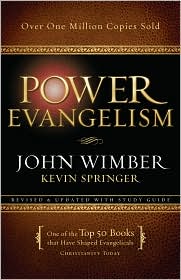
This coming Sunday Kevin Springer will be teaching on Acts 3, which happens to be a chapter detailing both the healing of a lame man and another evangelistic sermon preached by Peter (can you say, “Power Evangelism”?) This testimony was written by Dr. Gary Greig, who is a friend of Kevin’s and a co-author with Kevin on another book entitled, The Kingdom and the Power.  To view or download Gary’s paper on power evangelism (which contains some excellent small group questions) click here.

Gary writes… The way that I made it through my undergraduate and graduate school degree programs was through continual prayer and conscious dependence on the Lord—praying for wisdom and understanding in all my studies. I finished a B.A. degree at the Hebrew University in Jerusalem, Israel, in 1983 and a Ph.D. in Near Eastern Languages and Civilizations from the University of Chicago in 1990. All my studies at the Hebrew University were in Modern Hebrew, which I had to learn before entering my course of study there. When I told my academic advisor, Aviva Rosen, an older Israeli woman, that I had no family in Israel and had just had a summer to study modern Hebrew before entering the classroom where all my lectures would be in Hebrew, she exclaimed in Hebrew “My God!” And I thought, “Yes Lord, only you, God, can help me do this and succeed!” I had received prophetic words before traveling to Israel that the Lord would be with me and give me success, and I leaned hard on those prophetic promises in my prayers.
In my department of the University of Chicago, doctoral course-work and dissertation research normally took doctoral students ten years to complete, but I was able to complete the necessary course-work and research in seven years between 1983 and 1990. I say this not to praise myself. I was an average-to-above-average student all my life. I say this to demonstrate how the power of prayer and conscious dependence on God’s Spirit for all knowledge and wisdom can and should transform a Christian’s study in traditional academic degree-work, including seminary and Bible college degree-work.
Countless times, I remember praying and asking the Lord for wisdom in what I was studying, and He would prompt me to look in a certain book or journal, or He would let me stumble across the exact information I needed. Once a ruthless graduate student instructor at the University of Chicago, teaching a course in Old Egyptian (the oldest and most difficult form of ancient Egyptian), gave the class an impossible assignment to translate a very difficult Old Egyptian hieroglyphic inscription without giving us the normal references to journal articles analyzing the text. We had two days to translate the text into English and our grades (and chances for university scholarships) were depending on it. Well, my knee-jerk reaction was to pray and cry out to God for mercy in the research archives (library) of the U of C’s Oriental Institute! As I was doing so the Lord seemed to point to one volume of the Journal of Egyptian Archaeology among about 100 similar volumes. The quiet prompting of the Holy Spirit was persistent, “Look at that volume!” I picked out the volume, which had perhaps 200 pages of articles, and the first page I opened to was an article analyzing and translating the very Old Egyptian hieroglyphic text that we had been assigned in the class! Needless to say, I was thanking the Lord as I shared the information with my class-mates, who were not Christians but among whom the Lord got the glory! As a result we were all ready for the next class, though our instructor had no idea how we were all so well-prepared to translate and discuss the text!
Experiences like this taught me what the Old Testament means when it says, “The fear of the Lord is the beginning of wisdom, and knowing the Holy One is understanding” (Prov. 9:10). The Lord already knows all there is to know. That is why Scripture calls Him the “Spirit of Truth” who will “guide you into all truth” (John 16:13; cf. John 14:17; 15:26; 1 John 4:6). We fail to honor the Lord, the Spirit of Truth, when we do not seek Him for all knowledge and understanding that we wish to acquire. The sin of the Garden was that Adam and Eve impatiently grabbed for the fruit of the tree of the knowledge of good and evil without calling on or waiting for the Lord (Gen 3:6). They made it happen by themselves without consciously waiting for or depending on the Lord. And this is what happens in every classroom where Christian leaders in universities, colleges, seminaries, and Bible colleges—even with the best of intentions—try to figure it out for themselves, just them and their “gray matter,” apart from consciously depending on and asking the Holy Spirit to guide them into all truth.

The Old and New Testaments present all teaching, education, and ministry preparation as a process of depending on God’s Spirit within a framework of mentoring modeled after the nuclear family.


Biblical Community 101

I found this blog post online and thought it was an excellent overview of biblical community. This Sunday we will be taking a look at Acts 2:42-47, which is a definitive passage in the New Testament concerning the call to community for active, intentional followers of Christ.

From time to time, I’ll think a lot about biblical community. What it is in a practical sense. How I can contribute to it in my own sphere. Whether I have purposely (or inadvertinly) hampered or neglected it from time to time in my own life.

I believe that we are each wired to desire it, much like we are wired with a deep hunger for a personal relationship with God. Yet, it seems that which so many long for is seldom experienced. Why is that?

As Christians in the 21st century, we have access to more resources than ever. In the US we have more disposible time than our parents or grandparents. I don’t want to make this a treatise about the activities with which we fill our lives. That’s not my goal.

But I do want to underscore the fact that a lack of understanding, a misconception of just what biblical community is, often contributes to our lack of it. We settle for some lame program or strike off in a direction on our own in hopes of arriving at the fulfillment we so desparately desire. Real communit exists, and if we know what to look for and where to focus our energy, we can help foster it.
So I figured a brief reminder of what it means to be engaged in a healthy, biblical community would be in order. Perhaps we will be quickened to action…

What is Biblical Community?
Community is an interdependent group of people who are growing in their devotion to Christ, one another and the cause of the Gospel. Think of it this way. Imagine a triangle. At the pinnacle is Christ. At the two bottom points are One Another and The Gospel. Each of these three elements must be present if the community is to be healthy. The relationship is symbiotic. If we get out of balance in any area, we miss it. But as we grow in each one, we move toward each one’s goal and toward real community.

What are the Goals of Community?

  • The goal of our devotion to Jesus is intimacy with Him.

“Abide in Me, and I in you. As the branch cannot bear fruit of itself unless it abides in the vine, so neither can you unless you abide in Me. I am the vine, you are the branches; he who abides in Me and I in him, he bears much fruit, for apart from Me you can do nothing.”  –John 15:4-5

  • The goal of our devotion to One Another is love [remember, the vision statement for MPVCC is — learning how to love.]

“This is My commandment, that you love one another, just as I have loved you. Greater love has no one than this, that one lay down his life for his friends.”  –John 15:12-13

  • The goal of our devotion to The Gospel is spiritual reproduction

“When the Helper comes, whom I will send to you from the Father, that is the Spirit of truth who proceeds from the Father, He will testify about Me, and you will testify also, because you have been with Me from the beginning.”  –John 15:26-27

As mentioned above, each of these must be present. Omit any one and it’s out of balance.
If we…

  • Omit One Another and it’s “shoot our own” and task oriented. We may become legalistic, even in our efforts to share the Gospel.
  • Omit The Gospel and it’s warm fuzzies and no real purpose. We might have a great time singing Kum ba ya, but our inward focus will eventually become our undoing.
  • Omit Christ and it’s all flesh and we’re doomed before we begin. Without Jesus, it’s heresy so we might as well pack it up and go home.

What is the Value of Community?
Community offers us as Christians much meaning and fulfillment in our walk and witness. A thriving biblical community is:

  • A safe place for spiritual transformation — We see others growing at different points along the way and we are both encouraged and challenged. We can take risks, learn and mess up without fear of rejection.
  • Our vehicle for ministry — There are no lone rangers in ministry. None of us has all the spiritual gifts. Therefore we need each other.
  • A greater power of witness — In John 13:35 Jesus said, “By this all men will know that you are My disciples, if you have love for one another. When we are part of a biblical community, we will draw others to Christ.”

Well there it is. If we are to experience biblical community, I believe that we should be growing in our devotion to Christ, one another and the cause of the Gospel. I once heard discipleship defined as broken people ministering to broken people…


Possibly related posts: (automatically generated)

See the original post here.

Change is the New Normal

As we study the book of Acts it occurs to me that when the church started everything radically changed for the disciples, as well as for every person who decided to become an active intentional follower of Christ. 

The disciples were convinced that they were to become the cabinet members for the new theocracy that Jesus was going to set up on the earth.  They were hoping for condos on the Mediterranean and what they got was a call to become the servants of all.  Almost all of them would die martyrs deaths. 

Here are some quotes on CHANGE.  Think about it…

  • “If you want to make enemies, try to change something.” —Woodrow Wilson,
  • “It is not merely that changes in our world demand new responses from us. The very foundations of society have changed.” —Craig Van Gelder
  • “A church which pitches its tents without constantly looking out for new horizons, which does not continually strike camp, is being untrue to its calling… (we must) play down our longing for certainty, accept what is risky, and live by improvisation and experiment.” —Hans Kung
  • “The illiterate of the 21st century will not be those who cannot read and write, but those who cannot learn, unlearn, and relearn.” —Alvin Toffler

  • “Uncertainty is the only thing to be sure of.”—Anthony Muh
  • “If you don’t like change, you’re going to like irrelevance even less.” —General Eric Shinseki
  • “If things seem under control, you’re just not going fast enough.” —Mario Andretti
  • “It is generally much easier to kill an organization than change it substantially.” —Kevin Kelly
 Have said the above there are (at least) three things that will never change:
  1. God’s love never changes (see Malachi 3:6, Jeremiah 31:3, Psalm 119:159, Romans 8:38)
  2. God’s Word will never change (see Isaiah 40:8, Psalm 119:152, Matthew 5:24)
  3. God’s purpose for my life will never change (1 Samuel 15:29, Psalm 33:11, Proverbs 19:21, Romans 8:28, Psalm 56:11, Psalm 46:1-2)